IDAI Warns Forest Fire Haze Can Cause Stunting and Cognitive Impairment in Children
Baca dalam 60 detik
- Paparan kronis asap karhutla tidak hanya memicu gangguan pernapasan akut, tetapi juga berpotensi menurunkan kapasitas paru secara permanen dan meningkatkan risiko stunting pada anak.
- Studi pada kebakaran 1997 menunjukkan dampak jangka panjang hingga 10–17 tahun kemudian, termasuk IQ lebih rendah dan gangguan perilaku.
- IDAI mendesak pemantauan tumbuh kembang dan fungsi paru berkelanjutan, sementara UI menyiapkan riset lanjutan pascabencana untuk memperkuat dasar ilmiah perlindungan kesehatan.
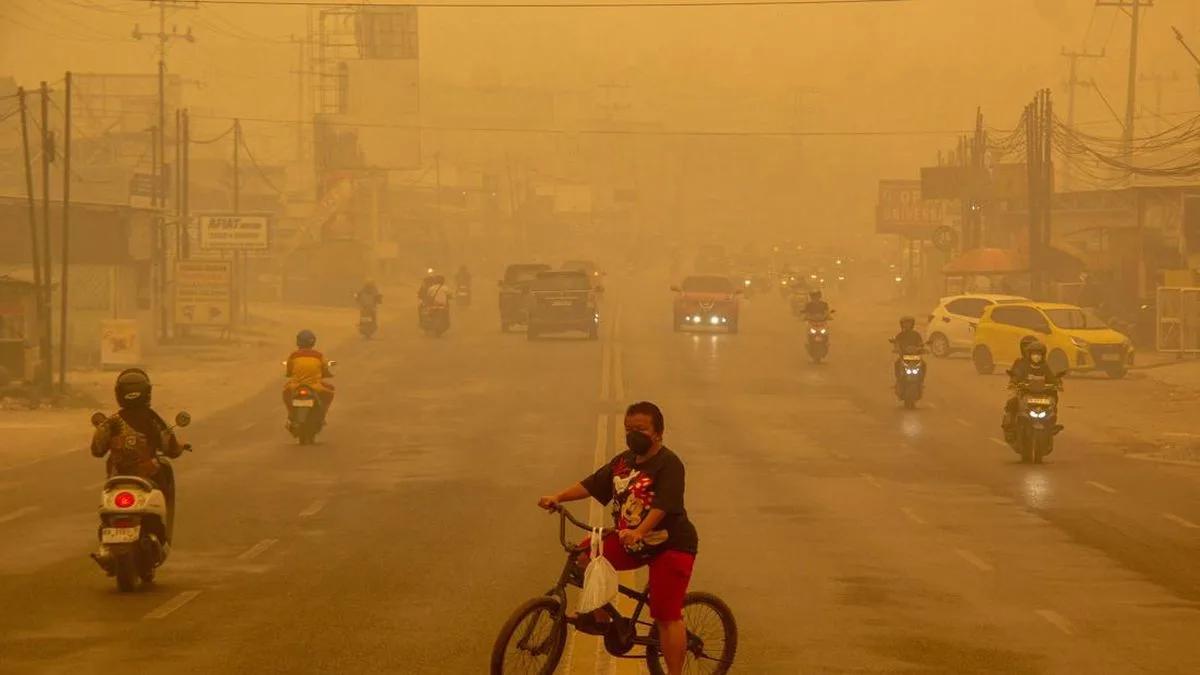
The Indonesian Pediatric Society (IDAI) has issued a serious warning: children continuously exposed to haze from forest and land fires (karhutla) risk permanent lung growth impairment, which can ultimately lead to stunting and reduced cognitive ability. The warning was delivered in Jakarta on Saturday (31/10), referring to findings from long-term studies in Indonesia and several other countries.
A member of IDAI's Respirology Coordinating Work Unit, dr. Nastiti Kaswandani, explained that the impact of karhutla haze exposure does not stop at shortness of breath or acute cough. “Chronic exposure in children can permanently disrupt lung growth, increasing the risk of persistent asthma and chronic obstructive pulmonary disease (COPD), which leads to stunting, and can potentially disrupt brain and cognitive development,” she said.
Data compiled by IDAI shows that a study of Indonesia's 1997 forest fires found lower lung capacity up to 10 years after the event, along with an increase in persistent asthma and COPD cases. Exposure from the womb also affects child growth, with effects persisting 10 and 17 years later, including the risk of stunting. Other evidence links haze exposure to lower cognitive achievement, below-average IQ, and behavioral and memory disorders.
Facing this threat, Nastiti stressed the need for strict long-term monitoring of affected children. She outlined four anticipatory steps: first, monitoring child growth and development through periodic height and weight measurements and watching for developmental delays; second, monitoring breathing through detection of recurrent cough or wheezing, assessment of asthma control, and spirometry where possible; third, strengthening prevention through complete immunization, good nutrition, smoke-free homes, and the practice of clean and healthy living behaviors (PHBS); fourth, conducting environmental advocacy through air quality monitoring, provision of clean rooms in schools, and karhutla prevention.
“Protect the generation of future leaders. Our children are ‘Their Name Is Today’—they deserve a healthy childhood, not to be victims of toxic air,” Nastiti stressed.
In line with IDAI, Universitas Indonesia (UI) through the Occupational Medicine Master's Alumni Association (ILUNI MKK) is preparing a study on the continued health impacts on workers and communities after forest and land fires. The Dean of UI's Faculty of Medicine, Anna Rozaliyani, stressed that human health must be an integral part of environmental protection and karhutla response efforts. “This is a matter of health, safety, and the future of our generation. We cannot only react when a disaster occurs. Exposure prevention, early recognition of health risks, and proper follow-up must be strengthened with scientific evidence and cross-disciplinary collaboration,” she said.
The study is planned to assess health conditions within one to three months after the event, focusing on residual respiratory tract symptoms and other health complaints relevant to exposure. The research will be coordinated through the Occupational & Environmental Health Cluster, IMERI FKUI, and the Department of Community Medicine FKUI. The results are expected to support the development of education, screening, and health monitoring based on the needs of affected groups. The observation window is the focus of the planned study and does not by itself represent all long-term health impacts.
IDAI's warning and UI's initiative serve as a reminder that karhutla is not merely an annual environmental disaster, but a public health crisis whose effects can span a generation. With the increasing frequency of karhutla due to climate change and land-clearing practices, the urgent question is how far the state is preparing a sustainable child health protection system—not just an emergency response when the haze thickens.