Ollama Brings Free Text-to-Speech to Mac, Natural AI Voices Without a Subscription
Baca dalam 60 detik
- Ollama merilis dukungan model text-to-speech Phonon untuk macOS, memungkinkan pengguna mengubah teks menjadi suara secara lokal tanpa biaya berlangganan.
- Model Phonon diklaim 35% lebih cepat berkat framework MLX Apple, dengan pilihan suara natural dalam berbagai aksen dan bahasa.
- Langkah ini menantang dominasi layanan TTS berbayar dan membuka jalan bagi adopsi AI lokal yang lebih luas, termasuk peluang bagi pengembang Indonesia.
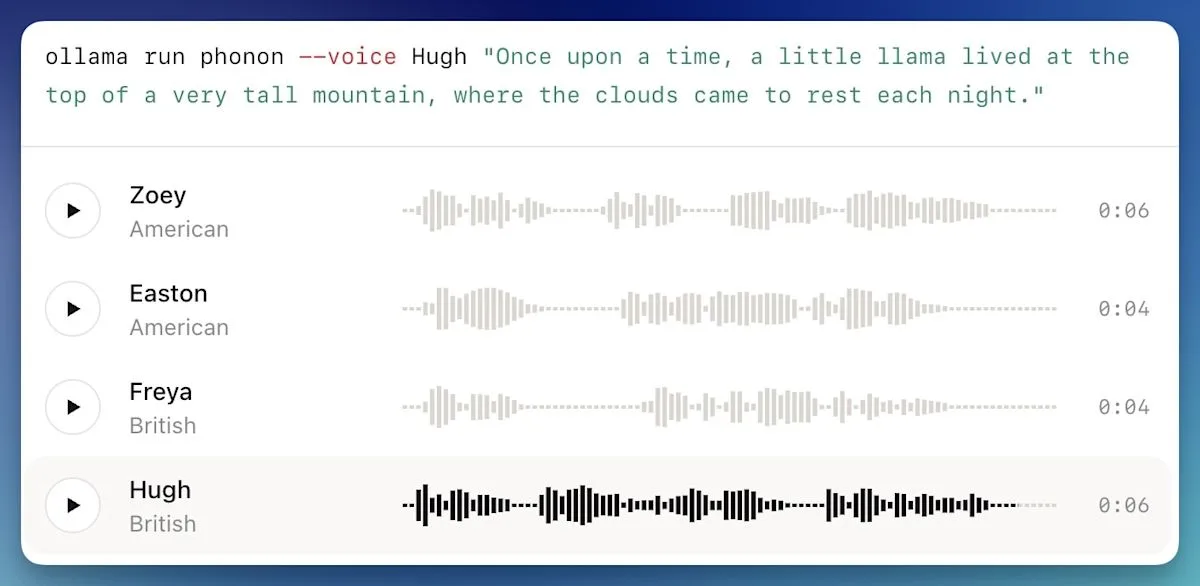
Ollama, an open-source application that lets users run AI models locally, has officially added text-to-speech (TTS) support for Mac devices. The move is meant to fill the gap in the availability of quality TTS models that have so far been locked behind subscription services. The first model introduced is Phonon, a collaboration with Gradium, which is claimed to turn any text into natural speech directly on the user's computer.
Phonon is available in several voice options, such as Zoey, Easton, Freya, and Hugh, with American and British accents. Besides English, the model also supports French, German, Spanish, and Portuguese. According to Ollama's claims, thanks to its use of Apple's MLX framework, Phonon runs 35% faster than Gradium's own runtime on a MacBook Pro with an M5 Max chip, without sacrificing accuracy.
The presence of Phonon in the Ollama ecosystem could reshape the competitive landscape of TTS services, which is currently dominated by commercial players. Users can pair it with a chat model to read replies aloud automatically, and playback begins after the first sentence so there is no need to wait for the full answer. To try it, a Mac with Apple Silicon and Ollama version 0.40.11 or newer is required. The English model is available for free under the Apache 2.0 license, while other language models are restricted to noncommercial use.
For Indonesia, this development opens opportunities for local developers to explore voice AI without relying on paid cloud services. With Portuguese support, for example, there is a possibility of adapting it for related languages, although Indonesian itself is not yet available. However, this local approach aligns with the trends of data sovereignty and cost efficiency that are increasingly relevant for domestic technology startups.
"We want to make powerful AI accessible to anyone, without the need for a subscription," an Ollama representative said in the official announcement.
Even so, Phonon adoption is still limited to the Mac platform, while Windows and Linux versions are promised to follow. The question is, will local TTS models like this drive more voice AI innovation at the network edge, or will they instead become a threat to conventional TTS service providers? What is clear is that Ollama's move marks a new chapter in the democratization of voice technology.