Amazon and Intel Stumble, Nasdaq-100 Futures Plunge 1.7% at October Close
Baca dalam 60 detik
- Kinerja kuartalan Amazon dan Intel di bawah ekspektasi memicu aksi jual di sesi after-hours, dengan kontrak berjangka Nasdaq-100 merosot 1,7%.
- Investor semakin kritis terhadap belanja modal raksasa teknologi untuk AI, sementara perusahaan neocloud seperti CoreWeave tertekan utang.
- Bursa Asia dibuka mixed, saham teknologi Jepang dan Korea Selatan menjadi korban sentimen negatif dari Wall Street.
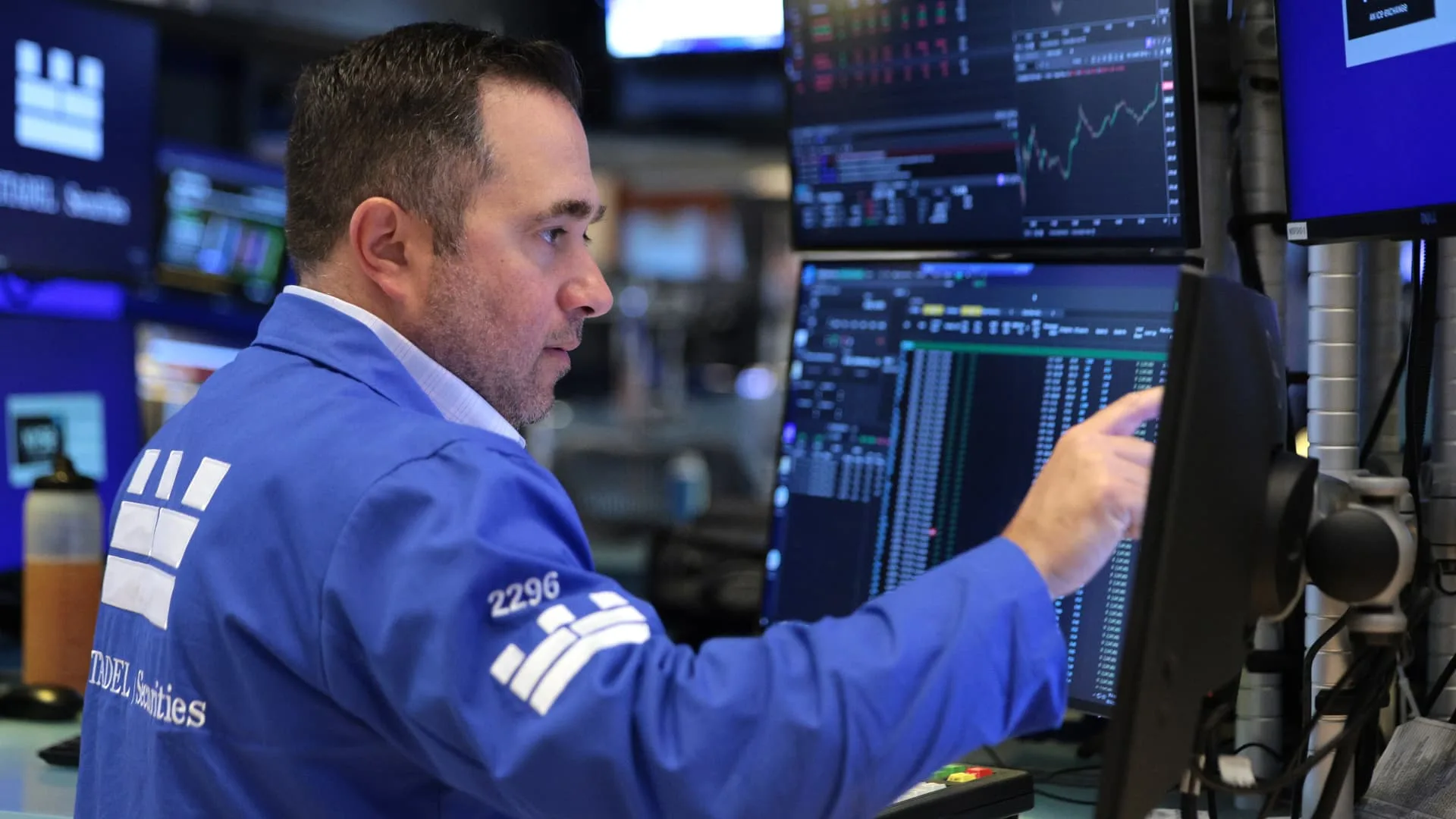
Nasdaq-100 futures sank 1.7% on Thursday night in New York, driven by the slump in Amazon and Intel shares after both companies' third-quarter earnings disappointed the market. S&P 500 futures fell 0.7%, while Dow futures were nearly flat with a slight gain of 13 points. The move marked a volatile October close for the technology sector, especially names tied closely to the artificial intelligence narrative.
Amazon was one of the main drags after posting earnings per share of $1.89 and revenue of $201.94 billion, below analyst estimates of $1.96 per share and $202.31 billion. Still, the e-commerce giant kept its annual capital expenditure projection at $220 billion—a signal that its cloud and AI infrastructure expansion will not slow. Intel, meanwhile, plunged 21% on guidance for the current quarter that came in far below consensus. The chipmaker expects earnings per share of just 25 cents on revenue of $15–16 billion, while analysts had forecast 43 cents and $17.1 billion. The decline was compounded by weaker revenue in its client computing and physical AI division, which fell 5% year-on-year to $8.1 billion.
The pressure did not stop with those two names. Alphabet, Google's parent, had already tumbled 12% in Thursday's regular session after its earnings and revenue missed. The selloff formed a death cross—when the 50-day moving average crosses below the 200-day moving average—which is technically viewed as a signal of medium-term weakness. The phenomenon last appeared in July 2025, and it is now once again weighing on investor sentiment toward AI mega-cap stocks.
More worrying, the market is starting to question the fiscal discipline of AI players. Hyperscalers such as Alphabet and Microsoft have not raised their capital expenditure projections, but market participants are instead scrutinizing neocloud companies—cloud infrastructure providers for AI data centers—whose debt levels are seen as concerning. CoreWeave, whose bond yields have surged, is the most striking example: its shares collapsed 30% over October. Nebius is expected to close the month down 27%, while another name fell 10%.
"We are investigating a potential security issue," a Binance spokesperson said, stressing that user funds remain safe. The incident triggered the freezing of more than $800 million in USD Coin by Circle, adding another layer of uncertainty to digital asset markets.
The negative sentiment from Wall Street spilled over into Asia. At Friday's open, Japanese and South Korean technology stocks came under pressure. SoftBank Group fell 4.66%, Tokyo Electron weakened 3.93%, and Advantest lost 5.43%. In Korea, SK Hynix plunged 6.36% and Samsung Electronics fell 3.45%. The Kospi opened down 3.11%, while the Kosdaq fell 2.35%. By contrast, Australia's S&P/ASX 200 rose 0.65%, showing differing responses across the region.
For Indonesian investors, this turmoil is not merely an event in a foreign country. Pressure on global technology stocks can affect foreign capital flows into emerging markets, including the IDX. When global investors shift to safe-haven assets, emerging-market currencies—including the rupiah—often face depreciation. In addition, the domestic technology sector, which relies on chip and computer component supply chains from the US and East Asia, could face higher costs if the weakness continues. The government and industry players need to watch the knock-on effects on IT equipment budgets and digital transformation projects.
With October nearly over, the Nasdaq Composite is heading for a monthly decline of 2.5%, the S&P 500 is still up 0.9%, and the Dow has gained 2.8%. But the big question remains: is this correction merely a technical pullback ahead of the next earnings season, or the start of a deeper correction to soaring AI sector valuations? The answer will depend heavily on how aggressively technology companies cut capital expenditure and how the bond market assesses the debt risk of cloud infrastructure providers. If the pressure continues, the risk-off wave could spread further into emerging markets, including Indonesia.