Fed Expected to Hold Rates, Warsh's Signal on Further Hikes in Focus
Baca dalam 60 detik
- Federal Open Market Committee (FOMC) diperkirakan mempertahankan suku bunga acuan pada Rabu, setelah kenaikan 25 basis poin pada September lalu.
- Ketua The Fed Kevin Warsh enggan memberi panduan forward guidance, sehingga pasar harus menafsirkan sendiri arah kebijakan dari data ekonomi yang masuk.
- Peluang kenaikan suku bunga pada Desember mencapai lebih dari 80%, sementara sejumlah ekonom memperingatkan risiko eksekusi kebijakan yang material.
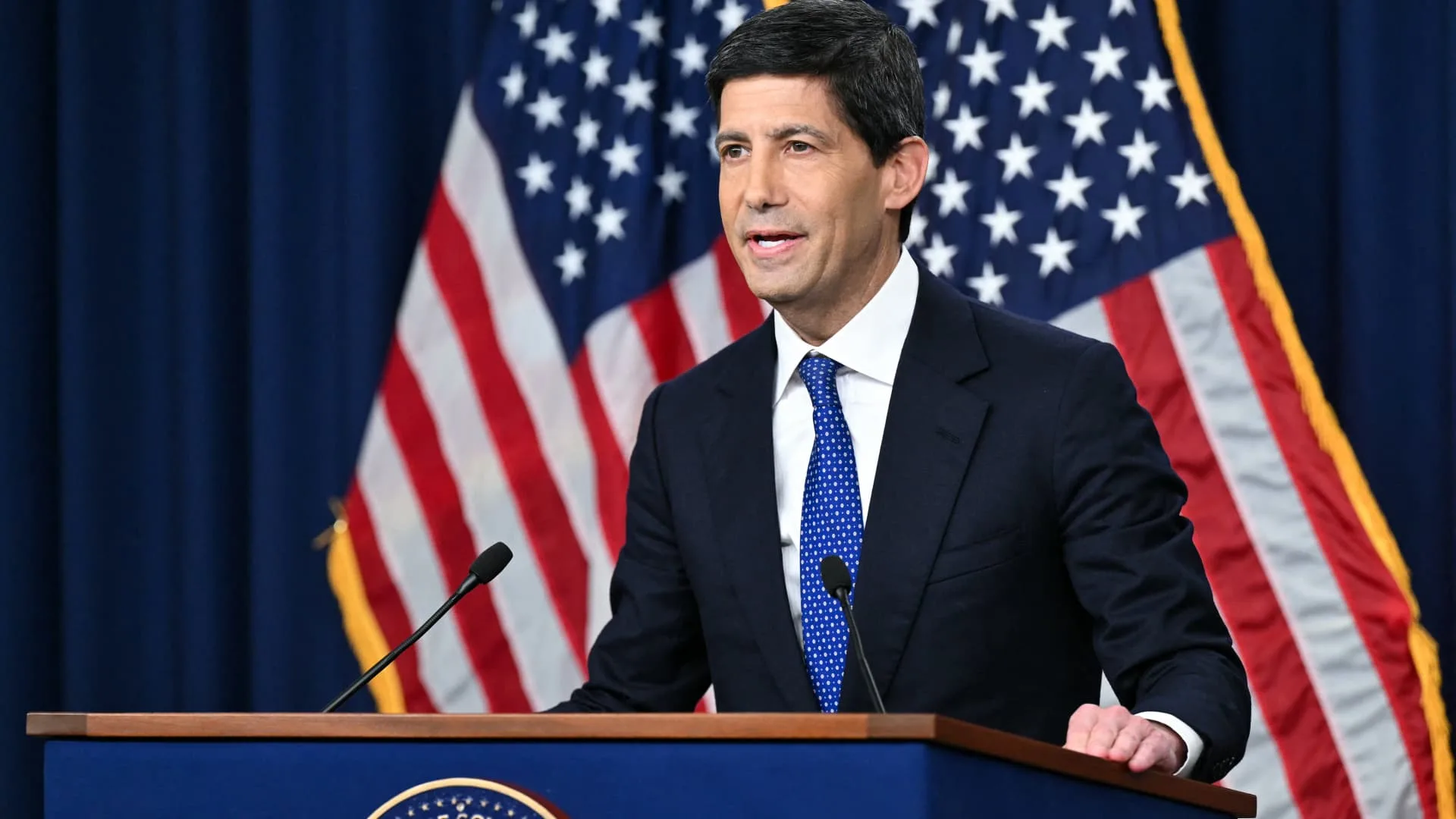
The United States Federal Reserve (The Fed) faces a credibility test at this week's policy meeting: holding the benchmark interest rate amid still-hot inflation while convincing markets it will not stand idle. The Federal Open Market Committee (FOMC) is scheduled to announce its decision on Wednesday local time, and most market participants expect no change after the 25 basis point hike in September.
But the main focus is not the rate figure itself, rather the signal to be delivered by Fed Chair Kevin Warsh. Since leading the central bank, Warsh has been known to be reluctant to provide forward guidance—a practice that dominated Fed communication throughout the 21st century. He prefers to let markets draw their own conclusions from incoming data, an approach some economists consider risky.
The latest inflation data offers no relief. The September Consumer Price Index (CPI) recorded an annual rate of 3.7%, driven mainly by a surge in energy prices. Even after stripping out volatile food and energy components, core inflation remained at 2.6%—still far above the Fed's 2% target and moving in the wrong direction after rising 0.3 percentage points from August. Meanwhile, the housing market is under pressure from mortgage rates exceeding 7%, and the labor market has entered a low-fire, low-hire pattern with layoffs at their lowest level since the late 1960s, even as those who lose their jobs find it increasingly hard to land new positions.
This is where the policy dilemma emerges. Holding rates this month could give the Fed time to assess the impact of previous hikes on the economy and financial conditions. However, a signal of further tightening could add to pressure on the housing and labor markets. Warsh and his colleagues are called upon to show readiness to control inflation without rushing to lock in commitments about how far or how fast rates will rise.
"It should be possible for Warsh—who is sensitive to market risks even as he professes not to like coddling investors—to show a steady and reassuring hand. But there is material execution risk," said Krishna Guha, head of central bank economics and strategy at Evercore ISI, in his note.
Guha interpreted Warsh's remarks in Bangkok some time ago as aligned with the FOMC's core view: the Fed is moving at a baseline pace of once per quarter, without prejudice to what is learned along the way, how far the final step goes, and whether at some point it needs to accelerate. "If inflation continues to disappoint and/or growth momentum fails to slow, the Fed will add hikes," he added.
The fed funds futures market currently prices about a 10% chance of a hike this week, but more than 80% for December, according to CME FedWatch. The market also sees a possible hike in March 2027, then a 50-50 chance of a final step before the end of next year. This view is not entirely unanimous: Citigroup, for instance, expects easing inflation data to give the Fed reason to hold off and possibly begin cutting next year, though it still projects a December hike.
Allianz senior economist Mohamed El-Erian believes the market is right that the Fed will do nothing this week, but Warsh must frame it in sufficiently hawkish language because inflation data is hotter than expected. "My problem is this is the wrong policy move right now," he told CNBC. According to him, the solution to inflation concerns and higher Treasury yields should be "fiscal restraint, not monetary tightening." He warned that tightening would hit sectors outside technology—especially housing, auto credit, and consumer loans.
For Indonesia, the direction of Fed policy remains a significant external factor. Further rate hikes could strengthen the US dollar and pressure the rupiah exchange rate, which in turn would narrow Bank Indonesia's room to cut its benchmark rate. On the other hand, higher global bond yields could trigger capital outflows from emerging markets, including Indonesia. The government and businesses need to anticipate this scenario, especially in managing foreign debt and the energy subsidy budget, which is sensitive to world oil price movements.
Looking ahead, the question is not merely whether the Fed will raise rates again, but whether Warsh's communication strategy with minimal guidance will be able to calm market turbulence without causing misunderstanding. If inflation remains stubborn and growth fails to slow as hoped, the Fed is on a difficult path: tightening too quickly risks triggering a recession, but acting too late will sacrifice credibility. Bond markets and global exchange rates will be the first barometer for judging whether this new approach succeeds.