Polanski Refuses to Cancel Green Party's 'Racist Zionism' Motion, Faces Leadership Pressure
Baca dalam 60 detik
- Zack Polanski menegaskan tidak akan menganulir mosi kontroversial yang menyebut Zionisme sebagai bentuk rasisme, meski menuai kritik dari berbagai pihak.
- Mosi yang lolos dengan suara tipis itu hanya didukung sebagian kecil anggota partai, memicu perpecahan internal dan sorotan dari badan pengawas kesetaraan Inggris.
- Polanski berjanji mengamendemen mosi pada 2028, namun sikapnya berpotensi memperuncing hubungan Partai Hijau dengan Partai Buruh dan komunitas Yahudi.
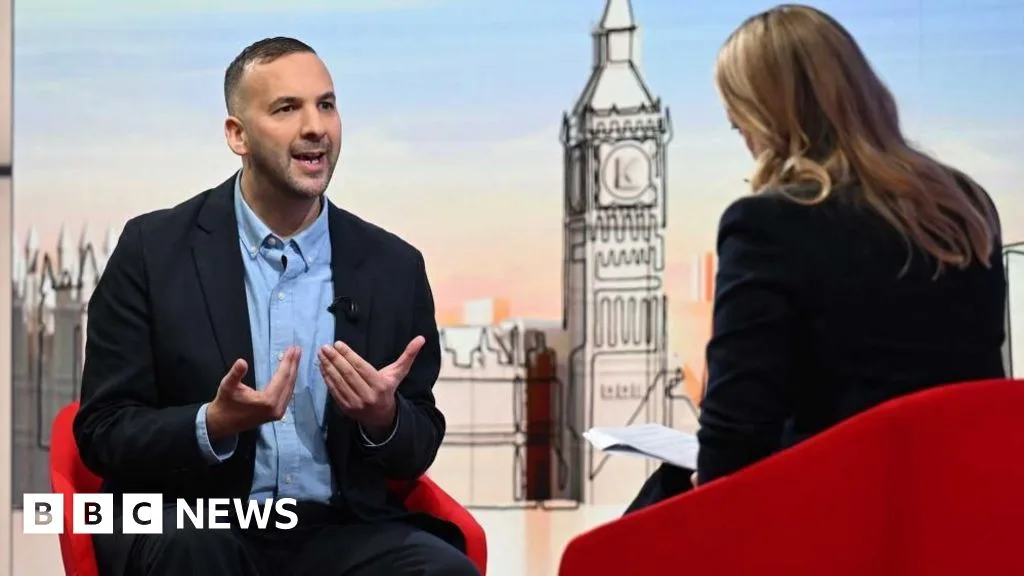
The leader of the UK Green Party, Zack Polanski, has confirmed he will not withdraw a motion declaring Zionism a form of racism. The decision comes even though the motion has triggered a wave of criticism from inside and outside the party and has affected his position as leader.
The motion, passed at the party conference in Brighton earlier this month, defines Zionism as an ideology supporting "an ethnonationalist Jewish state in historic Palestine that excludes and/or dominates the non-Jewish population". Support for the motion was narrow, at 1,022 votes to 813, out of roughly 230,000 party members. The low turnout has also become a target of internal criticism.
In an interview with the BBC's Sunday with Laura Kuenssberg programme, Polanski said he would not seek to cancel the motion. "I'm not going to try and cancel it," he said. However, he plans to propose an amendment at the first opportunity, which under party rules can only happen in 2028 because conference policies remain in force for two years. "I want to change it so that it no longer designates one democratic state, but instead leaves that future to the Israeli and Palestinian people themselves," he added.
Polanski's stance extends a controversy that has shadowed his political career. He previously abstained in the vote on the motion and had said he would not vote for it without two amendments that members ultimately rejected. The first amendment sought to prevent the endorsement of a one-state solution, while the second aimed to ensure the motion could not be used to discipline Jewish members who attend synagogues that consider themselves Zionist.
The controversy affects more than the Green Party's internal affairs. Several of its MPs, including Ellie Chowns, have called for a review of the member-driven decision-making mechanism given the low turnout in the vote. On the other side, the Board of Deputies of British Jews condemned the motion as "an attack on the Jewish community" and asserted that Zionism is anti-racism that created a refuge for Jews in their ancestral homeland.
Pressure has also come from the regulator. The EHRC wrote to the Green Party last week requesting further information about the motion and its practical effects. The body said many Jews feel vulnerable but needs details to assess whether any part of the motion could be considered discriminatory under the Equality Act 2010. The request followed a letter to the regulator from dozens of Labour and Liberal Democrat MPs.
Polanski, who is also Jewish, stressed that no Green Party member would be ostracised on the basis of belief or background. He separated Jewish identity from support for Israel. Asked whether Zionism is racist, he replied that it was not controversial, and instead highlighted the high death toll in Palestine. "What's controversial is 75,000 Palestinians have been killed in recent years," he said, accusing the actions of being driven by a racist ideology. The statement refers to the Gaza conflict that remains in the global spotlight, although the casualty figure he cited could not be independently verified in the interview.
"I want equal rights for Israeli and Palestinian people. The practical application of Zionism has not delivered that." — Zack Polanski
For the Labour Party, the motion is grounds to halt power-sharing agreements on local councils unless Green Party members withdraw support for it. Polanski left that decision to his party's councillors. Meanwhile, the motion's author, Lubna Speitan, accused the Labour government of being "participants in genocide" and said it had no right to speak on antisemitism.
The case has also drawn attention in Indonesia, albeit indirectly. As the country with the largest Muslim population and a consistent supporter of Palestinian rights, Indonesia often serves as a moral voice on the issue. The debate within the UK Green Party reflects how the Palestinian issue and Zionism remain political dividing lines in Western countries, which can affect the dynamics of diplomacy and international alliances. For Indonesia, the development is a mirror showing that solidarity with Palestine remains a sensitive theme capable of shaking the domestic political stage of other countries.
Going forward, Polanski's position will be tested by internal and external pressure. Can he hold on to the leadership amid the split, or will the motion become a turning point that forces the Green Party to evaluate the direction of its foreign policy? What is clear is that the debate over Zionism and racism will not subside any time soon, especially ahead of the next election.