Bitcoin Rebounds From Below US$80,000, Risk-On Signal Returns to Asian Markets
Baca dalam 60 detik
- Harga Bitcoin sempat menyentuh US$79.800 sebelum pembeli agresif mendorongnya kembali ke atas US$81.000 dalam dua jam.
- Saham chip Asia seperti Samsung dan SK Hynix melonjak lebih dari 2%, mengangkat indeks MSCI Asia Pasifik 1,3%.
- Pasar menanti pidato Ketua The Fed Kevin Warsh di Bangkok setelah data inflasi AS yang lebih panas dari perkiraan.
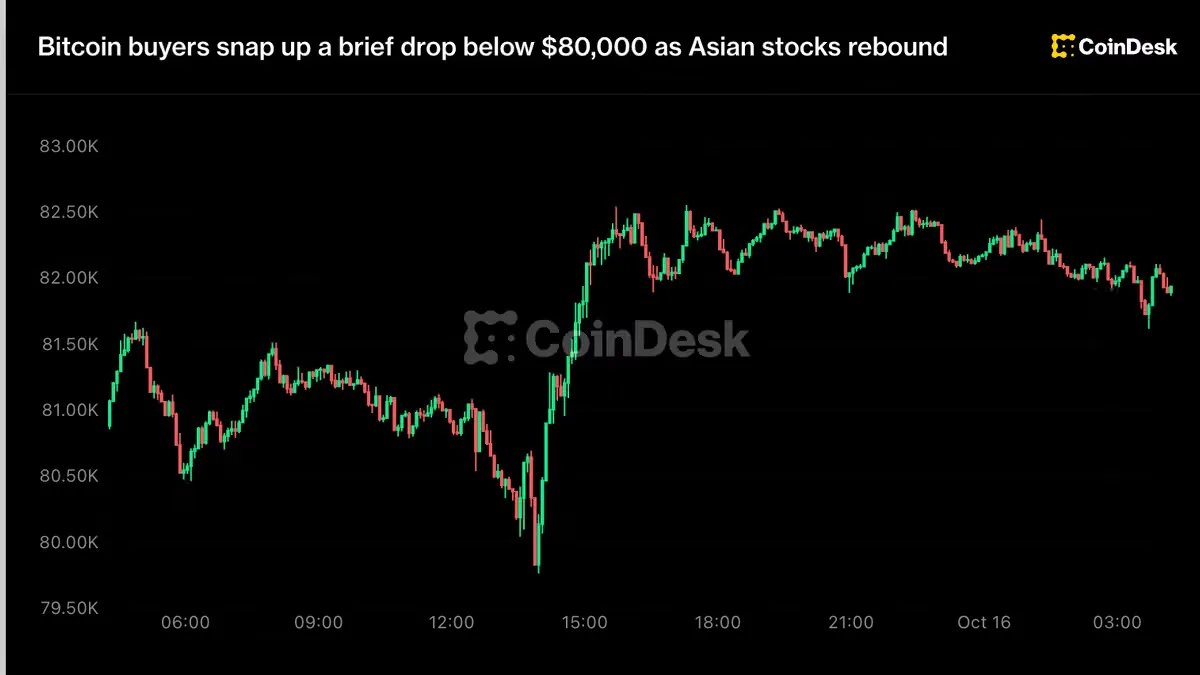
Asian crypto and equity markets rose in tandem on Friday morning after aggressive buying rescued Bitcoin from a brief slump below the psychological US$80,000 level. The largest digital currency jumped 1.3% to around US$82,000, paring losses that had briefly sparked concern among global investors.
Thursday's sharp decline had dragged Bitcoin to a low of US$79,800, breaking below the US$80,400 floor that buyers had defended twice in the past week. But the selling pressure was short-lived—only two hours—before demand strengthened again and pushed the price to US$82,500. Throughout the Asian session, Bitcoin held steady above US$81,000, indicating that the level has turned into new support.
The recovery was not isolated. The MSCI Asia Pacific equity index rose 1.3%, with advancers outnumbering decliners by three to one. South Korean technology giants Samsung Electronics and SK Hynix each gained more than 2%, while the Kospi index surged nearly 3% after closing the previous day at its lowest level since April. The phenomenon shows that global investors' risk appetite is strengthening again, at least for now.
Interestingly, not all risk assets joined the rebound celebration. Taiwan Semiconductor Manufacturing (TSMC) slipped despite releasing a positive outlook, weighed down by persistent concerns over spending by artificial intelligence (AI) companies. The anomaly underscores that the market recovery remains fragile and heavily dependent on the technology sector narrative.
In the bond market, profit-taking followed Thursday's safe-haven buying. US Treasury yields rose across maturities, with the 10-year yield adding 1 basis point to 5.07%. Market participants are now turning their attention to Federal Reserve Chair Kevin Warsh's speech at the IMF and World Bank meetings in Bangkok on Friday local time. The speech is in focus after US September inflation data released two days earlier came in higher than expected.
"A climb back above US$84,000—the level where Wednesday's post-inflation rally ran out of steam—would confirm that this rebound is backed by real buyers," a crypto market analyst noted.
Among major crypto assets, ZEC was the star with an 8% gain to around US$1,190. Solana (SOL), ether, XRP, and TRX each added about 1%, while BNB traded flat. CoinDesk data shows that the biggest gains remain concentrated in mid-cap assets, signaling that investors are looking for opportunities beyond Bitcoin and Ethereum.
On the fundamentals side, the narrative around real-world asset (RWA) stablecoins continues to draw attention. Diversified RWA stablecoins offer yields of 5-7% from real credit, far above crypto funding yields compressed to around 4%. The GENIUS initiative pushes yields off-chain, with the total addressable market (TAM) potentially growing to US$4 billion within three years. The trend could be a long-term catalyst for institutional adoption.
For Indonesian investors, these dynamics are worth watching. Although the domestic crypto market is not fully integrated with global moves, risk-on sentiment in Asia usually spills over into the local stock exchange, especially the technology and banking sectors. Moreover, the rupiah exchange rate is often affected by foreign capital flows that are sensitive to US bond yields. If Treasury yields keep rising, pressure on the rupiah could continue, which in turn affects the appeal of crypto assets as a hedge.
Looking ahead, the crucial question is: is this rebound sustainable or just a pause before the next test? The US$84,000 level will be an important demarcation line. If breached, the market could strengthen further; if it fails, selling pressure may again test buyers' resilience around US$80,000. All eyes are now on monetary policy signals from Bangkok and the next inflation data releases.