Poly Fighter: A Promising Roguelike Fighting Game That Still Feels Stiff
Baca dalam 60 detik
- Poly Fighter menggabungkan elemen fighting game dan roguelike dalam satu paket Early Access yang unik namun belum matang.
- Sistem kontrol sederhana dan minimnya kustomisasi statistik membatasi kedalaman mekanik yang sebenarnya berpotensi besar.
- Gaya visual low-poly era PSX dan atmosfer 90-an menjadi daya tarik utama yang membedakannya dari kompetitor.
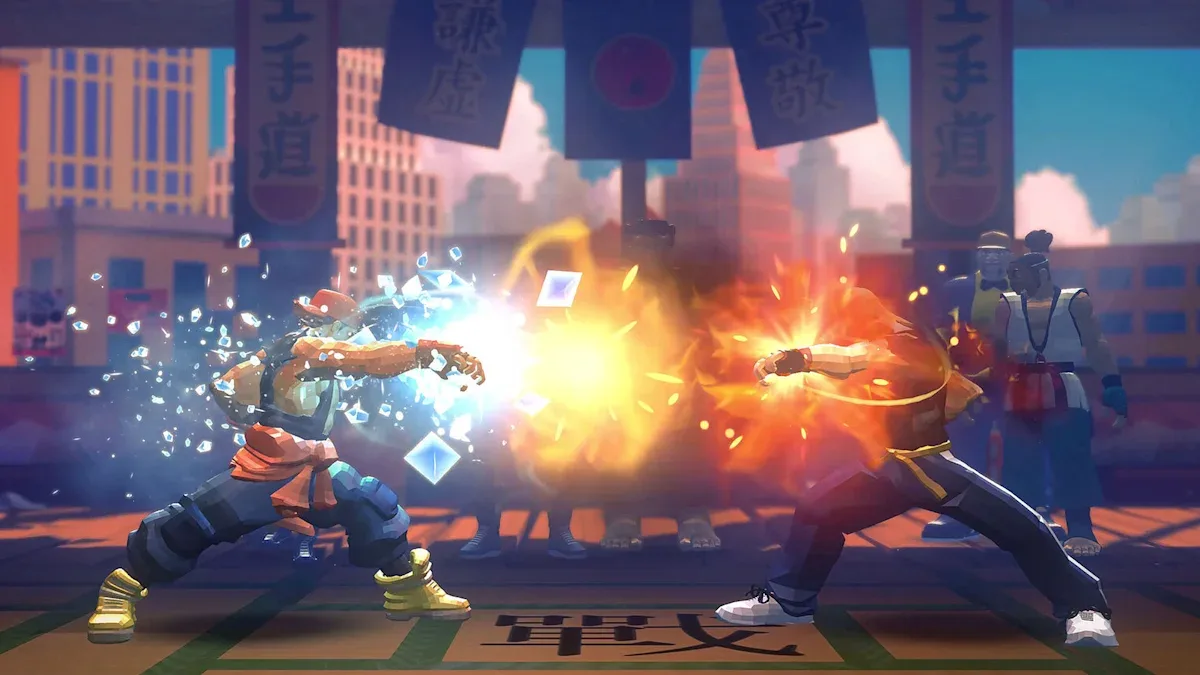
Heartloop Games released Poly Fighter through the Early Access program, offering a formula rarely seen: one-on-one combat with a roguelike structure. Players choose a fighting path, steal moves from defeated opponents, and build a character over the course of a single run. The concept immediately drew the attention of a fighting game community looking for alternatives outside the big franchises.
Unlike most fighting games that rely on combo practice and mastery of frame data, Poly Fighter puts strategic decision-making at the core of the experience. Every win opens the option to steal an opponent's move—a simple backstep can turn into an instant teleport, or a standard Shoryuken can evolve into a two-hit Flash Kick. This system forces players to think tactically about the next fight, rather than just sharpening reflexes.
However, the simplicity that is its selling point actually creates problems. Poly Fighter does not offer a stat progression system such as strength, speed, or HP. Yet in conventional fighting games, stat differences between characters—for example Zangief, who is far stronger but limited to grappling, compared with Chun-Li, who is agile with a broad moveset—are an important strategic element. The absence of this layer makes character builds feel shallow and lacking in variety.
Similar criticism arises over the control scheme. Only three basic attack buttons plus one special button are available, with no separation between punches and kicks as in the standard six-button scheme. For new players, this makes adaptation easy. But for fighting game veterans, this limitation makes movement feel stiff and greatly reduces combo potential. Some players even report inputs that are not detected properly.
Poly Fighter does not overwhelm players with choices—a double-edged sword that eases onboarding but hinders deeper exploration of the mechanics.
On the other hand, Poly Fighter excels in visual presentation. The combination of high-definition models with low-poly effects and detailed lighting produces a look resembling living action figures. Bright colors, striking effect particles, upbeat music, and cheesy voice lines build a 90s atmosphere that is hard to resist. This aesthetic is the main differentiator in an increasingly crowded indie market.
For the Indonesian game industry, Poly Fighter offers a valuable lesson. Local studios starting to work on the fighting genre—such as several indie projects that have appeared in the past two years—can see how Heartloop Games blends two genres that in theory do not fit. This approach opens opportunities for similar experiments in the domestic market, especially with relatively low production costs because it relies on a procedural roguelike system.
As an Early Access product, Poly Fighter still has room for improvement. Adding a stat system, a deeper control scheme, and fixing input detection could significantly raise its potential. The question is whether Heartloop Games will listen to community feedback and build on the existing foundation, or instead get stuck in a safe formula that limits creativity?