Constitutional Court Ruling on Gibran's Diploma: A Legal Finding That Could Become a New Political Weapon
Baca dalam 60 detik
- MK menolak gugatan Denny Indrayana Cs karena pemohon dinilai tak punya legal standing, tetapi dalam pertimbangannya mengakui tidak menemukan bukti ijazah Gibran yang setara SMA.
- Pakar hukum tata negara menilai MK masuk terlalu dalam ke substansi sebelum memutus kedudukan hukum, menciptakan preseden yang bisa dimanfaatkan aktor politik di luar ruang sidang.
- Kasus ini membuka diskusi lebih luas tentang judicialization of politics, di mana pengadilan berisiko menjadi alat legitimasi pertarungan politik elektoral.
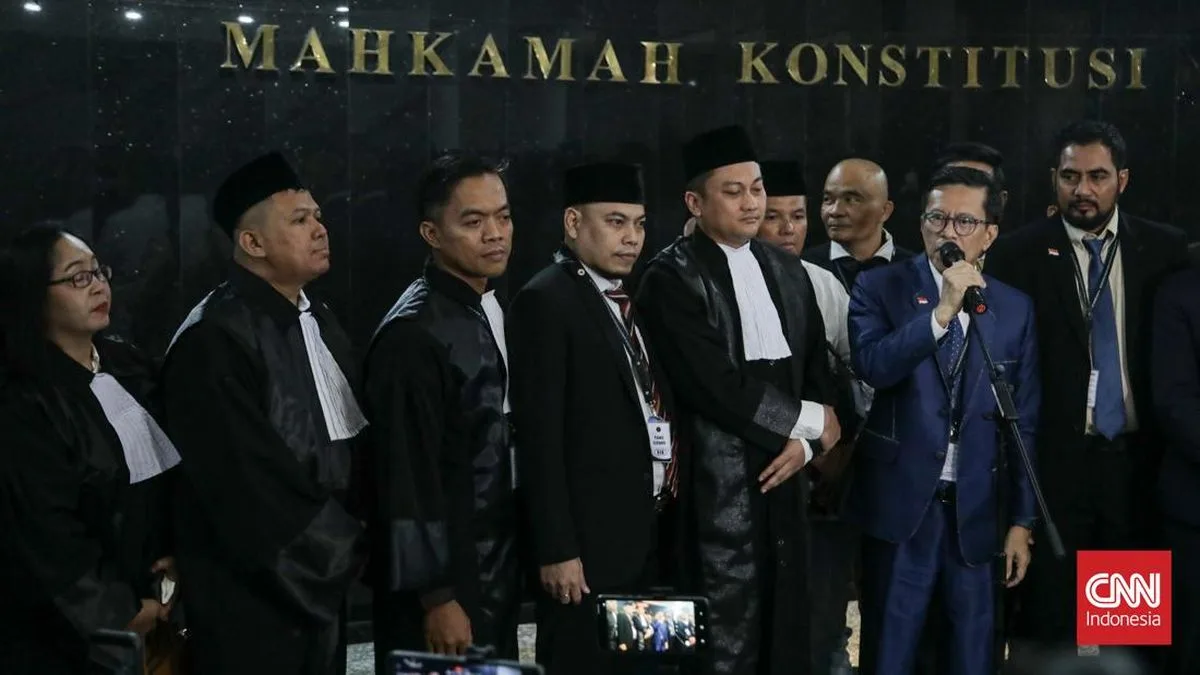
The Constitutional Court ruled that it could not accept the lawsuit challenging the validity of the candidacy requirements for Gibran Rakabuming Raka as vice-presidential candidate in the 2024 Presidential Election. The reason given: the petitioners, including Denny Indrayana, were deemed to lack legal standing to file the case. Yet behind that ruling, the Court inserted an unusual finding — that there was no convincing document showing Gibran completed a senior high school-level education abroad.
The finding drew attention because it ran counter to the case's procedural posture. In judicial practice, the issue of legal standing is usually examined first before the panel touches the merits. If petitioners are deemed to lack standing, courts generally need not delve into the substance. Observers consider the pattern the Court took in this case to be different.
Researcher at the Center for State Policy Studies (PSKN) and lecturer in Constitutional Law at the Faculty of Law, Universitas Padjadjaran, Yoppy Adhi Hernawan, highlighted the Court's method of examination. According to him, the Court first went quite far into the substance of the case before ultimately returning to assess the petitioners' legal standing. "My note lies precisely in how the Court arrived at that ruling," he said via text message, Wednesday (7/10).
Yoppy assessed that the political consequences of the construction of this ruling remain significant even though the petition was not accepted. The Court did not halt Gibran's path, but the considerations regarding proof of educational requirements can become material that lives on in the public sphere. "Such considerations can certainly be reused by political actors outside the courtroom," he said.
In constitutional law theory, this phenomenon is often called the judicialization of politics — a situation in which highly political issues, which should be resolved through political institutions, are increasingly brought to court to obtain resolution or legal legitimacy. The concept itself is not entirely bad. In a democracy, courts are indeed required to be able to control the political process based on the constitution. The problem arises when judicial mechanisms begin to be used to seek advantage in political competition.
"The problem I see is not merely about Gibran. The bigger precedent is whether in the future the process at the Constitutional Court can be used by political actors to produce legal considerations regarding their political opponents, even if the party filing the case actually lacks legal standing." — Yoppy Adhi Hernawan, constitutional law expert
For the public, this ruling leaves questions about the boundary between legal authority and political maneuvering. On one hand, the Constitutional Court functions as the guardian of the constitution, which must ensure every candidacy requirement is met lawfully. On the other hand, the way the Court builds its considerations can create long-term effects that are not entirely within the control of the judicial institution.
The Indonesian context shows that electoral disputes often continue into a battle of narratives after the ruling is read out. Legal findings that do not lead to sanctions can turn into instruments of delegitimization in the public sphere, especially ahead of the next contestation. Within that framework, the Court's considerations speak not only about Gibran, but about how the judicial institution is treated in the dynamics of power.
Going forward, what bears watching is whether this precedent will encourage more political cases to be brought to the Constitutional Court in the hope of obtaining strategic considerations, even if the chances of acceptance are slim. If that trend strengthens, the Court's burden is no longer merely deciding cases, but also managing the risk of institutional politicization. The question is, how far can the Court keep its distance from the vortex of electoral interests that continues to press upon the courtroom?