2027 Budget Agreed: Rp4,106 Trillion in Spending, Said Abdullah Warns of Debt Risk Behind the Deficit
Baca dalam 60 detik
- Banggar DPR dan pemerintah menyepakati postur APBN 2027 dengan belanja Rp4.106,3 triliun dan target pendapatan Rp3.435,1 triliun, menyisakan defisit Rp671,2 triliun atau 2,4 persen PDB.
- Ketua Banggar Said Abdullah memperingatkan bahwa kegagalan mencapai target penerimaan akan memaksa pemerintah memilih antara membengkakkan utang baru atau memangkas program pembangunan dan bansos.
- Beban bunga utang yang melonjak dari 10 persen pendapatan negara pada 2015 menjadi 19 persen pada 2026 menjadi alarm bahwa ruang fiskal semakin sempit menjelang pelaksanaan anggaran.
The Budget Committee (Banggar) of the Indonesian House of Representatives and the government have officially closed deliberations on the general outlook and policy direction of the 2027 Draft State Budget, setting the state spending ceiling at Rp4,106.3 trillion. That figure forms the foundation for all development programs, social safety nets, and economic equity throughout the coming fiscal year.
Yet behind the size of that allocation lies an unresolved structural problem: how the state will finance it. The government is targeting state revenue of only Rp3,435.1 trillion, sourced from tax receipts, customs and excise, and Non-Tax State Revenue (PNBP). The gap between the two produces a deficit of Rp671.2 trillion, equivalent to 2.4 percent of Gross Domestic Product (GDP).
By regulation, that deficit figure remains below the 3 percent threshold set by the state finance law. But for Banggar Chair Said Abdullah, compliance with the formal limit is not enough. He argues that every rupiah allocated carries direct consequences for the lives of more than 280 million people, from the affordability of staple food prices and certainty over farmers' harvest sale prices to access to capital for MSMEs.
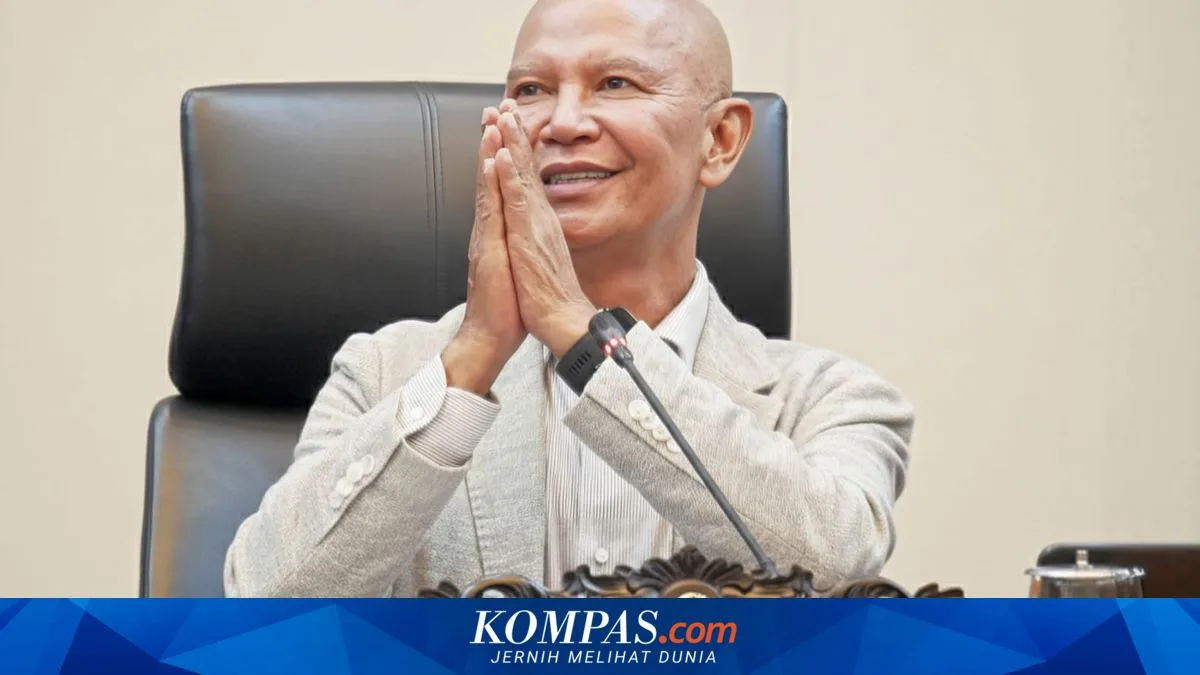
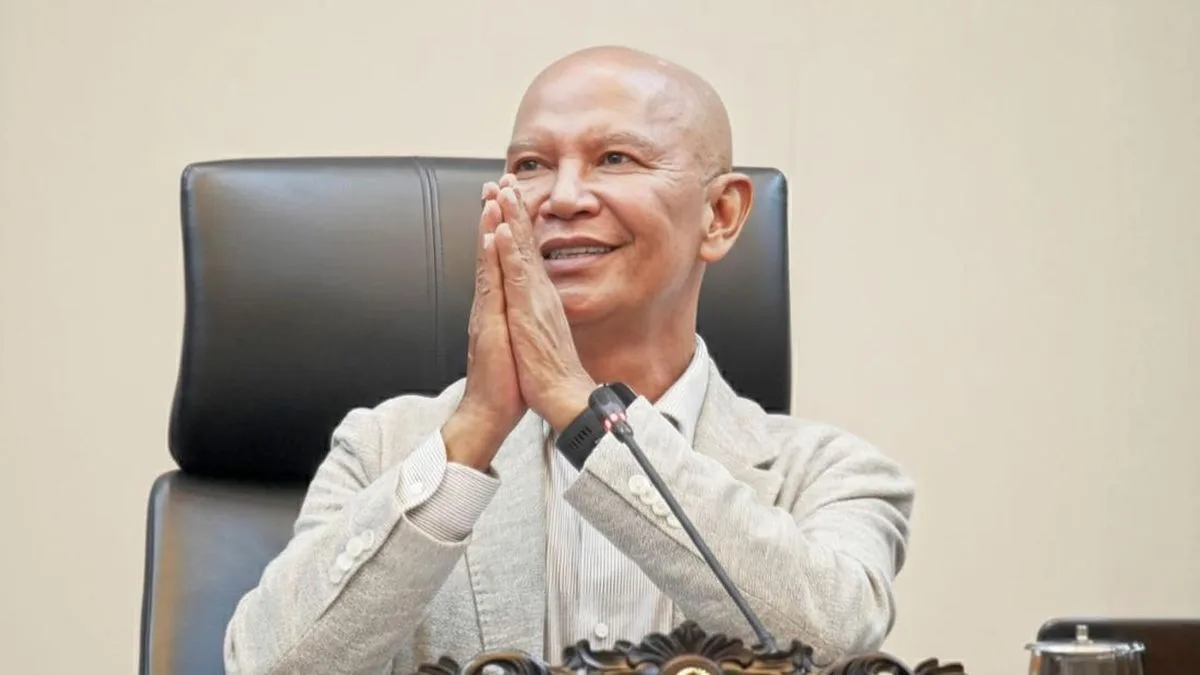
"The state budget is not merely a collection of numbers. Behind Rp4,106.3 trillion in state spending lie the lives of more than 280 million people with diverse needs and hopes," Said said in an official statement.
The government has set a number of fairly ambitious welfare targets. Economic growth is pegged at 6 percent, supported by household consumption, investment, and improved exports. The poverty rate is projected to fall to around 6–6.5 percent, while the Open Unemployment Rate is targeted to shrink to 4.30–4.87 percent. The Gini ratio is directed to improve to 0.360–0.365, with new job creation expected to absorb 2.57 million to 3.49 million workers.
Said underlined that high growth without equity will only produce illusory progress. "Growth cannot stand alone. Growth must be accompanied by equity, job creation, and improved welfare so that national economic progress is truly meaningful for people's lives," he said.
The problem arises when revenue targets are not met. According to Said, the government will face two equally difficult scenarios. First, the deficit widens and the government is forced to draw new debt to cover the financing shortfall. Consequently, the interest and principal burden the state budget must bear in subsequent periods will swell.
Historical data reinforces that concern. In 2015, debt interest payments absorbed about 10 percent of total state revenue. That proportion surged to 19 percent in 2026, and could keep rising if the deficit is not tightly controlled.
The second scenario is efficiency measures or cuts to state spending. Such a step is certain to disrupt the schedule for infrastructure development, the disbursement of social assistance, and the achievement of already-planned economic targets. "If the option is to cut state spending, then some of the hopes placed on the state budget must be recalculated. Therefore, the effort to meet state revenue targets is tantamount to an economic jihad for the country," Said stressed.
He added that the impact of drawing new debt will weigh on long-term fiscal space. "If the state budget deficit rises, the obligation to draw new debt will grow larger. In the next episode, the burden of interest and principal payments will be even greater down the road," he added.
Therefore, the success of the 2027 budget's implementation depends heavily on the government's ability to realize state revenue targets optimally. Tax intensification and extension as well as unlocking PNBP potential are the main focus, with the caveat that they must not suppress people's purchasing power or the investment climate.
For markets and businesses, this posture sends mixed signals. On one hand, the government remains committed to maintaining fiscal discipline and macroeconomic stability. On the other, fiscal space narrowed by the debt interest burden limits countercyclical maneuvers against global shocks.
The remaining question: is the Rp3,435.1 trillion revenue target realistic amid a global economic slowdown and commodity price volatility? If not, the government must choose between adding to the debt burden or cutting the welfare promises already written into the budget document.