DIY Solar Tracker: Innovation or Waste? Lessons from the 'Functional Yard Art' Project
Baca dalam 60 detik
- Seorang penggemar DIY berhasil menginstal dua pelacak surya sumbu ganda setelah dua tahun terbengkalai, meski harus merombak sistem kontrol dan rangka.
- Biaya panel surya yang kian murah membuat pelacak surya sering kali tidak ekonomis dibanding menambah panel statis, terutama jika lahan masih luas.
- Proyek ini menegaskan bahwa inovasi energi rumah tangga perlu mempertimbangkan trade-off antara keindahan, fungsi, dan pengembalian investasi.
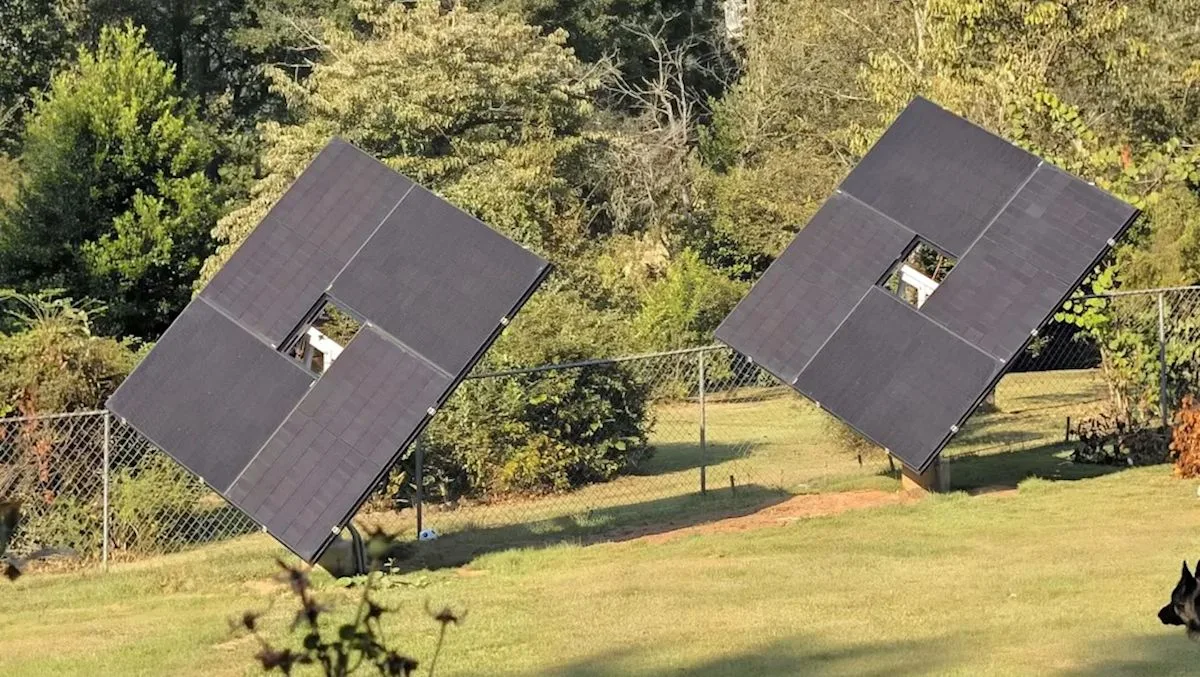
After two years stored in a box, a DIY enthusiast finally completed the installation of two dual-axis solar trackers in his yard. The project, shared on the r/diySolar forum, is not just an ordinary panel installation but a technical experiment that required extensive modifications.
To synchronize the movement of the two units, he connected both to a single controller via an external H-bridge relay. A custom tubular steel frame was built to support the panels, and a 660-pound actuator was installed to bear the additional load. The final result resembles a modern garden art installation rather than a row of conventional solar panels.
Although technically impressive, the builder admits that the economics are the weak point. With solar panel prices continuing to fall, adding panels to a fixed mount is often more sensible than spending on tracker hardware. "It's more about functional yard art that can educate the neighbors about solar power," he said, as quoted from the thread.
The forum discussion also highlights a trade-off that is often overlooked. Solar trackers are indeed designed to follow the sun's movement to maximize output from limited land. However, this system introduces installation complexity, the need for routine maintenance, and the risk of mechanical failure. If a homeowner has enough roof or yard space, adding fixed panels is usually simpler and cheaper than investing in motors and specialized hardware.
"It's a shame this isn't financially optimal, even though it's incredibly cool," wrote one commenter, describing the dilemma between aesthetics and cost efficiency.
For consumers in Indonesia, this phenomenon is relevant given the tropical climate that supports year-round solar production. However, the decision to adopt tracker technology must take into account PLN electricity prices that are still subsidized, as well as land availability. In dense cities like Jakarta, static rooftop panels with larger capacity are often the rational choice. Meanwhile, in remote areas with limited electricity access, solar trackers can be a solution to maximize energy from narrow land, provided maintenance costs are affordable.
The lesson from this project is not to reject innovation, but to encourage careful calculation. Before deciding, homeowners are advised to estimate energy consumption, evaluate the installation site, and compare fixed-system options. Tools such as solar maps and cost estimation calculators can help understand the return on investment. In many cases, simple rooftop or ground-mount solar systems still deliver the best financial results.
Going forward, the question is no longer whether solar tracker technology is technically viable, but how quickly its production costs can fall to compete with increasingly cheap static panels. As long as the price gap remains wide, "functional yard art" may remain a hobby project rather than a mainstream energy solution.