Constitutional Court Justice Arsul Sani Recounts Course Experience at UTS Insearch, Touches on Gibran's Diploma Equivalency
Baca dalam 60 detik
- Hakim Konstitusi Arsul Sani mengakui pernah mengikuti kursus bahasa Inggris tiga minggu di UTS Insearch, institusi yang juga dikaitkan dengan pendidikan Gibran Rakabuming Raka.
- Arsul mempertanyakan kejelasan program penyetaraan jenjang SMA bagi Gibran, baik di UTS Insearch Sydney maupun Orchid Park Secondary School Singapura, dalam sidang sengketa Pilpres 2024.
- Permohonan yang diajukan Denny Indrayana dan 11 pemohon lain menuntut MK mendiskualifikasi Gibran serta membatalkan keputusan KPU terkait pencalonannya.
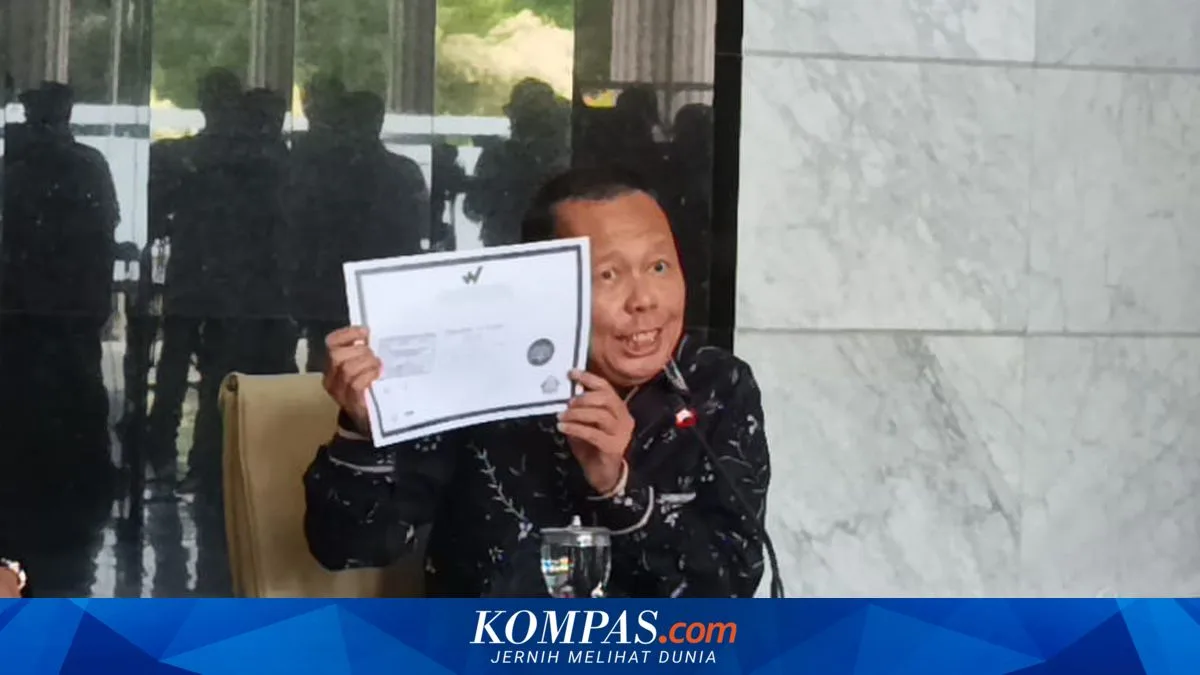
Constitutional Court Justice Arsul Sani revealed his experience of taking a three-week English course at University of Technology Sydney (UTS) Insearch, an educational institution that is also part of the educational background of Vice President Gibran Rakabuming Raka. Arsul made the admission during a hearing on the dispute over the vice-presidential candidacy requirements in the 2024 Election, case number 01/PHPU.PRES-XXIV/2026, on Wednesday (23/9/2026).
Arsul said he understood the ins and outs of UTS Insearch because he had taken a course program there. However, he stressed a significant difference: if Gibran is said to have undergone high-school-equivalent education at the institution, his own experience was limited to a short English course. "I happened to take a three-week English course there, and I also understand what Insearch UTS is because I am also a UTS alumnus," Arsul said during the hearing.
The statement came as Arsul questioned the clarity of the high-school-equivalency program Gibran is claimed to have undertaken. According to him, clarification on this matter is important not merely because it concerns the vice president, but as a valuable lesson for Indonesia's democratic and education systems going forward. He also highlighted Gibran's diploma equivalency, which is said to be equivalent to high school from Orchid Park Secondary School Singapore in the 2002-2004 period.
During the hearing, Arsul quoted the Quran, Surah Ali Imran verse 13, to emphasize the importance of learning lessons from past events. "Indeed, in that there is a great lesson for those who have eyes to see or sight," he said. The quote underscored that the diploma equivalency issue is not merely an administrative polemic, but touches on the integrity of the process of nominating public officials.
The petition heard in the hearing contains eight main demands. The petitioners ask the Constitutional Court to disqualify Gibran as vice president, annul the General Elections Commission (KPU) decision regarding the 2024 Presidential Election, particularly as it relates to Gibran, and order the People's Consultative Assembly (MPR) to hold a vice-presidential election from two names proposed by President Prabowo Subianto.
"So that it is clear, that is what I hope can be clarified, can be examined more deeply. Apart from the matter concerning our Mr. Vice President. But for me, things like this must be a lesson going forward." — Arsul Sani, Constitutional Court Justice
For readers in Indonesia, especially professionals, investors, and market players, this hearing is not merely political spectacle. The issue of diploma equivalency and the educational qualifications of public officials concerns legal certainty and governance. Unclear standards can create uncertainty that affects the investment climate and public trust in state institutions. The business world often demands transparency and accountability in every process of recruiting national leadership, including verification of educational backgrounds.
Furthermore, this case highlights the importance of standardizing the recognition of foreign educational qualifications. If diploma equivalency can be debated in the legal realm, then a firmer and more measurable mechanism is needed. This is also relevant to the education and labor sectors, where the credibility of foreign diplomas is often a consideration in recruitment and professional recognition.
Going forward, the Constitutional Court's ruling on this case will become a precedent for handling similar disputes. The public awaits whether the Court will strengthen verification standards or instead allow looser room for interpretation. What is clear is that demands for transparency in the qualifications of public officials are growing stronger, and every legal decision will be tested by the principle of accountability. Are Indonesia's education and legal systems ready to respond to the demands of the times?