Tether Releases Offline AI Translation Models for 19 African Languages, Challenging Cloud Dominance
Baca dalam 60 detik
- Tether AI Research memperkenalkan QVAC TranslatePsy-AfriSLM dan EuroNano yang mampu menerjemahkan tanpa koneksi internet, menyimpan data di perangkat.
- Model AfriSLM mendukung 19 bahasa Afrika dengan 800 juta parameter, diklaim melampaui beberapa model besar dalam tolok ukur FLORES-200, BOUQuET, dan SMOL.
- Langkah ini berpotensi mengubah lanskap akses AI di wilayah minim konektivitas, termasuk Indonesia, dengan pendekatan hemat sumber daya dan privasi terjaga.
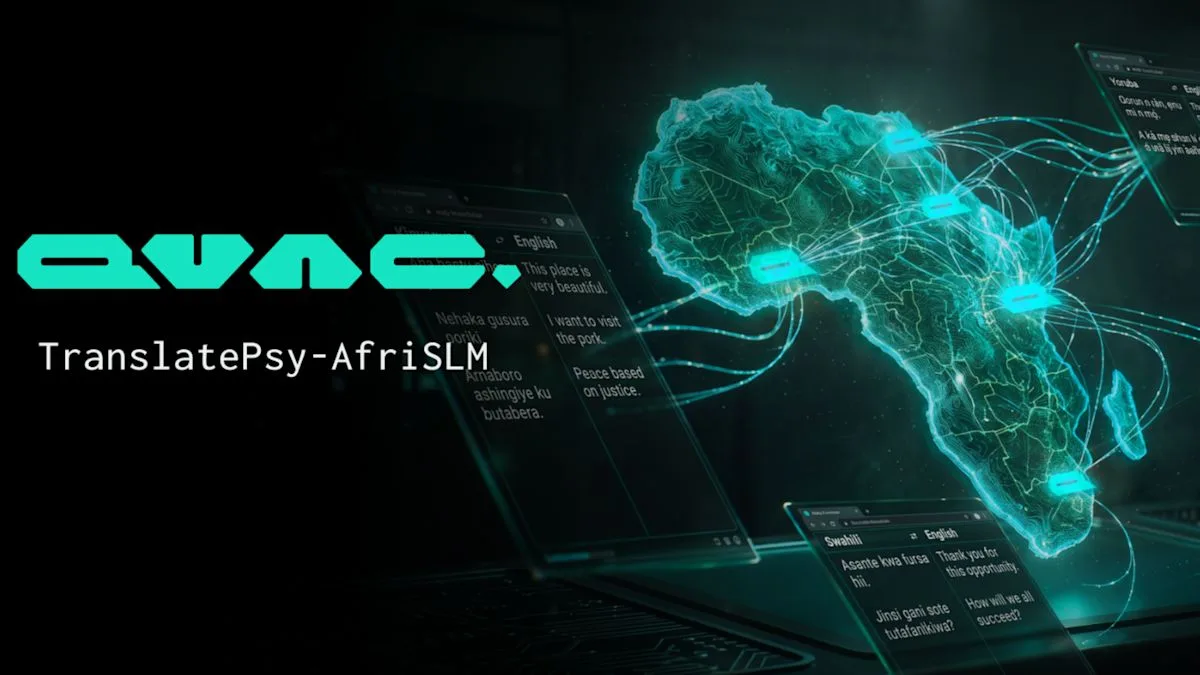
Tether AI Research launched a translation system that operates fully offline, without requiring a network connection. The release includes QVAC TranslatePsy-AfriSLM for 19 African languages and QVAC TranslatePsy-EuroNano for nine European languages. Each model processes translations directly on the device, keeping personal data local instead of sending it to cloud servers.
AfriSLM covers Hausa, Amharic, Yoruba, Lingala, Swahili, Igbo, Zulu, Somali, Oromo, Malagasy, Kinyarwanda, Xhosa, and Afrikaans, as well as Wolof, Luganda, Nyanja, Shona, Tswana, and Southern Sotho. According to Tether, the 19 languages collectively represent about 50% of the African continent's population—a figure that indicates language reach, not the number of individual users. The model has 800 million parameters, but Tether claims AfriSLM surpasses Qwen3.5-122B-A10B, TranslateGemma-27B, and NLLB-3.3B in tests using FLORES-200, BOUQuET, and SMOL. Even so, benchmark performance does not guarantee identical results in every practical translation situation.
That success is partly attributed to a data filtering system that discards up to 96% of material deemed unsuitable. Tether also released smaller and larger versions, including 0.8B, 2B, and 4B parameter configurations for various hardware needs. Meanwhile, EuroNano uses English as an intermediary and connects European languages through 90 possible translation routes. The package takes up only 36MB, which according to Tether is about 94% more storage-efficient than a comparable Firefox offline setup.
Tether's focus on Africa is also connected to physical infrastructure it has built in parts of Sub-Saharan Africa. The company has installed solar-powered kiosks that provide phone charging, battery swapping, and access to digital financial services in communities. These locations could later become distribution channels for educational materials, agricultural information, and other localized translated content without relying on continuous connectivity.
"Four billion people are left behind by the traditional financial system, and the most powerful technology of our time is repeating that failure," said Paolo Ardoino, CEO of Tether. "Language should not determine who can benefit from artificial intelligence. Open translation models like this are a step toward a future where education and AI tools reach hundreds of millions of people who lack reliable connectivity or access to expensive systems."
The same technology can also operate alongside QVAC MedPsy, Tether's smaller model aimed at health applications on local devices. "A mother can get real medical information she understands, instead of guessing. A child can learn in their own language. That is the future we are building through QVAC," Ardoino added.
AfriSLM is currently available through Hugging Face, and the related research has been accepted for presentation at EMNLP 2026. Tether's move marks a significant shift in the AI industry: from dependence on the cloud to inclusive edge computing. For Indonesia, which has more than 700 regional languages and connectivity challenges in remote areas, models like this offer an opportunity to bridge the digital divide. However, the big question remains: will global technology companies look at Nusantara languages as their next target, or will similar initiatives come from within the country?