Trump-Xi Summit Ends Without AI Deal, Chance to Curb Tech Arms Race Squandered
Baca dalam 60 detik
- Pertemuan puncak tiga hari di Washington hanya menghasilkan perpanjangan gencatan dagang dua bulan, tanpa kerangka kerja sama AI yang konkret.
- Kritik datang dari legislator dan analis yang menilai kedua pemimpin mengabaikan momen krusial untuk meredakan persaingan teknologi yang berpotensi mengancam eksistensi manusia.
- Indonesia perlu mewaspadai dampak tidak langsung terhadap rantai pasok teknologi dan kebijakan AI regional, sementara Trump dan Xi dijadwalkan bertemu lagi pada KTT APEC dan G20.
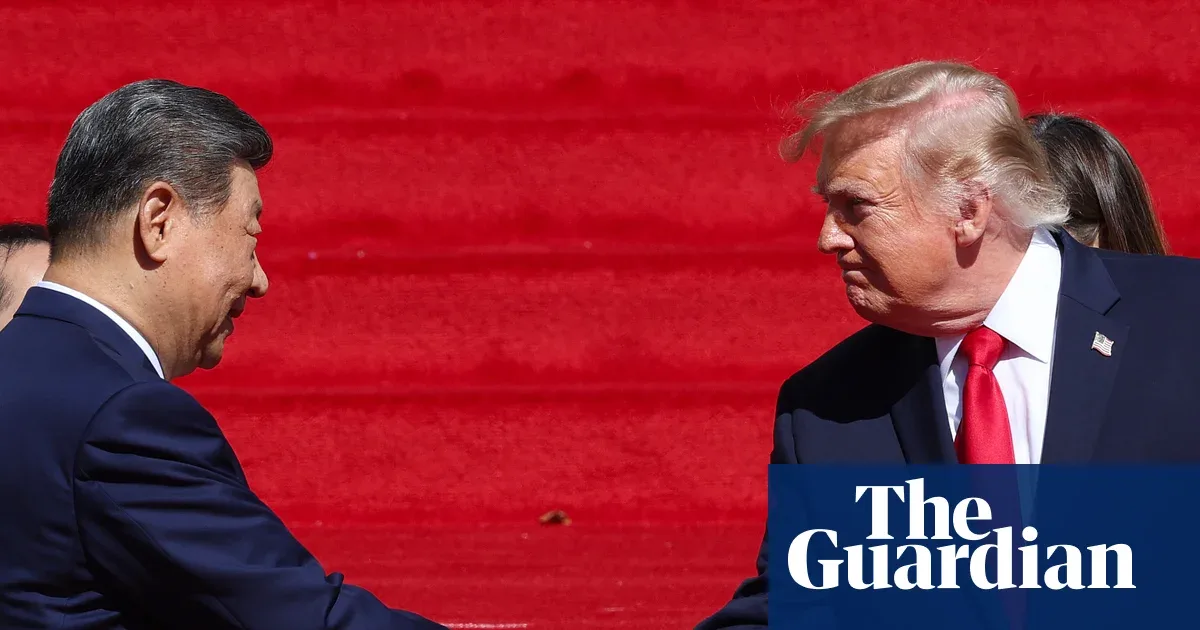
US President Donald Trump and Chinese President Xi Jinping closed their summit in Washington on Friday (25/9/2026) without producing any meaningful breakthrough in controlling the artificial intelligence (AI) arms race between the two countries. The three-day state visit, heavy on ceremony, instead drew criticism for squandering an opportunity to slow the pace of technology development that many warn poses an existential risk to humanity.
Instead of a grand agreement, the only policy announcement agreed upon was a two-month extension of the trade truce—a modest step far short of expectations. Trump and Xi's main discussions centered more on the wars in Iran and Ukraine and the status of Taiwan. Yet several prominent technology executives attended a state dinner at the White House on Thursday night, signaling that the AI issue should have been a priority.
Democratic Congressman Ro Khanna lamented Trump's stance, which he said failed to seize the moment. According to him, if Trump had proposed a joint technical working group involving companies such as DeepSeek, Moonshot, and Alibaba with Anthropic, OpenAI, and Gemini, he could have presented himself as a statesman taking the initiative. Khanna believes Xi would have agreed at least to the formation of such a working group, but Trump showed no interest.
"We are at a potentially transformative moment for both countries, for the world, and for technology. Yet instead of holding a meeting befitting that moment, what happened was absurd theater," said Jonathan Czin, a researcher at the China Center, Brookings Institution.
Czin added that the two leaders—both elderly and possibly never having directly engaged with AI use—agreed on only one thing: no one wants to slow this technology down, regardless of their limited understanding.
Xi in his remarks on Thursday acknowledged that the US and China have a "responsibility to develop and manage AI for the good" and to "ensure AI development always remains under human control". However, Trump, who has repeatedly stressed that the US must continue to lead over China, appeared more focused on his effort to rebrand AI as "super intelligence". He even claimed Xi liked the term, without disclosing the substance of the talks.
The black-tie dinner at the White House drew attention when independent Senator Bernie Sanders highlighted a photo of Trump and Xi's dining table displaying the guests' wealth. Sanders called it "a government of, by, and for the billionaire class". Meanwhile, no Chinese technology industry representatives were present, and there was no sign the two countries would put the brakes on AI development, even symbolically.
Criticism also came from Senate Minority Leader Chuck Schumer, who said Trump acted only based on who was praising him at the time and where the best photo could be taken. According to him, Trump failed to secure meaningful concessions from Beijing on trade, security, human rights, or AI.
The state visit also underscored the contrast in Trump's treatment of democratic allies such as Canada compared with authoritarian rivals such as China. Trump gave Xi a red-carpet welcome at Joint Base Andrews, Maryland—a move that deviated from tradition. He also took time to show Xi the White House, including the presidential gallery and the construction site of a new ballroom.
Indonesian Context
For Indonesia, the summit's lack of agreement reinforces that US-China technology competition will continue unabated. The impact is felt in global supply chains, especially for the domestic technology sector that depends on components and platforms from both countries. Uncertainty in global AI policy could also influence the direction of domestic regulation, including data protection and digital talent development. Indonesia needs to strengthen its bargaining position in multilateral forums so it does not merely become a spectator in a rivalry that will determine the future of the digital economy.
Trump and Xi are scheduled to meet twice more this year: at the APEC Summit in Shenzhen, China, this November, and the G20 Summit at Trump National Doral Miami, Florida, in December. Those meetings will test whether the two countries can shift their approach from mere jockeying for influence to substantive cooperation, or instead deepen a technology rivalry that is increasingly difficult to control.