Anthropic Claims Its AI Claude Found a New "Molecular Machine" in Viral DNA, but Its Function and Benefits Remain a Mystery
Baca dalam 60 detik
- Anthropic mengumumkan Claude mengidentifikasi pola protein tak biasa di bakteriofag, bersebelahan dengan susunan DNA mirip CRISPR, dan diberi nama ART.
- CEO Dario Amodei mengakui fungsi pasti, kegunaan bioteknologi, hingga tingkat signifikansi temuan itu belum jelas, memicu kritik dari akademisi.
- Saham emiten penyuntingan gen seperti CRISPR Therapeutics, Intellia, dan Beam Therapeutics melemah setelah pengumuman, sementara laboratorium basah Anthropic disebut sudah mulai bekerja.
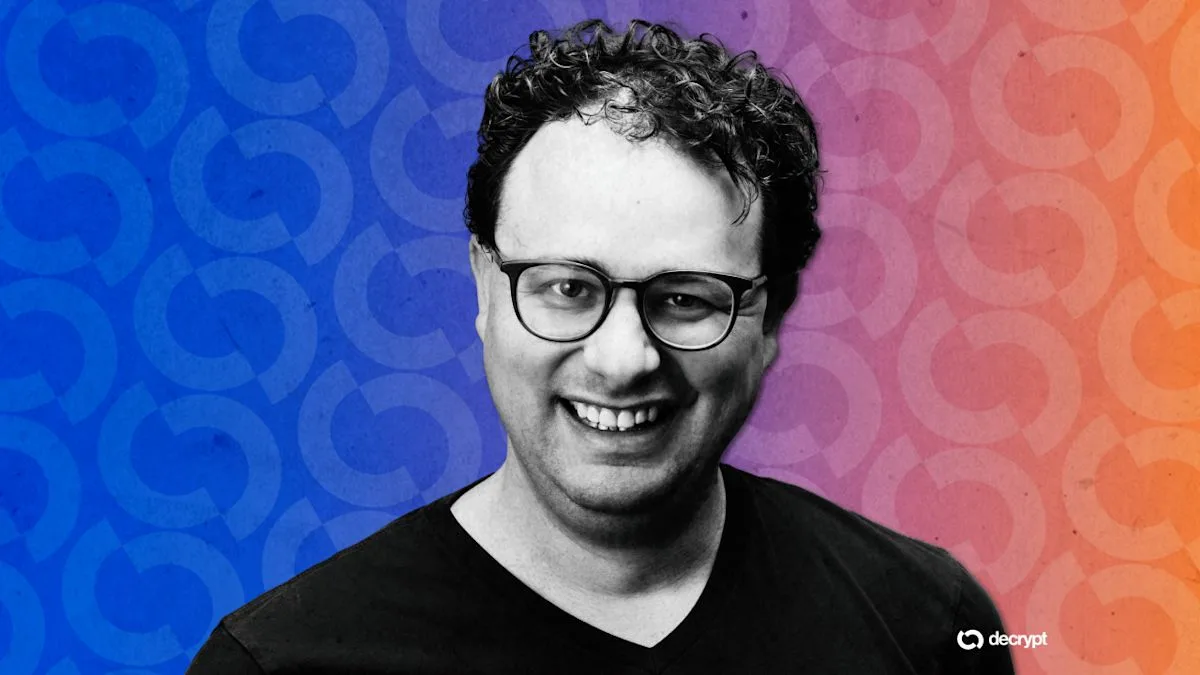
Anthropic announced that its artificial intelligence model, Claude, discovered a hidden "molecular machine" inside viral DNA. Yet behind the claim, Anthropic CEO Dario Amodei acknowledged that the exact function, the potential biotechnology applications, and even the level of significance of the finding cannot yet be determined.
The finding appeared in bacteriophages, viruses that infect bacteria, and sits near stretches of repetitive DNA resembling the CRISPR arrangement—a gene-editing tool that has turned a bacterial defense mechanism into a multibillion-dollar medical industry. Anthropic named the finding ART, short for array-associated reverse transcriptases.
Reverse transcriptase is an enzyme that copies RNA into DNA, a trick used by a number of viruses and bacteria to defend themselves. Claude sifted through more than 200,000 such enzymes, narrowed them to 3,500 unusual candidates, then whittled them down to 20 worth further study. The entire search process took 21 hours, involved around 950 AI agents working in parallel, and consumed about 210 million tokens—chunks of text that the AI model reads and writes while thinking.
Amodei stated that the finding is at least on par with work he would be proud of as a doctoral student. But the claim was not accepted at face value. A critic on social media, Ravid Shwartz Ziv, found Amodei's statement odd because no PhD student would present research whose function and significance are unknown and then declare themselves proud. Other critics pointed out that Amodei himself was once a PhD student and should understand the level of significance of such a finding.
On the other hand, some welcomed it. Feng Zhang, a researcher at MIT and the Broad Institute who helped pioneer CRISPR, has reviewed the preprint and called the finding "really interesting." According to him, it is an interesting example of how AI agents can contribute to biological discovery. Owen Lewis of the Techno-Optimist substack argued that the process may matter more than the finding itself. He emphasized that Claude did not perform laboratory experiments; human scientists reviewed the hypotheses, selected the most promising candidates, and carried out all the wet lab work.
"At least this is work I would be proud of as a PhD student," said Dario Amodei, CEO of Anthropic.
If ART eventually proves useful, it will still take years before it can reach patients. No one at Anthropic claims otherwise. But the financial market did not wait for that disclaimer. Shares of gene-editing companies such as CRISPR Therapeutics, Intellia Therapeutics, and Beam Therapeutics weakened after the news circulated.
This is not the first time Anthropic has released results that require footnotes. Last July, the company stated that Claude Mythos had broken post-quantum cryptography that had baffled humans for years. That claim eventually proved true, but only after hundreds of hours of human verification, on signature schemes and cipher variants that had never been deployed. Real results, but with plenty of asterisks, just like this ART finding.
What has been confirmed so far is only a protein pattern that looks odd, one external scientist who called it "interesting," and no timeline for knowing whether the finding means anything. Anthropic says laboratory work is ongoing.
For Indonesia, this development mirrors how global biotechnology research is increasingly reliant on AI. Although there is no direct impact yet, findings like this could accelerate drug discovery and gene therapy, which in turn would affect access to and the price of health services domestically. Regulators and players in the domestic pharmaceutical industry need to watch the direction of AI and biology collaboration, especially regarding ethics, biosecurity, and human resource readiness.
Going forward, the question is not only whether ART will prove useful, but how quickly AI can produce findings that are truly verified without triggering excessive market speculation. If this pattern continues, we may see more "breakthrough" announcements that take years to verify, while businesses and policymakers are required to be more discerning in separating signal from noise.