Why Do Pilots Disengage Autopilot Before Landing? Here Are the Technical and Safety Reasons
Baca dalam 60 detik
- Pilot umumnya menonaktifkan autopilot saat mendekati landasan untuk mengendalikan pesawat secara manual, terutama pada fase kritis pendaratan.
- Sistem autoland memang ada, tetapi hanya berfungsi di bandara dengan infrastruktur khusus dan tetap memerlukan pengawasan manusia yang ketat.
- Pelatihan manual landing secara rutin menjadi kunci menjaga keterampilan pilot dalam menghadapi kondisi darurat atau perubahan cuaca ekstrem.
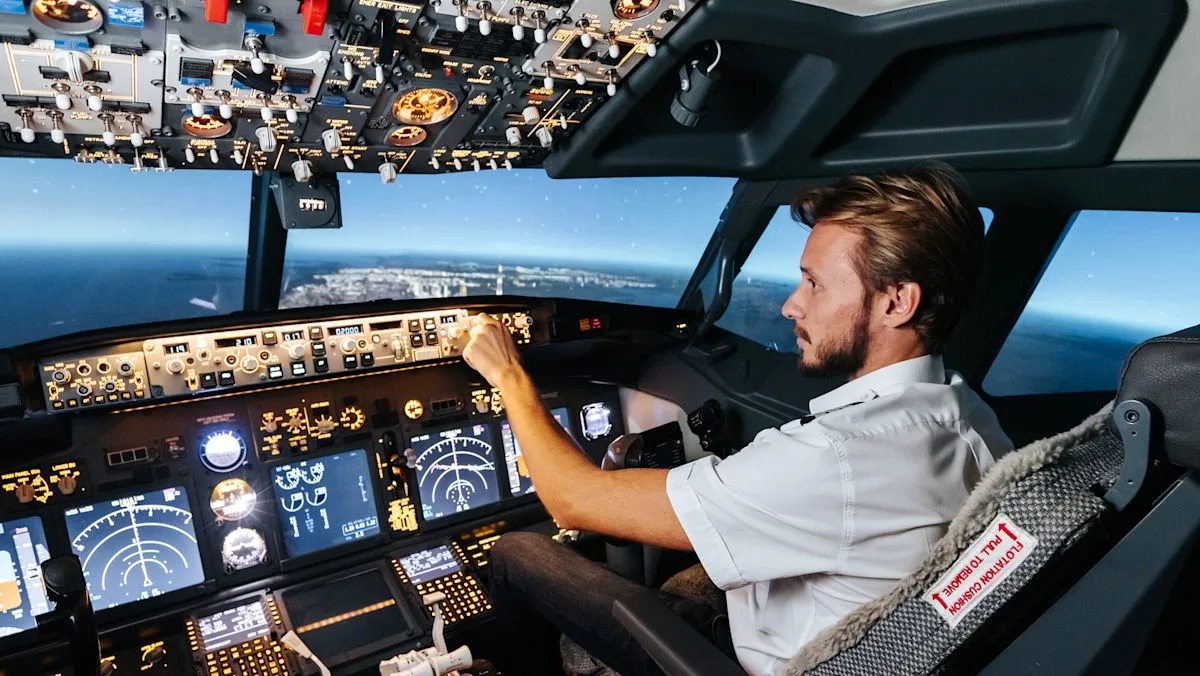
Behind the smoothness of a commercial flight, there is a crucial moment when pilots choose to take over control from the autopilot—especially as the aircraft is about to touch the runway. Although autopilot technology is advanced and capable of managing various aspects of flight, the decision to disengage the automatic system before landing is not without reason. This step concerns precision, safety, and human capabilities that machines cannot fully replace.
Modern autopilot, which is often part of the Automatic Flight Control System (AFCS), is designed to ease the workload of pilots and copilots. The system can manage speed, heading, altitude, and even engine thrust. On the latest generation of passenger aircraft, the level of automation is very high. However, when the landing phase arrives, pilots usually choose to take manual control. According to several aviation sources, the main reason is that landing is the most critical stage, demanding rapid response to changing conditions, whether wind, visibility, or potential technical issues.
Nevertheless, this does not mean the autopilot cannot land the aircraft at all. A feature called autoland does exist and is permitted for use in certain situations, such as when visibility is very low. However, its use is not as simple as pressing a button. Autoland requires the airport to have special navigation infrastructure, and not all commercial aircraft are equipped with this capability. Even on aircraft that have it, pilots must still monitor intensively and hold special certification to perform automatic landings. Therefore, in daily practice, pilots more often disengage the autopilot and land manually.
Beyond technical reasons, there are psychological and procedural factors that keep manual landing the standard. Pilots need to keep their instincts sharp and their motor skills honed. In aviation, the skill of landing manually is a basic competency that must be continuously developed. If pilots rely too much on automation, there is concern that this ability will decline. This aligns with the principle of aviation safety, which emphasizes the importance of human vigilance and adaptability to unexpected situations.
"Manual landing allows pilots to react more quickly to changing conditions or emergencies," is a view often expressed by flight instructors. They emphasize that autopilot is a tool, not a full replacement for the human role.
For Indonesia, the discussion about autopilot and manual landing has its own relevance. As an archipelagic country with dynamic tropical weather, airports in Indonesia often face challenges of visibility and rapidly changing wind conditions. Although some international airports such as Soekarno-Hatta or Ngurah Rai have been equipped with advanced navigation systems, not all fully support autoland operations. Therefore, pilots' ability to perform manual landings becomes increasingly vital. The national aviation regulator also periodically tests pilot competency, including in manual landing, to ensure aviation safety is maintained.
In the future, as technology develops, there may be more airports supporting autoland and fully autonomous aircraft. However, for now, the combination of machine sophistication and human expertise remains the main key. The question is, to what extent are we ready to entrust aviation safety entirely to algorithms? Until that time comes, pilots remain the last guardians in the cockpit, ensuring every landing is safe and precise.