Customs Gratification Trial: Ex-Intelligence Official Reveals 'Boss's Order' Behind Unofficial Payments
Baca dalam 60 detik
- Mantan Kepala Intelijen Cukai Budiman Bayu Prasodjo menyatakan penghentian pungutan ilegal dari pengusaha rokok terganjal instruksi atasan yang tak disebut identitasnya.
- Dakwaan KPK mengungkap aliran dana miliaran rupiah dan valuta asing dari pemilik Blueray Cargo Group serta sejumlah pengusaha kepada tiga pejabat Bea Cukai.
- Persidangan ini membuka celah uji integritas reformasi institusi penerimaan negara, dengan implikasi langsung pada iklim kepatuhan importir dan penerimaan APBN.
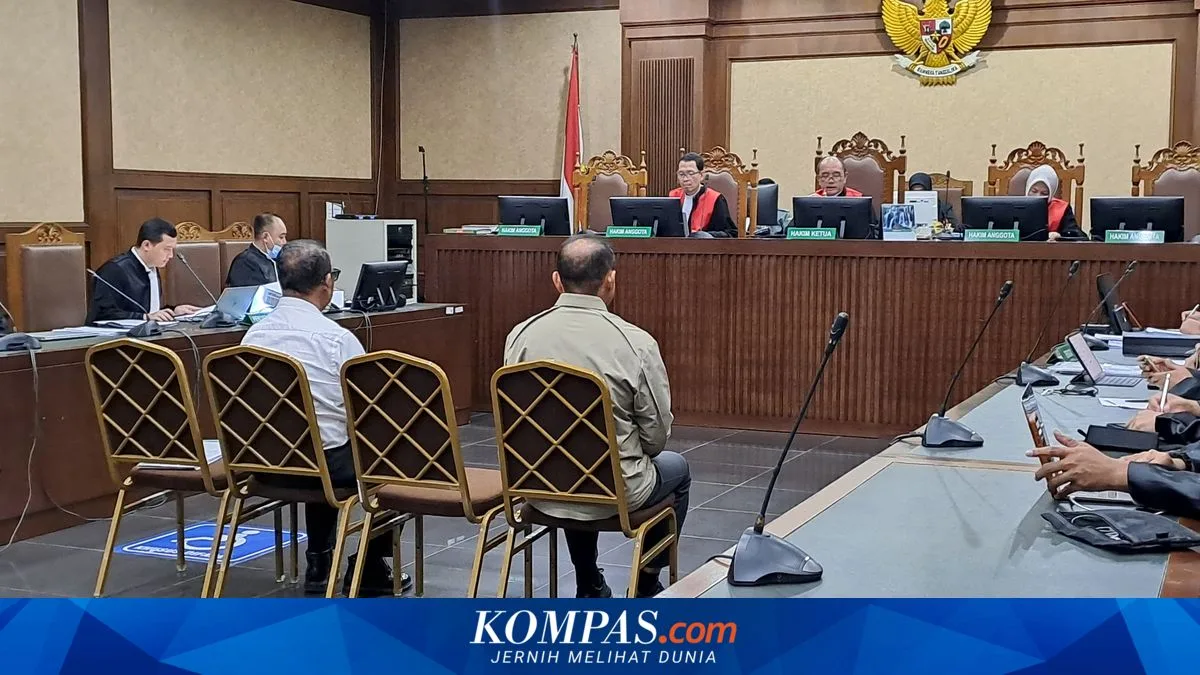
The Directorate General of Customs and Excise (DJBC) has come under scrutiny again after the former Head of Customs Intelligence at the Directorate of Enforcement and Investigation (P2), Budiman Bayu Prasodjo, revealed directions from a party he called the "boss" in the practice of unofficial payments within his institution. The testimony was delivered in the courtroom of the Jakarta Corruption Court on Wednesday (23/9/2026), in a case of alleged gratification implicating several DJBC officials.
Bayu said he had repeatedly conveyed instructions to stop illegal payments from cigarette entrepreneurs, especially after the change of the Director General of Customs and Excise in mid-2025. However, according to him, not all parties followed up on the order consistently. He said some responded by citing the direction of their superiors without naming identities.
"He did not say anything, he just said yes, but at that time he conveyed, 'Well, what can we do, the boss's order,' like that," Bayu said, imitating his colleague's response in court.
The statement emerged when Bayu responded to the testimony of the Head of the Customs Intelligence Subdirectorate, Sisprian Subiaksono, who was presented as a witness. Sisprian admitted he had heard the term "di-zero-kan" used by Bayu to order the cessation of unofficial payments. According to Sisprian, the phrase meant to be stopped. He also confirmed that Bayu had indeed made that request.
The Public Prosecutors of the Corruption Eradication Commission (KPK) charged Bayu along with two other officials, namely former Director of Enforcement and Investigation of Customs Rizal and Sisprian, with receiving money from John Field as the owner of Blueray Cargo Group and several other private parties, including cigarette entrepreneurs. The total value charged includes Rp525 million in Singapore dollars, Rp5.278 billion, USD 10,000, SGD 119,755, HKD 4,700, and MYR 8,100.
According to the prosecutors, the flow of funds is closely related to the positions held by the three officials and contradicts their obligations. This indictment places Customs at a crucial point: whether the trial will reveal a systematic pattern or merely stop at individual roles. The public awaits whether the investigation will reach the party referred to as the "boss" in Bayu's testimony.
For businesses and investors, this case highlights governance risks at one of the main gateways of national goods flow. Uncertainty over compliance costs at ports can affect logistics calculations and export-import competitiveness. Importers who have so far taken the official route could bear a disproportionate burden if the practice of illegal levies is not resolved to its root.
Reform within Customs is also a test of the government's commitment to safeguarding state revenue. Any leakage due to gratification could reduce the fiscal space needed for development programs. Therefore, transparency of the legal process and the seriousness of internal oversight will be key indicators of market trust in this institution.
Going forward, the question is not merely who is guilty, but how far the oversight system can prevent recurrence. If the trial only produces individual verdicts without governance improvements, the same risk will continue to loom every time there is a change of officials.