Europe Worries About Trump, but the Real Threat Comes From Putin and Beijing
Baca dalam 60 detik
- Hubungan transatlantik justru menjadi bagian paling stabil dari lingkungan eksternal Eropa saat ini, sementara Rusia dan China dinilai sebagai ancaman struktural yang lebih serius.
- Kremlin yang semakin lemah secara ekonomi berpotensi mempercepat eskalasi militer di Ukraina dan perang hibrida terhadap NATO.
- Pemilu presiden Prancis tahun depan berpotensi memunculkan Marine Le Pen, yang dapat mengguncang kohesi politik Uni Eropa tepat saat solidaritas paling dibutuhkan.
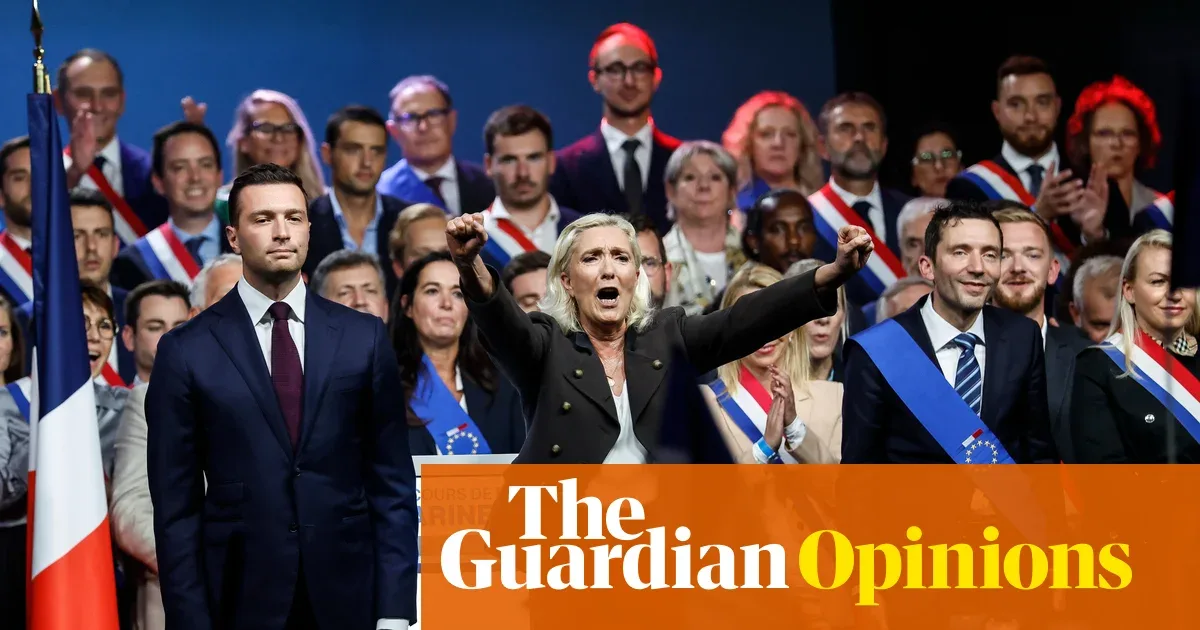
Europe has been preoccupied with the uncertainty of its relationship with the United States under Donald Trump. But a number of analysts argue that the more urgent threat over the next 12 months actually comes from Moscow and Beijing, not from Washington. That assessment was made by Mujtaba Rahman, Managing Director for Europe at Eurasia Group, in his column in The Guardian, which highlighted the shifting landscape of the region's geopolitical risks.
According to Rahman, the transatlantic relationship is indeed turbulent. Trump is said to have weakened trust in NATO, triggered new trade tensions, and created uncertainty over US support for Ukraine, as well as his territorial ambitions toward Greenland. Even so, he argues that the relationship with Washington is actually a relatively more stable part than Europe's relations with Russia and China. Disputes with the US are seen as still limited and negotiable.
Rahman underlined that Ukraine's rapidly developing drone capabilities, military innovation, and battlefield experience make Kyiv increasingly valuable to Washington. US defense companies are also benefiting from European military support for Ukraine and rearmament programs against Russia. The US, Denmark, and Greenland are reported to have reached an agreement allowing the US to build a significant military presence in Greenland. Although the details remain vague, the incentives to reach an understanding are seen as far greater than letting the issue become a prolonged confrontation.
Unlike the US, the risks posed by Russia and China are seen as more structural and headed toward escalation. Rahman says Russia is becoming more dangerous precisely because its economy is weakening. The Kremlin is running out of cheap and politically safe ways to finance the war in Ukraine. The budget assumptions for early 2026 have been overtaken by events. Military spending keeps rising, not only for equipment but also for the cost of recruiting frontline soldiers and compensating casualties.
War financing has now become a battlefield behind the battlefield. Further tax increases risk damaging an economy that, outside the military sector, is nearing recession. Borrowing costs are rising, while public spending on schools, hospitals, and infrastructure is squeezed to sustain the war effort. According to Rahman, instead of pushing Putin to compromise, economic hardship could actually trigger escalation. If the Kremlin expects its economic position to worsen next year, there is a strong incentive to improve its military position now. This explains CIA Director John Ratcliffe's sudden visit to Moscow.
"Russia is becoming more dangerous because it is becoming weaker," Rahman wrote, describing the strategic dilemma facing Europe.
In Ukraine, Russia is expected to accelerate mobilization and launch heavier attacks on cities and infrastructure, especially to weaken the economy and civilian morale during winter. Hybrid warfare against NATO countries is also predicted to increase in the coming months.
China presents a different but equally serious challenge. The long debate over whether China competes fairly is seen as over. A broad consensus has now formed that subsidies, industrial overcapacity, an undervalued exchange rate, and China's export-based economic model require a political response. The question is no longer whether Europe must defend itself, but how far Europe is prepared to go. Beijing, for its part, sees Europe's trade defense measures, industrial policy, and economic security agenda as efforts to curb China's growth.
European Commissioner for Trade and Economic Security Maroš Šefčovič and his Chinese counterpart Wang Wentao met in late June and committed to resolving a number of issues in October. The meeting may delay confrontation, but it will not avoid it. China will not abandon industrial subsidies, its exchange rate policy, or its export model. Conversely, the European Union will not back down from its economic security agenda either. Every European step to reduce dependence on China tends to trigger a counter-response, and every Chinese retaliation will strengthen the political argument in Brussels to go further.
The most likely outcome is managed confrontation, not a full-blown trade war. The European Union will expand targeted restrictions in additional sectors, while China responds with selective tariffs, procurement barriers, regulatory pressure on European companies, and tighter controls on critical minerals. Both sides are trying to increase pressure without losing control. Europe also has leverage because China still depends heavily on access to the EU single market, one of the world's last large and wealthy export destinations.
But the real determining factor lies within Europe itself. Next year's French presidential election is seen as potentially having more impact on Europe than any decision in Washington, Moscow, or Beijing. Marine Le Pen has a credible path to victory. She is currently polling 35–38% in the first round and is considered more formidable than her lieutenant, Jordan Bardella, who is widely expected to be the Rassemblement National candidate. Her chances depend heavily on whether France's fragmented political center can unite behind a single candidate. If not, Le Pen could face Jean-Luc Mélenchon of the hard left in the second round and would most likely win.
A Le Pen presidency is predicted to be highly disruptive for Europe. She is likely to oppose further support for Ukraine, hinder sanctions against Russia, weaken the bloc's approach to China, and trigger fights with Brussels over Schengen, fiscal rules, electricity prices, and the single market. The threat to withhold France's contribution to the EU budget could plunge the union into an unprecedented financial and constitutional crisis.
Europe's external challenges are indeed great, but they remain manageable. The determining variable is Europe itself: whether it can maintain the political cohesion needed to face the US, Russia, and China. A Le Pen victory would call that cohesion into question just when Europe needs it most. For Indonesia, this dynamic matters because Europe is a major trading partner and a strategic export market. EU-China tensions could divert flows of goods and investment to Southeast Asia, including Indonesia, while European political instability could affect commodity prices and global supply chains. The question is, will Indonesia seize this opening or instead become a victim of a larger geopolitical shift?