AstroForge Set to Launch First Autonomous Mission to Earth Orbit in 2027
Baca dalam 60 detik
- AstroForge menjadwalkan misi Autonomy-1 pada awal 2027 menggunakan roket Nova Pathfinder milik Stoke Space, menandai penerbangan perdana kendaraan tersebut.
- Model kecerdasan Solo akan mengendalikan seluruh operasi pesawat tanpa instruksi dari darat, sebuah terobosan yang disebut sebagai pencapaian puncak rekayasa antariksa.
- Misi ini menjadi ujian bagi ambisi penambangan asteroid dan teknologi roket reusable, dengan implikasi bagi industri antariksa global termasuk Indonesia.
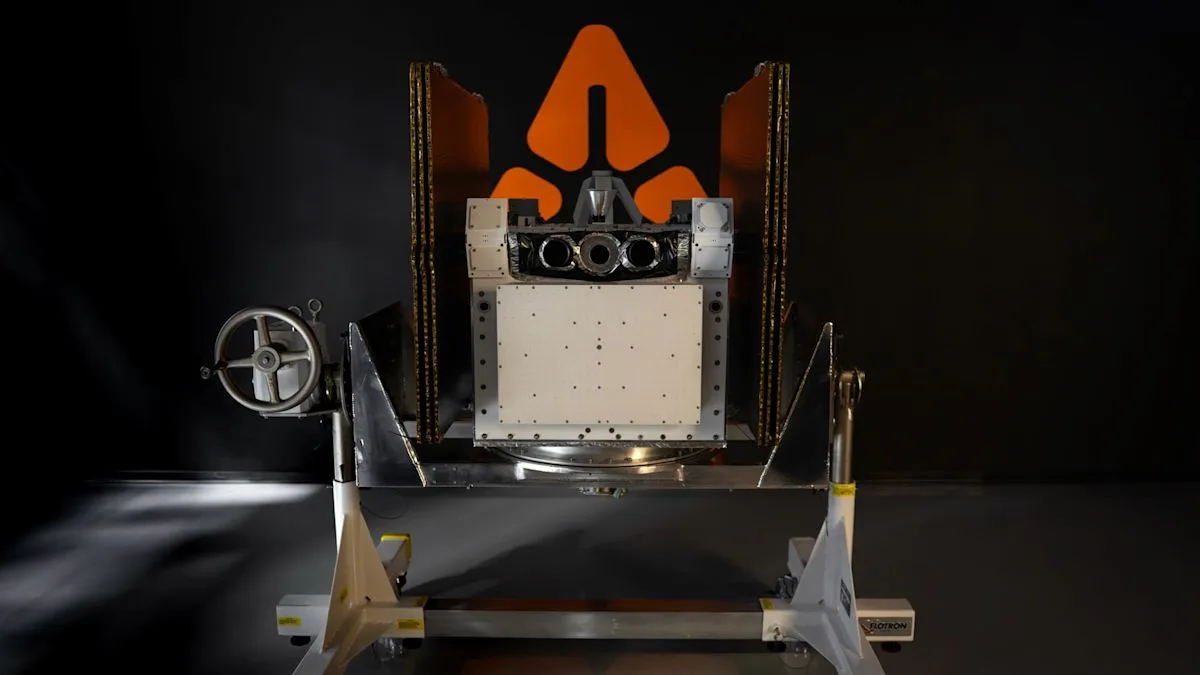
California-based asteroid mining company AstroForge announced plans to launch the Autonomy-1 mission in early 2027 using Stoke Space's Nova Pathfinder rocket. The mission is claimed to be the first fully autonomous one, with no commands from a ground station after separation from the launch vehicle. The move marks a new chapter in commercial space exploration, in which artificial intelligence takes full control of spacecraft operations.
Autonomy-1 will be the maiden flight of Nova Pathfinder, a rocket developed by Stoke Space with fully reusable technology. The success of this mission is crucial not only for AstroForge but also for Stoke Space, which is competing with SpaceX to deliver reusable rockets. According to AstroForge CEO Matt Gialich, in a company blog post, the mission aims to remove human operators from the control loop. "We do not intend to send a single command to the spacecraft after separation," he wrote. Telemetry and science data will flow one way from the spacecraft to Earth, with no return instructions.
An artificial intelligence model named Solo was developed to coordinate onboard functions independently. Solo works on top of existing deterministic physics-based flight software, enabling real-time decision-making during flight. Gialich calls full autonomy the "holy grail of space engineering," which will be achieved gradually. Before Autonomy-1, Solo will be tested in the DeepSpace-2 mission, which will launch on SpaceX's Falcon 9 rocket together with Intuitive Machines' lunar lander. In that mission, Solo will only operate in "shadow mode"—processing data and making decisions without executing them.
On Autonomy-1, Solo will fully control the spacecraft, including supporting NASA's COMPASS (Compact Multi-Spectral Photometer for Space Science) science instrument. The mission is also a proving ground for AstroForge, which has previously suffered failures. Brokkr-1, a cubesat prototype launched in April 2023, failed to activate its refining technology. Then Odin, launched in February 2025 alongside the IM-2 mission, lost communication and was declared lost. Those failures are the backdrop to why AstroForge developed Solo—to reduce reliance on costly and risky human control.
"Autonomy-1 will be the first space mission to complete its entire mission after separation without a single command from the ground. With Solo, we remove the human operator from the loop," said Matt Gialich, CEO of AstroForge.
For Indonesia, this development offers valuable lessons. The country is developing its space industry through LAPAN and the National Research and Innovation Agency (BRIN), and has ambitions to become a player in the global space economy. Autonomous technology like Solo can serve as a reference for more efficient national satellite missions, especially for maritime area monitoring and disaster mitigation. In addition, the success of reusable rockets like Nova Pathfinder can lower launch costs, opening opportunities for developing countries to access orbit more cheaply.
The Autonomy-1 mission will also draw industry attention because it is Stoke Space's first orbital launch. The company is developing a fully reusable rocket, a technology experts believe will revolutionize spaceflight. SpaceX, which is developing Starship, is among those that believe in that potential. If successful, Autonomy-1 will not only prove the concept of full autonomy but also accelerate the race toward a more independent and sustainable space era.
With a launch schedule in early 2027, will AstroForge be able to overcome the shadow of its previous failures and open the way for commercial asteroid mining? Meanwhile, where does Indonesia stand in the map of space technology competition that is increasingly dominated by the private sector?