Viral Automatic Haircut Machines on Social Media Are AI-Generated, Not Real Technology
Baca dalam 60 detik
- Sejumlah video yang memperlihatkan mesin pemotong rambut otomatis di media sosial dipastikan merupakan konten buatan AI, bukan perangkat nyata.
- Konten semacam ini masuk kategori 'AI-slop' yang memanfaatkan rasa penasaran dan taktik engagement untuk memperluas jangkauan.
- Pengguna diimbau memeriksa label AI, menelusuri akun sumber, dan mewaspadai kejanggalan visual sebelum mempercayai atau menyebarkan video.
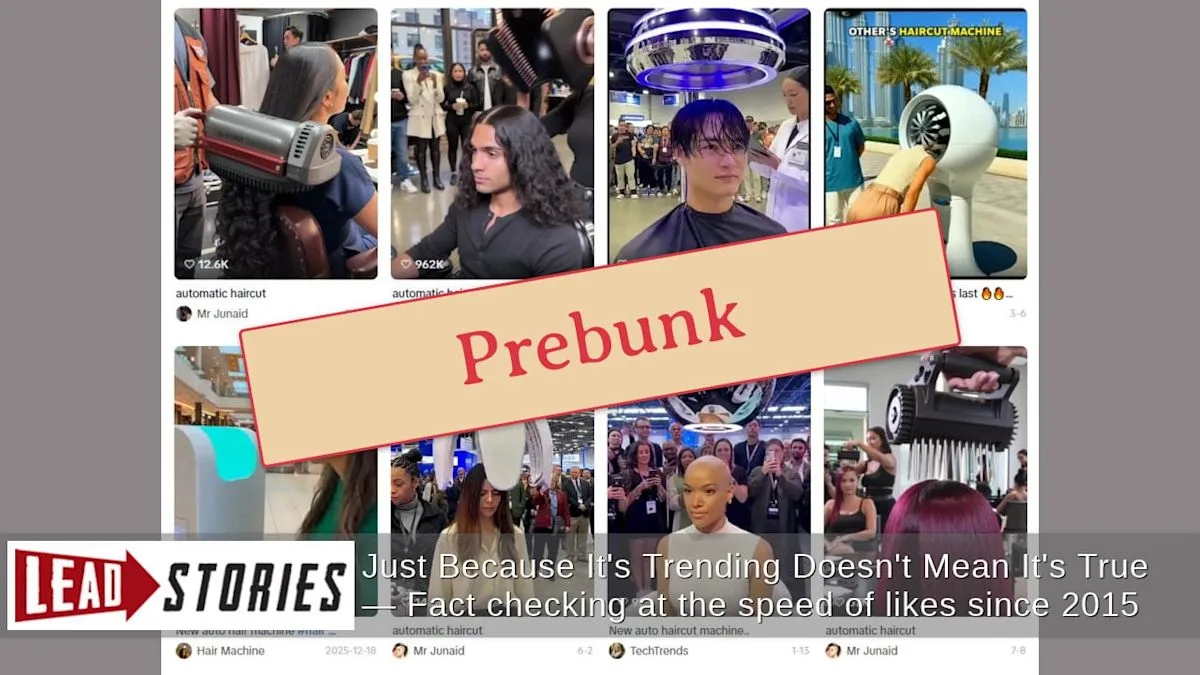
Videos showing automatic hair-cutting machines operating without human touch are currently popular on digital platforms, but an investigation reveals that most of this content is generated by artificial intelligence, rather than recording devices that actually exist. The finding confirms that the "AI-slop" phenomenon—viral algorithm-made content that prioritizes emotional appeal over facts—is now spreading into lifestyle and consumer technology.
According to a report by the fact-checker Lead Stories, the videos show scenes of people receiving haircuts or styling from futuristic machines in shopping malls, city parks, and traditional salons. The exaggerated reactions of the people in them, from awe to excessive praise, are designed to trigger viewer interaction. The narrative is uniform: advanced machines, dramatic hair transformations, and calls to follow, comment, or tag friends.
What makes this content effective is its ability to exploit curiosity. Many social media users do not realize they are watching digital fabrication. Some posts have even included labels such as "AI content" or "AI-generated," but the labels are often hidden in descriptions or screen corners that are rarely noticed. Accounts such as @mikejonesbusiness on TikTok, @TechtrimStudios on YouTube, and @AI creativity hairstyle on Instagram are examples of how easily such content spreads across platforms.
For Indonesia, this phenomenon is not merely internet frivolity. With high internet penetration and a fast-sharing culture, AI-slop content could reinforce misinformation in the country's digital space. People who are not used to verifying visuals can easily be exposed to false claims about technology that appears to already be available. The impact could spill over into the real sector: consumers may be drawn to buy devices that do not exist, or salon owners may feel threatened by innovation that is actually fictional.
Fact-checkers recommend several simple steps to recognize such videos. First, check the AI label attached by the platform or uploader. Second, trace the creator's account—if the account has uploaded dozens of similar video variations, it is likely AI-generated content. Third, use reverse image search on the first frame to trace its origin. Fourth, pay attention to physical oddities: objects that suddenly appear or disappear, garbled text, unnatural movements, and audio that sounds flat and out of sync.
"If a video shows an event that should be newsworthy, check whether credible media have reported it. Do not stop at the account that uploaded it; they may have copied it from another source," Lead Stories said in its report.
The ability of generative AI to produce convincing short videos is indeed becoming more sophisticated. But behind that ease lies the risk of eroding public trust in visual information. Social media platforms are now expected not only to attach labels but also to reduce the reach of content proven to be misleading. Regulators in various countries, including Indonesia, need to consider stricter oversight of the spread of AI-slop that could harm consumers.
Going forward, the question is no longer whether AI can make videos that look real, but how quickly public digital literacy can catch up with the pace of the technology itself. Without collective vigilance, the automatic hair clipper that never existed could become a symbol of how reality is slowly eroded by deceptive viewing material.