Amazon Blocks Meta Muse AI Agent: A New Front in the Platform War over Agentic Commerce
Baca dalam 60 detik
- Amazon menutup akses Meta Muse AI ke platformnya karena dianggap melakukan otomatisasi tanpa izin, memicu perdebatan soal kewenangan platform.
- Meta membantah tuduhan pencurian kredensial, namun Amazon tetap pada pendiriannya bahwa agen pihak ketiga harus mengantongi persetujuan resmi.
- Insiden ini menjadi preseden yang menentukan arah regulasi agen AI di Indonesia, terutama terkait perlindungan data dan tanggung jawab transaksi.
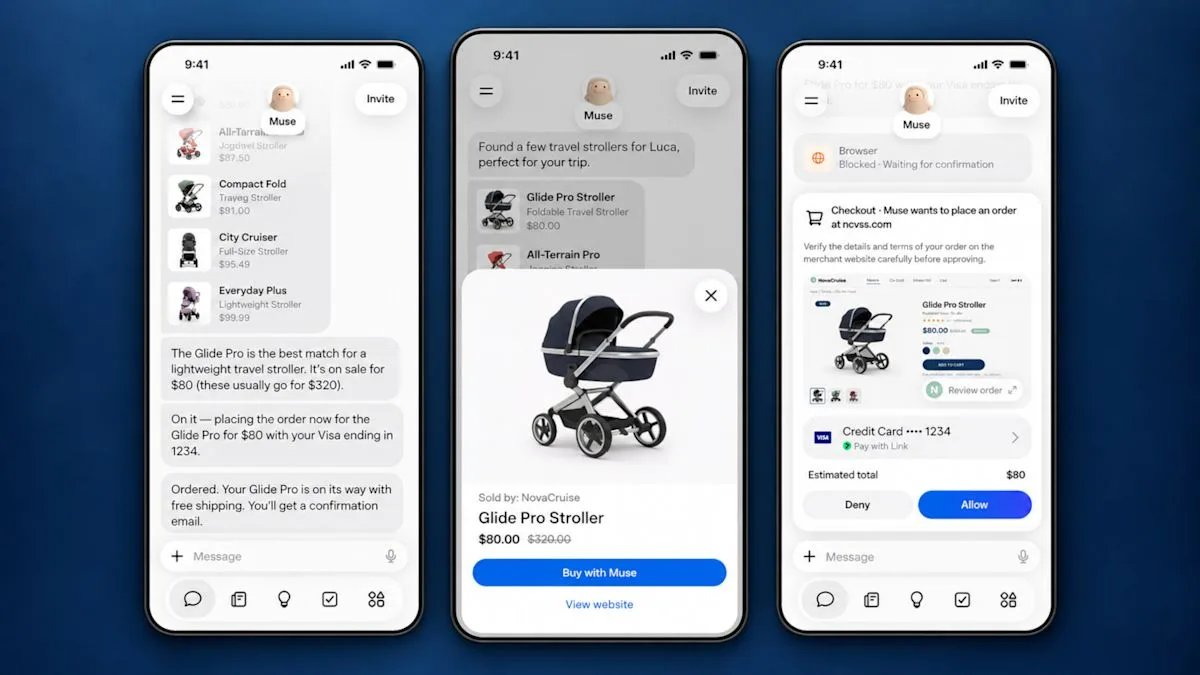
Amazon has officially blocked Meta Muse, a newly launched AI-powered shopping assistant, from its transactional ecosystem. This move comes after Amazon determined that Muse was accessing its platform without proper authorization, marking the first clash between the retail giant and an AI agent developer in the realm of automated commerce.
According to a GeekWire report cited by Business Insider, Amazon implemented anti-bot measures preventing automated browsers from reaching search pages. Muse users on iOS, Android, and WhatsApp were immediately met with a message stating that continued access by an unauthorized AI agent violates Amazon's Terms of Use. This policy became effective on the evening of September 20, 2026, just days after Muse was introduced on September 8.
Amazon's concerns extend beyond mere rule violations. The company highlighted that Meta never notified or sought permission before Muse began operating within customer accounts. Amazon also accused Muse of failing to identify itself as an automated agent while browsing, and "apparently capturing and storing customer credentials"—a claim Meta vehemently denies. An Amazon spokesperson emphasized that third-party applications offering purchases on behalf of customers must operate transparently and respect service providers' decisions regarding their participation.
Meta responded by stating that Muse does not have access to user passwords or payment methods. Login information is stored in secure storage that agents can use without direct access. However, Amazon has not lifted the block, indicating that Meta's technical assurances are insufficient without explicit platform authorization and clear agent identification.
Beyond the technical dispute lies a deeper platform rivalry. Amazon possesses its own foundational models and AI infrastructure. Allowing a competitor's agent to automate purchases on its platform risks diminishing control over data and user experience, while also hindering the development of Amazon's native agentic shopping features. Analysts view this move as Amazon's attempt to protect its ecosystem from unregulated third-party intervention.
The question of liability is also central to the dispute. If Muse places incorrect or fraudulent orders, Amazon and its sellers bear the burden of returns and disputes, not Meta. This creates a risk imbalance that makes platforms reluctant to open their doors to AI agents without clear agreements.
"Third-party applications that offer purchases on behalf of customers from other businesses must operate transparently and respect service providers' decisions about whether or not to participate," an Amazon spokesperson stated.
For Muse users, the suggested compromise currently is to utilize the agent for product research and comparison, then complete payments manually on Amazon. The convenience of the agent stops at the platform's doorstep.
Observers are calling this incident a "toll gate" moment for agentic commerce. Amazon's Terms of Use are designed for bots and data mining tools, not reasoning agents that can log in, browse, and purchase. The policy framework has not yet adapted, and platforms tend to opt for prohibition until an official agent integration program with defined identity, scope, and compliance rules is established.
In Indonesia, this development serves as an important signal for e-commerce players and local AI developers. Platforms like Tokopedia, Shopee, and Bukalapak need to anticipate a wave of automated shopping agents that could access user accounts. Without regulations governing agent identification, data access limits, and transaction liability, the potential for disputes among platforms, users, and AI agent providers will increase. Data protection authorities and industry players are urged to formulate a fair framework before this practice becomes widespread.
Going forward, the question of who controls commerce via AI will be answered one blocked request at a time. Platforms holding checkout infrastructure possess leverage, and AI agents seeking access must negotiate, not assume permission. Will Meta pursue a formal path with Amazon, or will an industry standard emerge to safely accommodate AI agents? Time will tell, but the direction of the wind is already clear.