Bahlil Prepares New Rules for Subsidized Fuel Users, Anticipating Pertalite Surge
Baca dalam 60 detik
- Pemerintah tengah merumuskan regulasi baru untuk memfilter siapa saja yang berhak mengonsumsi BBM bersubsidi.
- Lonjakan konsumsi Pertalite dipicu pelebaran disparitas harga dengan Pertamax, memicu antrean di sejumlah SPBU.
- Stok nasional diklaim aman, namun kuota subsidi berpotensi jebol jika peralihan konsumsi tidak segera dibendung.
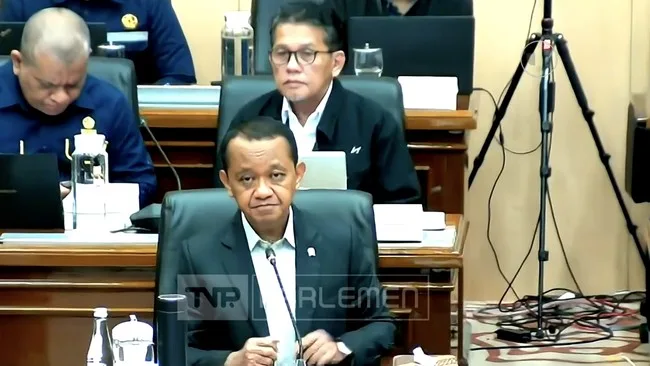
The government has confirmed it is drafting a new regulation that specifically sets out the criteria for users of subsidized fuel oil (BBM). Minister of Energy and Mineral Resources (ESDM) Bahlil Lahadalia said the rule is designed to respond to a shift in public consumption patterns increasingly leaning toward cheaper fuel types.
The move follows a growing phenomenon of shifting, or the migration of consumption from non-subsidized fuel to subsidized fuel. Bahlil said the shift is not only occurring among lower-income groups but is also starting to spread to upper-income earners. "Yes, we are indeed formulating the rule," Bahlil said when met at the DPR RI Building in Jakarta on Wednesday (16/9/2026).
On that occasion, Bahlil touched on the ethics of energy consumption. He urged owners of luxury vehicles or expensive cars to stop filling up with subsidized fuel. According to him, the subsidy quota is the exclusive right of underprivileged citizens who need state assistance. "Please, let us not use subsidized fuel, because subsidized fuel is meant for our brothers and sisters who are entitled to receive it," he stressed.
Data from the Downstream Oil and Gas Regulatory Agency (BPH Migas) reinforces those concerns. BPH Migas head Wahyudi Anas explained that the Pertalite (RON 90) consumption curve moves in line with fluctuations in non-subsidized fuel prices. When Pertamax and Pertamax Turbo prices rise, demand for Pertalite also surges. "The factor causing the increase is, first, certainly the widening price disparity," Wahyudi said in a hearing with Commission XII of the DPR RI on Wednesday (26/8/2026).
Although the Pertamax price was corrected on 1 August 2026, its impact on reducing Pertalite consumption was not significant. Wahyudi noted that the still-high price disparity kept people flocking to switch to subsidized fuel. As a result, Pertalite consumption in August 2026 was recorded at 84,368 kl per day, still 11.31% higher than the normal average before the Pertamax price increase on 10 June 2026.
"Even though at the end of August the price for the Pertamax category... declined, the price disparity is still quite wide, and many people are shifting their usage to subsidized fuel and state compensation." — Wahyudi Anas, Head of BPH Migas
This phenomenon has also triggered long vehicle queues at public fuel filling stations (SPBU) in several regions, including South Sulawesi. Bahlil suspects certain individuals are deliberately exploiting the situation for particular interests. "There are indeed parties... queuing at the gas pump just for... well, there's some other motive, roughly like that," he said without elaborating further.
Nevertheless, Bahlil stressed that national fuel stock resilience remains within safe limits, at around 18 to 20 days. "Fuel, in terms of our national stock reserves, is within the national minimum limit, 18 to 20 days," he said.
Indonesian Context: Implications for Consumers and Investors
For consumers, the plan to formulate this new rule could change the landscape of daily refueling. If the regulation is tightened, private vehicle owners—especially four-wheelers—may be required to show proof of ownership or a certain economic category to access Pertalite. This could trigger higher transportation costs for the middle class that has relied on cheap fuel.
From an investor standpoint, this regulatory uncertainty is an important signal. The energy and fuel retail sectors will scrutinize the details of the rule, particularly regarding the verification mechanism and the potential decline in Pertalite sales volume. On the other hand, the policy could boost demand for non-subsidized fuel such as Pertamax, whose margins are more competitive for business entities. The government also hopes this step can curb the energy subsidy burden, which keeps swelling due to the consumption shift.
Going forward, the effectiveness of the new rule will depend on how strict field supervision is and how ready the verification infrastructure is. Without firm law enforcement to match, the potential for subsidy leakage remains wide open. The question is, will this regulation truly target the affluent, or will it instead make things harder for ordinary people who have so far been the main target of subsidies?