Prabowo Rides Kelapa Gading–Manggarai LRT Before Inauguration, Rp5,000 Fare in Focus
Baca dalam 60 detik
- Presiden Prabowo Subianto menumpang LRT rute Kelapa Gading–Manggarai didampingi Gubernur Jakarta Pramono Anung, Rabu (16/9/2026), beberapa saat sebelum meresmikan jalur sepanjang 12,2 km tersebut.
- Peresmian ini menandai beroperasinya 11 stasiun yang menghubungkan kawasan timur laut Jakarta dengan simpul transit Manggarai, dengan tarif flat Rp5.000 per perjalanan.
- Bagi investor dan pelaku pasar, kehadiran LRT ini berpotensi mengerek nilai properti di koridor timur Jakarta sekaligus menguji kesiapan integrasi antarmoda di Manggarai.

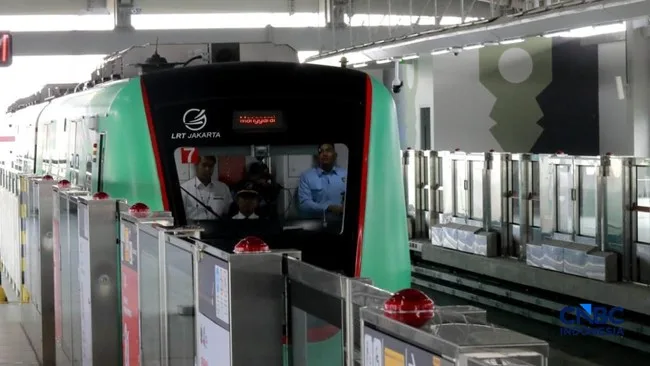
President Prabowo Subianto rode the Jakarta LRT on the Kelapa Gading–Manggarai route on Wednesday (16/9/2026) afternoon, shortly before inaugurating the line. He arrived at Kelapa Gading LRT Station, North Jakarta, at around 13.00 WIB and was immediately welcomed by Jakarta Governor Pramono Anung.
On the journey to Manggarai Station, Prabowo was accompanied by several ministers of the Merah Putih Cabinet, including State Secretary Minister Prasetyo Hadi, Transportation Minister Dudy Purwagandhi, Cabinet Secretary Teddy Indra Wijaya, and Presidential Chief of Staff Dudung Abdurachman. Also joining the group were students, community representatives, and disability groups.
Throughout the trip, Prabowo appeared to receive reports from Pramono on the line's operational readiness. He was also seen several times chatting with the students who joined the ride. After arriving at Manggarai, the agenda continued with the inauguration that formally marked the start of operations on the line.
The inauguration ends a long wait for a rail-based mode of transport connecting the densely populated area in northeast Jakarta with one of the largest stations in the capital. Previously, the Jakarta LRT only served a limited route from Kelapa Gading to Velodrome. Now its reach is extended to Manggarai, which has long been a meeting point for various train services.
For readers in Jakarta and its surroundings, this extension could cut travel time from the Kelapa Gading area to the city center, especially for commuters who have relied on private vehicles or buses. The flat Rp5,000 fare per trip is also relatively competitive compared with fuel and parking costs in destination areas.
From an investment standpoint, the presence of the LRT up to Manggarai could be a catalyst for the property market in Jakarta's eastern corridor. Areas such as Pulomas, Rawamangun, and Matraman may see rising demand for vertical housing and commercial space as accessibility improves. Developers holding land around the stations are expected to adjust their marketing strategies.
However, the biggest challenge is not the length of the line but intermodal integration at Manggarai. The station is known as one of the busiest hubs in Indonesia, serving the KRL Commuter Line, long-distance trains, and later the Jakarta MRT. The smoothness of passenger transfers from the LRT to other modes will determine whether this extension truly eases the traffic burden.
"Operational readiness and ticket integration are key to getting people to switch to public transport," said a Transportation Ministry official who did not wish to be named, describing the government's priority in developing integrated public transport.
The government aims for the Jakarta LRT to become the backbone of mobility in the eastern corridor, in line with plans to develop the MRT network and operate the high-speed train. If integration runs smoothly, the impact will be not only on mobility but also on the region's economic growth patterns.
The question now is whether this route extension will be followed by adequate additional rolling stock and operating hours, as well as a consistent fare policy. Without that, the inauguration momentum may not translate proportionally into the daily passenger numbers achieved.