China Opens Pinglu Canal, a New Logistics Route Threatening Traditional Southeast Asian Paths
Baca dalam 60 detik
- Kanal Pinglu sepanjang 134,2 km resmi dibuka, menghubungkan Nanning ke Teluk Tonkin tanpa harus memutar 560 km lewat Guangzhou.
- Dua rute kargo perdagangan langsung diluncurkan: Nanning–Can Tho (Vietnam) dan Nanning–Yangpu (Hainan), mengangkut bahan bangunan, batu bara, mineral, baja, dan pupuk.
- Pembukaan ini berpotensi menggeser peta logistik regional dan menekan biaya distribusi, dengan implikasi langsung bagi pelabuhan dan eksportir Indonesia.
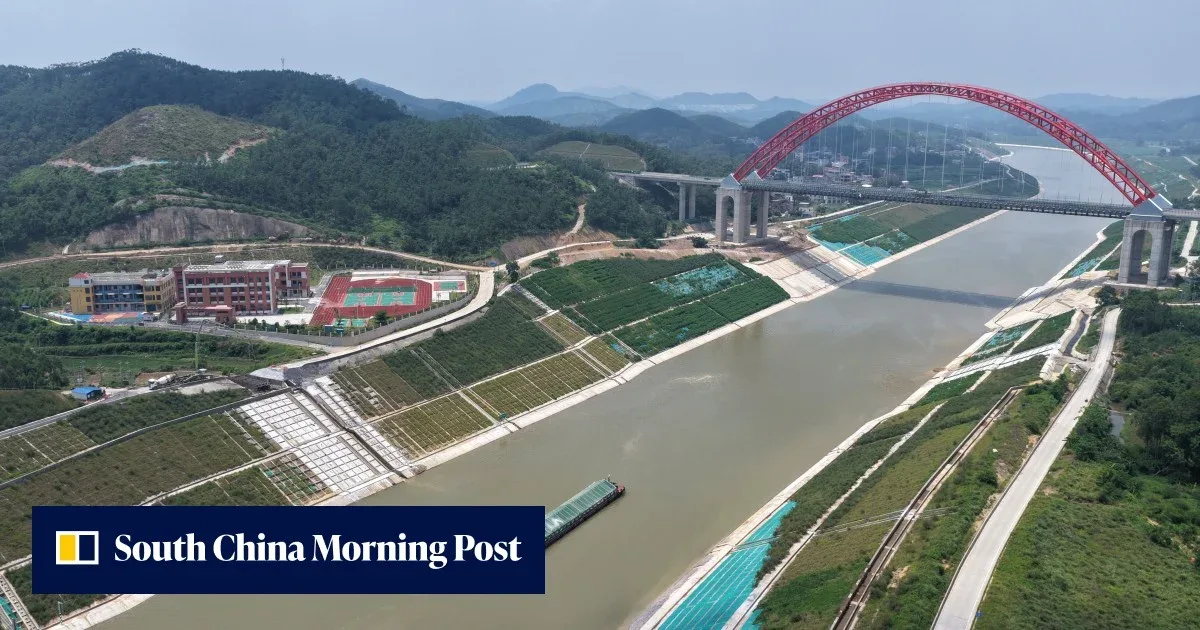
China has officially put the Pinglu Canal into operation, the first artificial waterway the country has built since 1949. The 134.2-kilometer canal connects Nanning, the capital of Guangxi, with the Gulf of Tonkin—known in China as Beibu Gulf—allowing cargo from inland provinces to reach the sea without having to detour roughly 560 kilometers through Guangzhou. The move is seen as Beijing's effort to strengthen logistics connectivity and deepen trade integration with Southeast Asia.
According to a CCTV report, two direct cargo routes began operating alongside the canal's inauguration: an international route linking Nanning with Can Tho in Vietnam, and a domestic route connecting Nanning with Yangpu in Hainan Province. On the opening day, about 30 cargo ships carrying construction materials, coal, minerals, steel, and fertilizer passed through the canal, with Nanning Port and Qinzhou Port as the main operators.
Cutting the travel distance by up to 560 kilometers is not just a number. For industry players, that difference means significant savings in transit time and logistics costs. The canal allows goods from inland regions such as Guangxi, Yunnan, and Guizhou to access sea routes directly, without relying on the traditional route through the Pearl River Delta. This efficiency could boost the competitiveness of China's exports, especially for bulk commodities and manufactured products.
For Indonesia, the opening of the Pinglu Canal presents both opportunities and challenges. On one hand, the new route could smooth the flow of bilateral trade, especially for commodities such as coal and minerals that have long been Indonesia's main exports to China. The shorter distance from southern Chinese ports to Southeast Asia could reduce shipping costs and speed up the supply of raw materials. On the other hand, China's improved logistics efficiency could strengthen its position as a regional distribution hub, which in turn could shift the role of Indonesian ports such as Tanjung Priok or Tanjung Perak in the global supply chain.
Logistics observers assess that the canal is part of China's long-term strategy to divert part of the trade flow from congested traditional routes while strengthening economic influence in the region. "This is not just an infrastructure project, but a geopolitical instrument that binds neighboring countries through logistics dependence," said an international trade analyst who did not wish to be named. The statement underscores that the canal could become a tool of Beijing's economic diplomacy, especially within the framework of the Belt and Road Initiative.
The Indonesian government needs to closely monitor this development. If it is not matched by improvements in domestic connectivity and port efficiency, goods flows could shift to the cheaper new route. Investment in the national logistics sector, including the development of hub ports and supply chain digitalization, is becoming increasingly urgent. In addition, Indonesia can use this moment to strengthen shipping cooperation with Vietnam and China, for example through direct route agreements that benefit both sides.
Going forward, the question is how much cargo volume will be diverted to the Pinglu Canal over the next five years, and whether ASEAN countries can respond with adaptive logistics policies. If not, the canal could serve as a reminder that infrastructure competition in the region is intensifying, and Indonesia cannot afford to be just a spectator.