Police Deploy Field Kitchen at Carita SAR Post: 300 Meals a Day for Joint Team and Victims' Families
Baca dalam 60 detik
- Satuan Brimob Polda Banten mengoperasikan dapur lapangan yang memasok 300 porsi makanan siap saji setiap hari selama operasi pencarian jurnalis hilang di Selat Sunda.
- Layanan logistik ini menjangkau personel SAR gabungan, warga sekitar, hingga keluarga korban yang menunggu di posko utama Pantai Carita, Pandeglang.
- Keberadaan dapur lapangan menjadi penopang non-teknis yang krusial ketika operasi memasuki hari kesembilan dengan medan pencarian yang semakin menantang.
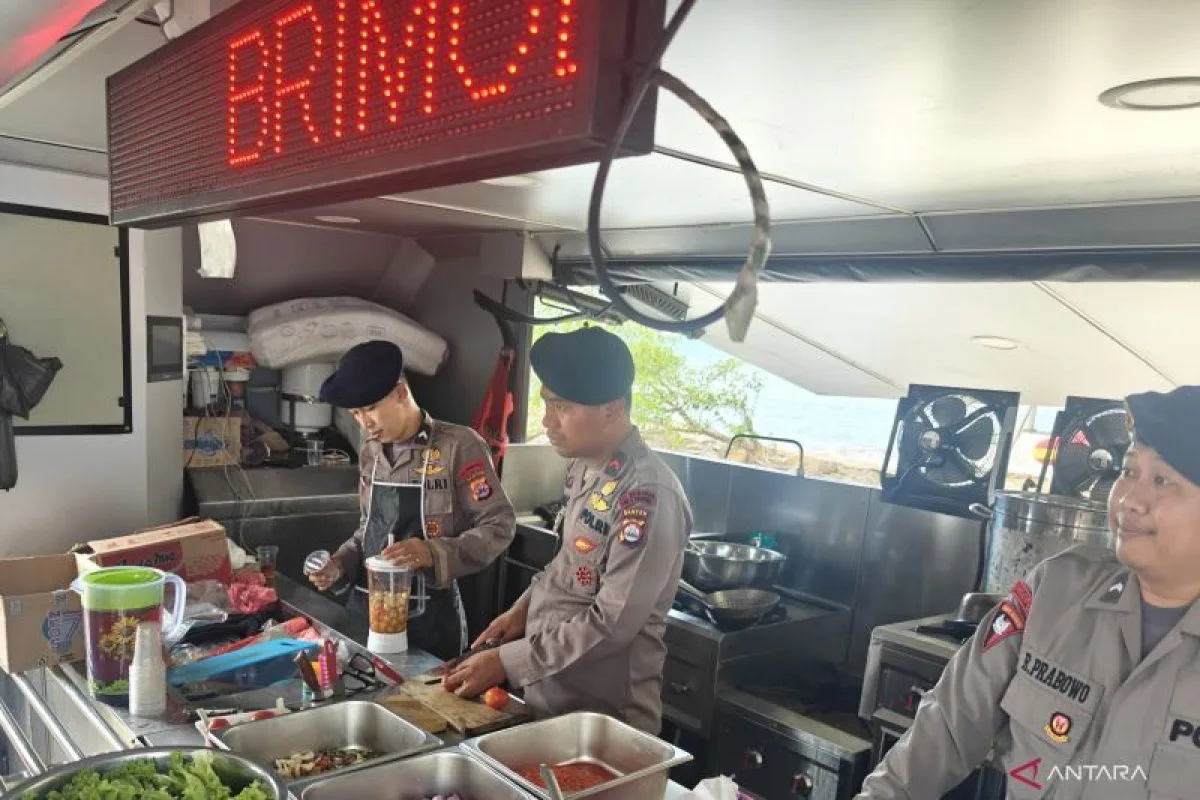
The Indonesian National Police (Polri) has deployed a field kitchen to the Main SAR Post at Carita Beach, Pandeglang Regency, Banten, to supply 300 ready-to-eat meals every day for personnel of the joint SAR team, residents, and the victims' families in the search operation for a group of journalists and the crew of the fast boat KM Arupadatu I, which has been missing in the Sunda Strait since Monday (7/9).
The field kitchen, run by the Banten Regional Police's Mobile Brigade (Brimob) unit, began operating on the second day of the search, Tuesday (8/9), and has since served meals three times a day—100 portions each for breakfast, lunch, and dinner. The head of the Polri Field Kitchen Team, Sadiel Marbun, said the facility was set up on the orders of the Banten Police Chief as a humanitarian action to ensure the logistical needs of all parties at the post are met.
According to Marbun, cooking starts at 05.00 WIB for breakfast, continues at 11.30 WIB for lunch, and at 19.30 WIB in preparation for dinner. "For those 300 portions, we cook for 1-1.5 hours, so we can make sure it's on time and that volunteers, officers, or anyone here doesn't go hungry," he said.
The field kitchen is run by seven personnel of the Banten Regional Police's Satbrimob who normally serve in logistics and tactical operations units. Marbun said the division of labor runs smoothly: some act as cooks, some process raw ingredients such as cutting and washing, and others buy daily logistics at the local market. "For example, this afternoon, on the ninth day of the operation, we prepared Manado-style Ayam Rica-rica, and tonight it will be different again, tomorrow different again," he said.
Besides main meals, the field kitchen also provides light dishes such as jelly and hot drinks. Marbun ensured that anyone at the Main SAR Post in Carita can use the service, including volunteers who want to brew their own coffee or tea. "Those 300 portions of food we provide have been accounted for. They run out, but volunteers can come here anytime to make their own coffee and tea, which are provided," he said.
The presence of the field kitchen is a crucial non-technical support amid the SAR operation, which has entered its ninth day. The search team was reported to have narrowed its range to the coast of the Sunda Strait, while Basarnas explained why it has not yet deployed a dive team to search for the journalists still missing. In such situations, the timely availability of logistics maintains the stamina and concentration of personnel in the field, while also giving a sense of security to the victims' families waiting at the post.
For readers in Indonesia, especially professionals and businesses in the logistics, catering, and emergency supply sectors, an operation like this shows the importance of agile small-scale supply chain readiness. A field kitchen capable of cooking 300 portions in a limited time and operating in a remote location is a real example of crisis management that companies can adopt when facing emergencies, whether natural disasters or humanitarian operations.
Going forward, the public will be waiting to see whether this SAR operation finds a breakthrough, and to what extent logistical support such as the field kitchen will continue to be maintained. What is clear is that the synergy between the police, Basarnas, volunteers, and the community at the Carita Post reflects how disaster response in Indonesia relies on cross-agency collaboration—a social capital worth preserving as the search challenges grow heavier.