Honda Admits F1 Engine Is Fragile at Altitude, Aston Martin Already Knew They Would Not Finish in Mexico
Baca dalam 60 detik
- Honda mengungkap penyebab kegagalan ganda Aston Martin di GP Meksiko: stres pendinginan ERS dan kerusakan MGU-K akibat kondisi ketinggian ekstrem.
- Tim sudah memprediksi kedua mobil tak akan mencapai garis finis, tetapi opsi mitigasi yang disiapkan ternyata tidak memadai.
- Honda membawa perbaikan perangkat keras dan lunak untuk GP Brasil, namun fokus utama tetap pada pengembangan unit daya 2027.
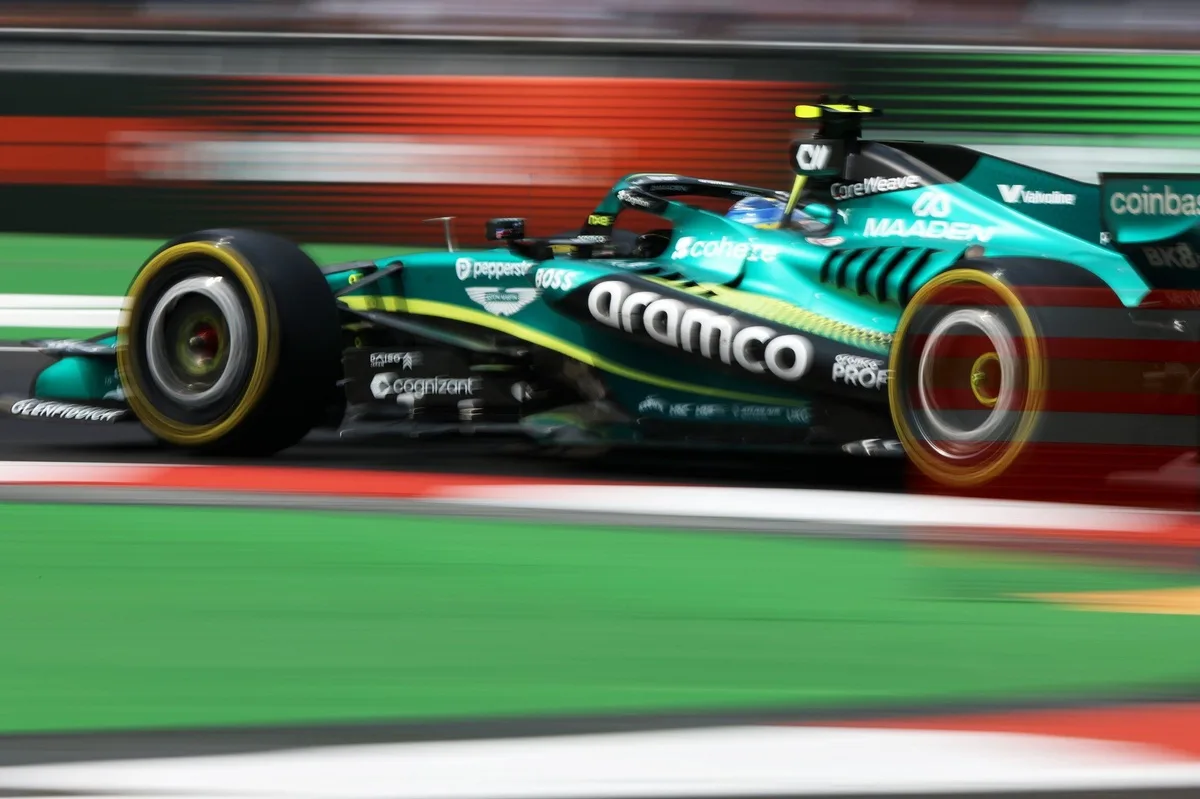
Aston Martin-Honda's total failure at the Mexico City Grand Prix was no sudden misfortune. The team and the engine manufacturer had known in advance that both cars would not be able to finish the race at the Autodromo Hermanos Rodriguez circuit, which sits at 2,286 meters above sea level—the highest on the Formula 1 calendar.
That certainty was disclosed by Aston Martin's Head of Track Engineering, Mike Krack, ahead of the Brazilian GP. “We knew about it beforehand, not on Sunday morning,” he said. Nevertheless, the team still drew up several scenarios to extend the cars' service life, from exploiting clean air and managing gear usage to reducing power output. But all those options ran out before they could be applied, because Fernando Alonso and Lance Stroll lasted only five laps before retiring due to “abnormal pressure in the power unit system”.
The Mexico incident had in fact been foreshadowed since qualifying. Alonso, who had been competitive, was ordered to stop his car in the Foro Sol area. Honda's chief engineer, Shintaro Orihara, explained that the special conditions on track—such as the laps to the grid and the tire-warming laps—triggered abnormal engine behavior. “There was pressure on the ERS cooling from the engine, then a failure occurred in the MGU-K,” Orihara said. He added that the extreme altitude factor worsened the problem.
For Honda, the incident is a heavy blow amid efforts to rebuild its reputation as a reliable engine supplier. Nevertheless, Orihara stressed that the manufacturer had brought countermeasures for the Brazilian GP, which is also held at altitude though not as extreme as Mexico. “We are bringing remedial measures, not only in hardware but also in software to improve durability under those conditions,” he explained.
“The learning point is that our engine, under special conditions, has a durability shortfall. We are taking this experience back to the factory to prevent it from happening again,” Orihara said.
More importantly, Honda does not want to merely patch up a short-term problem. The factory in Japan is currently focused on developing the power unit for the 2027 regulatory era. The bitter experience in Mexico will be used to improve engine reliability next year. “This is a tough race for Honda, but we will apply these lessons to next year's engine,” Orihara added.
For Aston Martin, the failure in Mexico underscores that the technical partnership with Honda still needs maturing, especially in dealing with circuits of extreme character. The Silverstone-based team must quickly find a solution so as not to lose more points in the remainder of the season. Meanwhile, for Honda, the Brazilian GP is the first test of the effectiveness of their fixes. If a similar problem reappears at Interlagos, public pressure will grow even greater.
The question now is: are Honda's remedial steps enough to overcome the vulnerability at high-altitude circuits, or is a fundamental design change needed that will only be seen in 2027? The answer will begin to emerge in São Paulo this weekend.