Bessent Vs Zelenskyy: US Accusation Over Starlink Curbs Sparks New Washington-Kyiv Friction
Baca dalam 60 detik
- Menteri Keuangan AS Scott Bessent memperingatkan Presiden Ukraina Volodymyr Zelenskyy agar berhati-hati menuduh Washington membatasi layanan Starlink.
- Pembatasan Starshield—versi militer Starlink—dinilai menghambat operasi drone Ukraina, sementara Musk menyatakan kendali penuh ada di tangan pemerintah AS.
- Ketegangan ini memperuncing hubungan AS-Ukraina di tengah tekanan harga energi jelang pemilu midterm, dengan implikasi pada pasokan senjata dan diplomasi.
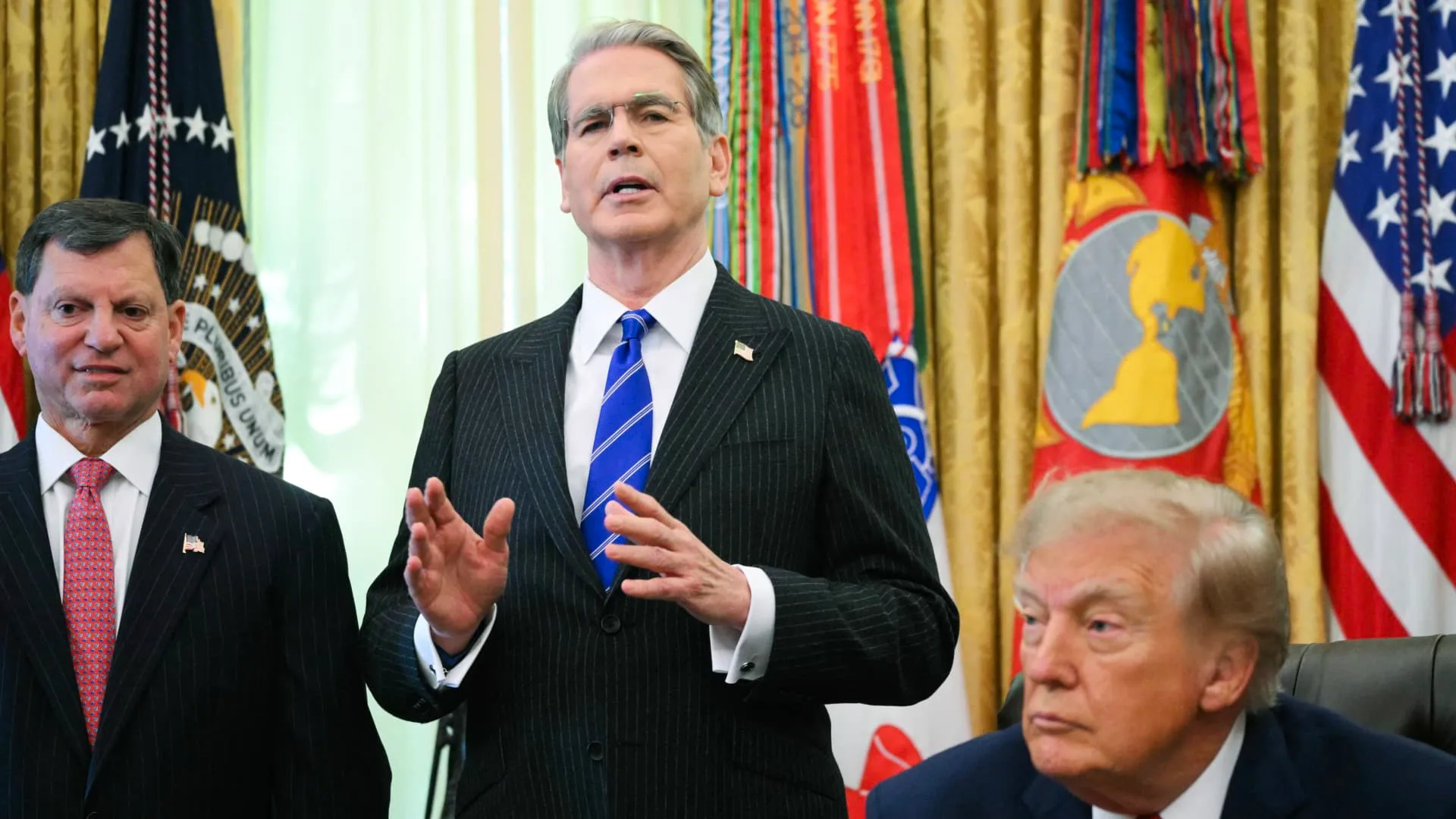
US Treasury Secretary Scott Bessent on Sunday (18/10) issued a sharp warning to Ukrainian President Volodymyr Zelenskyy to be careful in making public statements about Washington's support for Kyiv. The warning came after Zelenskyy accused the US government of being responsible for restrictions on the Starlink internet service used by Ukraine's military.
In an interview on NBC's “Meet the Press,” Bessent stressed that President Donald Trump and Secretary of State Marco Rubio had denied government involvement in the restrictions. “It is very reckless for President Zelenskyy to make such accusations,” Bessent said, adding that false statements could damage bilateral relations.
Zelenskyy had earlier claimed that Ukraine was at one point “blocked” from US intelligence and that vehicles and drones connected to Starshield—the government-controlled military version of Starlink—were still speed-limited. The accusation drew attention because Starshield plays a crucial role in Ukraine's ability to respond to Russian attacks.
Bessent's remarks sharpened friction within Trump's own administration. Reuters reported last week that the White House ordered the technology restrictions, but Trump denied responsibility. “I don't know if anybody did it because it wasn't me, and I don't think it was Elon,” Trump said. “From what I understand, it's the same as usual.”
On the other side, Elon Musk said in a post on X that the Starshield system is fully owned and controlled by the US government. “Any speed or usage limits are decided by the US military and ultimately the POTUS,” he wrote. The statement implicitly rejects the narrative that SpaceX acted unilaterally, while placing political responsibility in the executive branch.
“President Zelenskyy should be very careful in making statements like this that are not true,” Bessent said.
The tension is not merely about technology. US-Ukraine relations are at their lowest point in recent years. Trump has repeatedly voiced frustration over Ukrainian strikes on Russian oil refineries, which he says have helped drive up domestic energy prices. Trump even accused Zelenskyy of deliberately creating problems for US farmers and ranchers through higher diesel prices.
Domestic political pressure in the US is mounting ahead of the midterm elections. Soaring gasoline prices caused by disruption in the Strait of Hormuz have pushed the White House to look for openings, including plans to import Russian diesel—a policy that has drawn bipartisan criticism. Republican Senator Thom Tillis called the move “irresponsible” and “unacceptable” because it was seen as giving Russia a boost.
Congress has just sent a bipartisan sanctions package aimed at crippling Russia's energy industry. Trump signed it, but this weekend he canceled part of its provisions, citing national interest. The decision sparked anger among legislators, including from his own party, who believe the administration has given in to Moscow's aggression.
For Indonesia, this dynamic is worth watching. As a non-aligned country that relies on global energy price stability, escalating tensions in Eastern Europe and fluctuations in oil supply could affect subsidy burdens and domestic inflation. In addition, military technology restrictions such as Starshield show that digital infrastructure is now a geopolitical instrument that can be used to pressure other countries—a precedent relevant to Indonesia's technological sovereignty.
Looking ahead, will the Trump administration maintain the Starshield restrictions as leverage against Kyiv, or loosen them to ease tensions? The answer to this question will not only shape the course of the war in Ukraine but also US credibility as a strategic partner in the eyes of its allies.