Wall Street Rebounds Slightly, but the AI Credit Market Starts Flashing Danger
Baca dalam 60 detik
- Kontrak berjangka Nasdaq-100 dan S&P 500 kompak naik 0,2% pada perdagangan Minggu malam, sinyal awal investor mulai mengakumulasi saham teknologi yang tertekan pekan lalu.
- Spread kredit emiten AI dan hyperscaler melebar ke level terlebar sepanjang tahun, memicu kekhawatiran bahwa lonjakan belanja modal AI telah mencapai puncaknya.
- Rilis kinerja Meta dan Tesla pekan ini menjadi ujian apakah optimisme laba korporasi mampu mengalihkan pasar dari tekanan sektor kredit dan gejolak minyak.
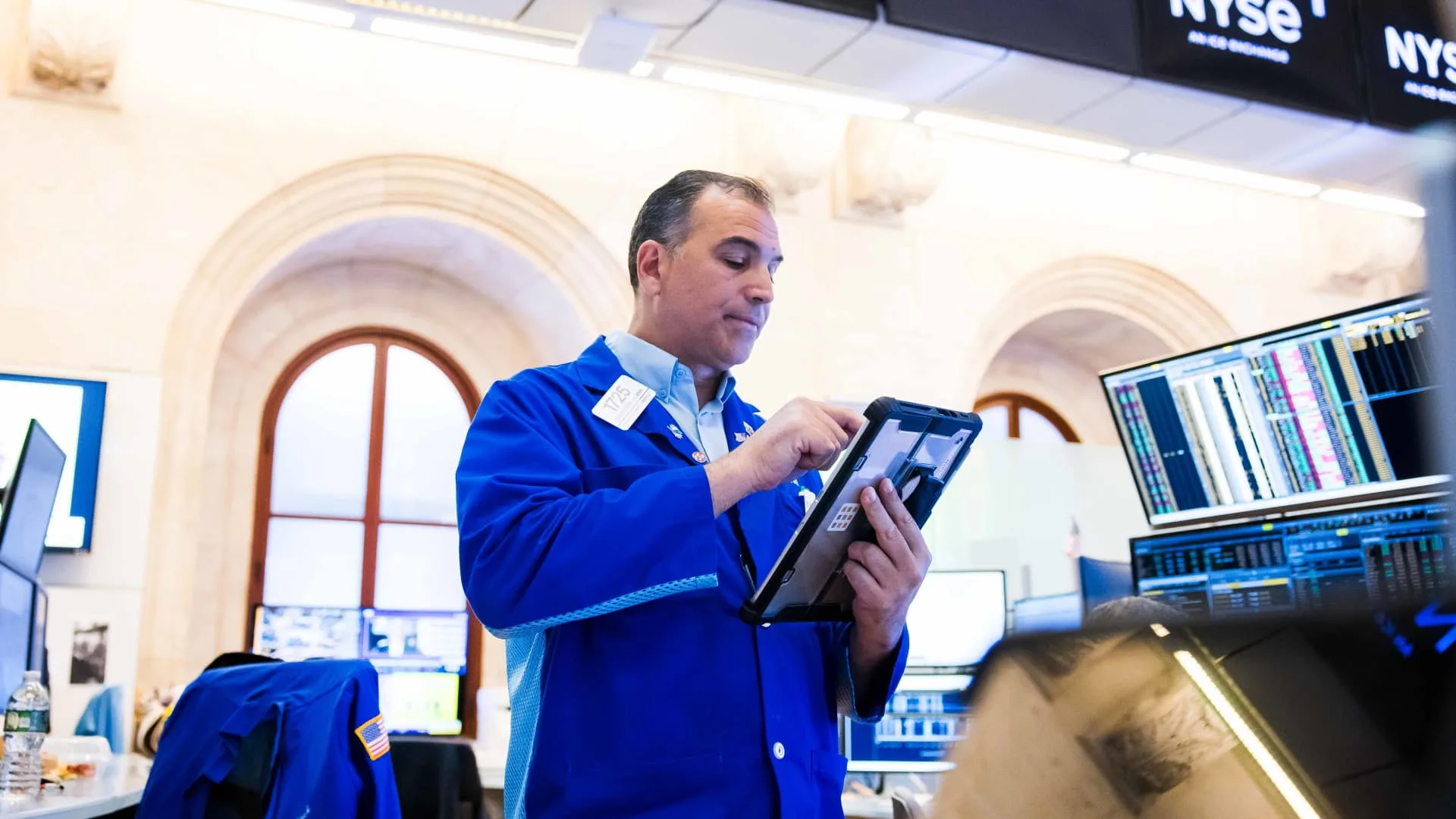
Nasdaq-100 and S&P 500 futures each rose 0.2% at the open of Sunday night trading in New York, signaling that some market participants are starting to add exposure to technology shares again after last week's sharp correction. The move itself was relatively modest, but enough to show that buying on dips, or buy the dip, has not entirely vanished from the US stock market.
The previous week was the worst period for the S&P 500 since the end of June, with a decline of nearly 2%. The Nasdaq even tumbled 4.5%, snapping a four-week winning streak. The triggers were multiple: still-hot inflation data, a wave of selling in artificial intelligence (AI)-related shares, and oil prices swinging wildly amid rising geopolitical tensions in the Middle East and the Russia-Ukraine conflict.
What drew the most market attention was pressure on the credit side. Shares of CoreWeave, a neocloud issuer that builds data centers with heavy debt to lease to technology companies, plunged 25% over the past week, its worst weekly decline since November 2025. More than just a stock price correction, the corporate bond market is starting to move away from CoreWeave. The company's credit default swap (CDS) has touched distress levels, an indication that investors see default risk as increasingly real.
Pressure in the credit market does not stop at CoreWeave. Goldman Sachs' trading team said in a Friday note that credit spreads for AI and hyperscaler issuers are at their widest levels of the year. They warned that the last time spreads were in such a high range, benchmark share prices were about 15% lower than current levels. In other words, the bond market has given a warning signal ahead of the stock market.
"The widening of spreads across the AI complex forces investors to confront a scenario of slowing AI spending growth. AI capital expenditure may have already peaked, and what is now being debated is financing, sustainability, and returns on capital, no longer short-term earnings revisions," the Goldman Sachs analysis said.
Goldman also noted rising pessimism, with market breadth, or the distribution of advancing shares, being narrow. On Friday, put option trading volume was recorded as the second-highest of the year, behind only June. This indicates that market participants are rushing to buy insurance to protect portfolios from further declines.
On the other hand, oil prices actually moved slightly lower early in the week despite escalating geopolitical tensions. Brent weakened 1% to US$108.80 per barrel, while US crude (WTI) fell 0.2% to US$101.18. Ukrainian drone attacks hit oil terminals and depots in St. Petersburg, Russia, on Sunday, according to St. Petersburg Governor Alexander Beglov. Two tankers were also attacked off the coast of Saudi Arabia in the Persian Gulf on Friday, based on an incident report from the UK Maritime Trade Operations Centre.
Nevertheless, longer-dated oil futures are starting to climb as the market expects disruptions to energy infrastructure could last until 2027. For Indonesia, this movement warrants close attention. As a net oil importer, a sustained rise in oil prices will pressure the oil and gas trade balance deficit, widen the energy subsidy burden, and ultimately erode people's purchasing power. The government has limited fiscal room, so every surge in global oil prices becomes a test for domestic price stabilization strategy.
This week, market attention will shift to the quarterly earnings season. Meta Platforms and Tesla are scheduled to report their financial results. Some analysts hope the earnings reports from these giants can stabilize the market and ease concerns triggered by turmoil in the AI credit sector. However, if the results disappoint, selling pressure could intensify again, especially in shares bought on high growth expectations.
The question now: is this week's slight opening gain the start of a recovery, or just a pause before the next storm? The bond market appears to have given an early answer, and the stock market still has to prove that optimism about AI has not run out of steam.