Honeybees Are Garden 'Bullies': Driving Out Wild Bees for Nectar
Baca dalam 60 detik
- Riset di Cambridgeshire mengungkap lebah madu melakukan kompetisi interferensi—menabrak dan mengusir lebah liar dari bunga—bukan sekadar berebut sumber daya.
- Populasi lebah madu yang dikelola melonjak dua kali lipat dalam 15 tahun terakhir, memicu kekhawatiran penurunan keanekaragaman penyerbuk liar.
- Pemanasan global berpotensi memperbanyak konflik antarpenyerbuk karena nektar mengering dan tanaman mengalami cekaman panas.
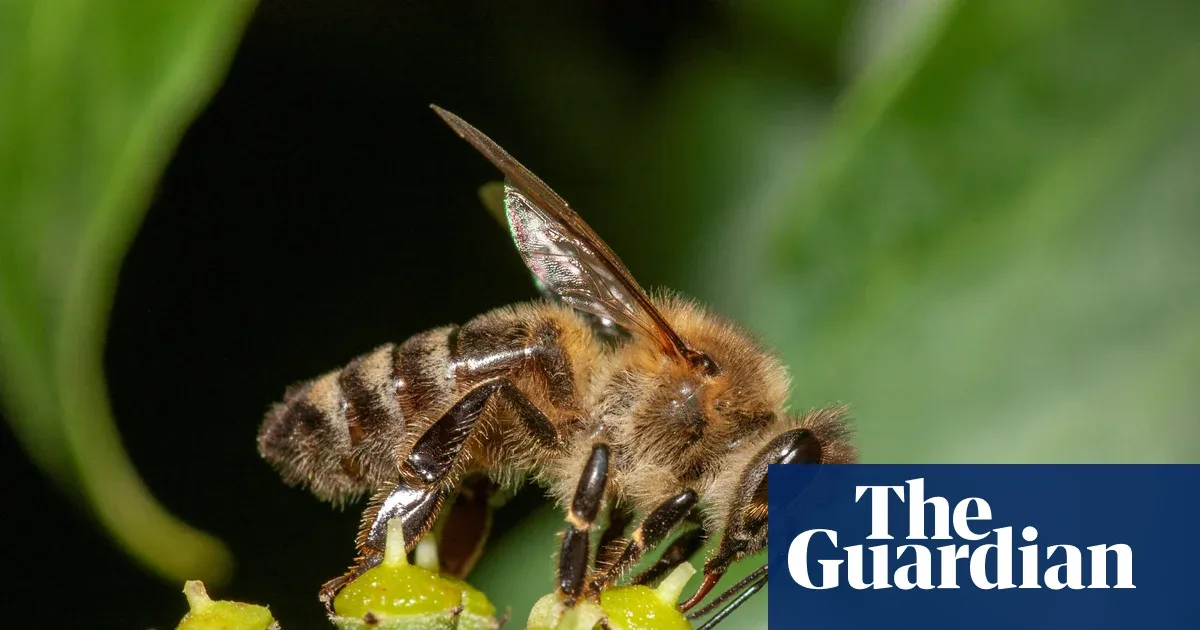
Honeybees (Apis mellifera) do not merely compete passively for nectar and pollen. Recent research from Anglia Ruskin University shows that these managed insects actively ram, push, and drive wild bees and other pollinators away from flowers—an aggressive behavior that has largely gone unnoticed.
The study, published in a scientific journal, observed 300 interactions in the Cambridgeshire farmland area over two years. It focused on bramble flowers (a type of rubus) and ivy (a climbing plant). The results were consistent: at sites with high honeybee hive density, populations of wild bees—including bumblebees, solitary bees, and hoverflies—were recorded at lower levels. Honeybees were also the most frequent initiators and winners of contests over space on flower heads.
"This matters because wild pollinators now face two kinds of pressure at once: indirect competition through resource depletion, and direct competition in the form of physical attacks," said Victoria Buckle, the study's lead researcher, as quoted from an interview with British media.
What sets these findings apart from earlier research is the identification of "interference competition"—an ecological term for physical attacks aimed at blocking an opponent's access to resources. Buckle explained that honeybees have a guard bee caste that is naturally equipped with the ability to defend the hive aggressively. That same ability appears to be used when foraging for food outside the colony.
"Bumblebees do sometimes bump into other pollinators, but that is more because their movements are uncoordinated. With honeybees, the aggression is clear and directed—they deliberately push opponents away from flowers," Buckle said.
The phenomenon is tied to the surge in popularity of beekeeping in the UK. Massive "save the bees" campaigns have encouraged thousands of residents to set up hives in their backyards. Unfortunately, that conservation euphoria has turned into a threat to biodiversity. The species being protected has instead become a dominant competitor in landscapes where floral supply is limited.
Interestingly, one pollinator can stand up to honeybee dominance: the ivy bee (Colletes hederae). First recorded in the UK in 2001, this species has been observed several times driving away and chasing honeybees. However, Buckle cautioned that this balance is fragile. She estimated that a rise in average summer temperatures of up to 4°C by 2080—a projection used by the UK government—will worsen the competition. The reason is that nectar evaporates faster and plants suffer heat stress, so flowers produce less food.
For Indonesia, these findings are relevant even though the context differs. Indonesia has high wild bee diversity, including stingless bees (Trigona spp.) and giant honeybees (Apis dorsata). Honeybee farming (Apis cerana and Apis mellifera) also continues to grow to meet domestic honey demand. This study serves as a warning that placing commercial hives near conservation areas or protected forests needs to be regulated so as not to suppress endemic wild bee populations. The Ministry of Environment and Forestry does not yet have specific regulations on the carrying capacity of forage for managed bees, so current beekeeping practices rely more on the initiative of beekeepers.
Buckle stressed that further research needs to test the effectiveness of mitigation strategies, such as arranging flowering landscapes or limiting hive density in certain areas. She also highlighted that most beekeepers have good intentions toward the environment. "This research is important for guiding best conservation practices, not for blaming beekeepers," she said.
The question then is: if honeybees—the species long held up as the icon of insect rescue—are actually a threat to their wild relatives, should conservation campaigns be overhauled from simply "adding hives" to "maintaining diverse forage and habitat"? The answer to that question will shape biodiversity policy in many countries, including Indonesia, over the next decade.