Octane Coffee: Full Automation, Coffee Ready in 18 Seconds
Baca dalam 60 detik
- Octane Coffee menghadirkan gerai otomatis tanpa barista, mengandalkan robot dan aplikasi untuk menyajikan minuman dalam hitungan detik.
- Model bisnis ini menekankan efisiensi biaya tenaga kerja dan konsistensi rasa, berpotensi mengubah lanskap industri kopi global.
- Dengan rencana waralaba dan retrofit, Octane membidik pasar yang lebih luas, termasuk peluang di Indonesia yang memiliki budaya kopi kuat.
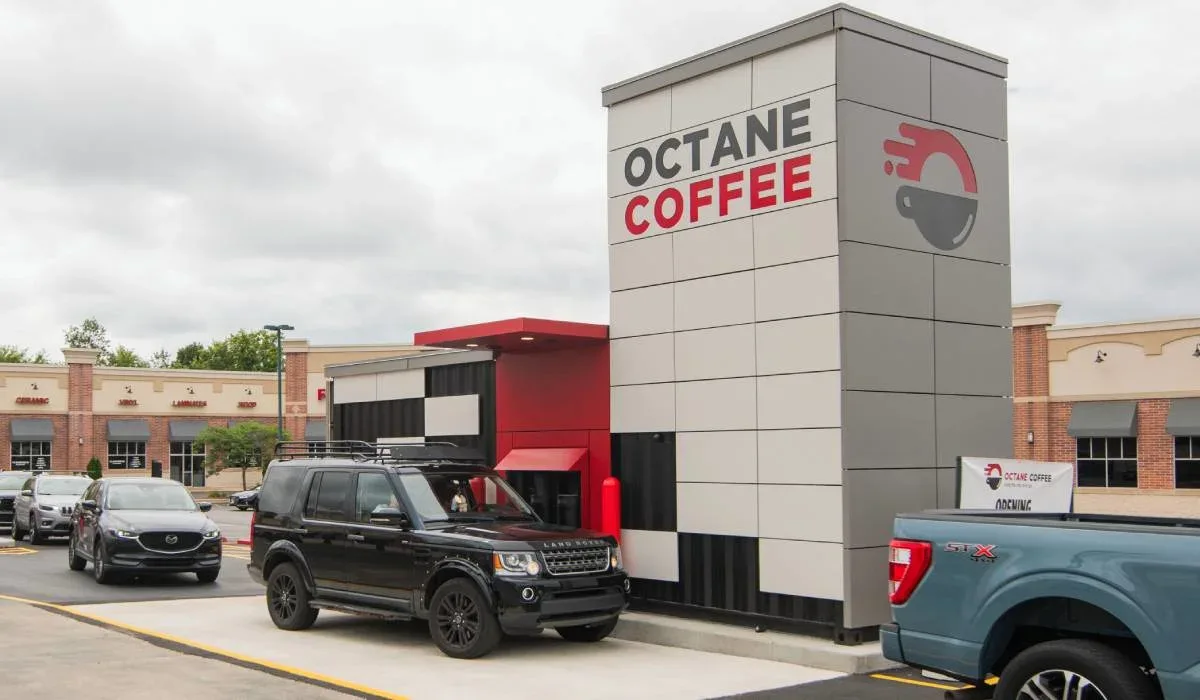
In Brookfield, Wisconsin, a 30-foot shipping container has been transformed into a staffless coffee shop. Octane Coffee, as it is called, relies on robotic systems and a mobile app to serve customers. Its founder, Adrian Deasy, a mechanical engineer who grew tired of long drive-thru lines, created the concept to cut wait times from 20 minutes to under 30 seconds.
Octane is not just an ordinary coffee shop. Customers order through the app, which then tracks their location and syncs their arrival time with the drink-making process. The goal is for the order to be finished just before the customer reaches the pickup window. "We time everything so the drink is done a few seconds before they arrive," Deasy said. The system is designed to produce more than 200 drinks per hour, or one drink every 18 seconds.
Octane's business model centers on reducing reliance on human labor. There is only one "Java tech" who visits the outlet daily to clean, restock, and troubleshoot. Deasy argues that robots should handle the heavy and stressful tasks, while humans are placed in positions that require a personal touch. "Let robots do the hard things, and put humans where they can do well," he said. He compared the experience at a conventional coffee shop, where baristas turn their backs and customers only see the backs of their heads, with Octane, which offers minimal but efficient interaction.
Even so, Octane faces challenges. The system is still in testing with one outlet, and Deasy acknowledges that most problems that arise are caused by human factors, not the machines. "Nine out of ten problems are always human-related. The robot never makes a mistake," he asserted. To address doubts, he challenged skeptics: "It's already running. It takes a lot of faith and a lot of spilled coffee."
Octane is pursuing two growth tracks. First, the consumer business will be franchised, with a debut opening in the fourth quarter of this year, pending an FDD filing. In addition, two to three company-owned outlets will open over the next year to test manufacturing, service, and remote support. Second, Octane offers automation solutions for other beverage and food operations by retrofitting existing locations. "We can take the contents of the container and install them inside an existing location," Deasy explained.
"As engineers, we have a culture of continuous improvement. We always try to make everything 1-2 percent better," Deasy said.
In Indonesia, where coffee culture is strong and long lines at coffee shops are a common sight, a concept like Octane could be appealing. However, local challenges such as consumer preference for human interaction, as well as uneven digital infrastructure, could be obstacles. Even so, with the rapid growth of modern coffee shops and technology adoption in major cities, automation could be a solution to improve efficiency and consistency. Will this staffless model be accepted in the Indonesian market, or will it lose the personal touch that is the main draw? Time will tell, but Octane has shown that the future of coffee may not require a barista.