Former KPU Chair Denies Smuggling of PKPU Article: Forgetting Is Allowed, Hypocrisy Is Not
Baca dalam 60 detik
- Hasyim Asy'ari membantah tuduhan bahwa Pasal 18 ayat (3) PKPU 19/2023 diselundupkan tanpa pembahasan.
- Ia menegaskan pasal tersebut telah dibahas dalam RDP 20 September 2023 dan disetujui bersama, termasuk oleh Ahmad Doli Kurnia dan Arsul Sani.
- Hasyim meminta DKPP berlaku adil dalam memeriksa pengaduan, mengingat DKPP juga terlibat dan menandatangani kesimpulan RDP.
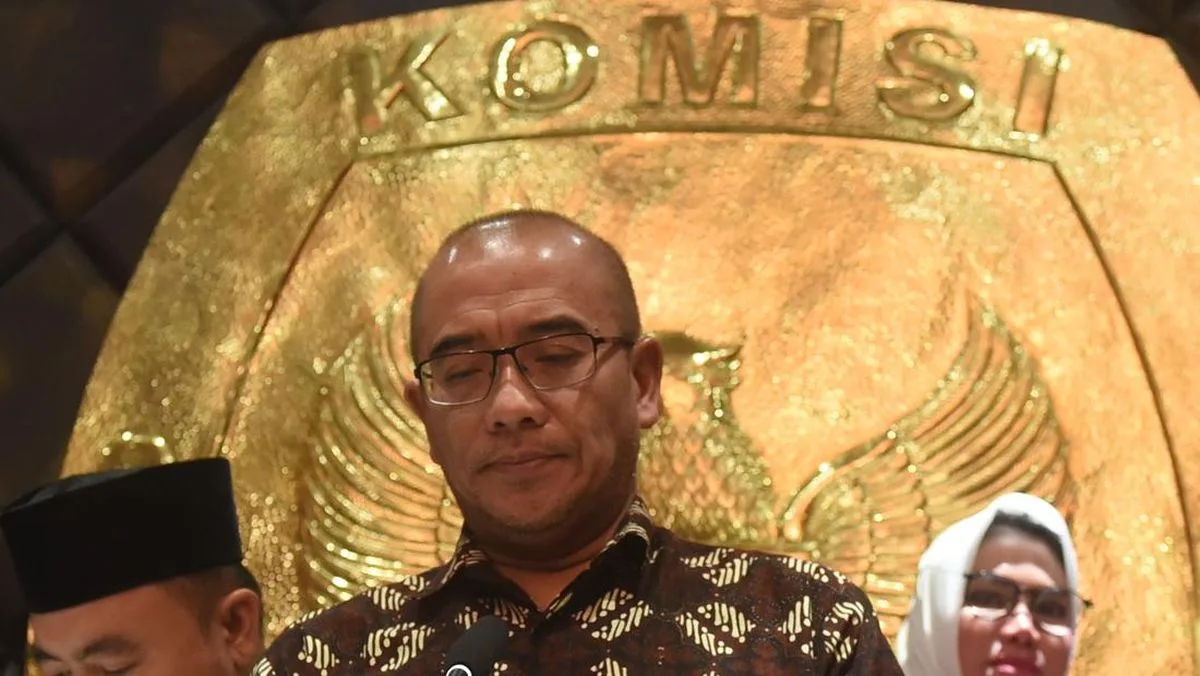
Former Chairman of the Indonesian General Elections Commission (KPU) Hasyim Asy'ari strongly denied allegations that Article 18 paragraph (3) of KPU Regulation (PKPU) Number 19 of 2023 on the Nomination of Participants in the 2024 Presidential Election was smuggled in without deliberation. The denial came after a statement by House Commission II member Ahmad Doli Kurnia, who claimed he never discussed the article in a meeting with the KPU.
Hasyim explained that on 19 September 2023, the KPU sent a letter to the House to consult on four draft PKPU regulations, including the draft PKPU on the Nomination of Presidential and Vice Presidential Candidates. A hearing (RDP) was then held on 20 September 2023 with the agenda of consulting on the draft. At that meeting, Article 18 paragraph (3), which was originally in Article 19 paragraph (2), was one of the items discussed, and Bawaslu also provided input.
According to Hasyim, there was no record of objection from meeting participants to the article. He stressed that election organizers—the KPU, Bawaslu, and DKPP—were present and actively involved, and even signed the RDP conclusions. "The accusation of smuggling and manipulating the article is untrue," he said when confirmed, Monday (12/10).
"Ahmad Doli Kurnia Tandjung was present leading the RDP and signed the approval of the RDP Conclusions. Arsul Sani, a House Commission 2 member and now a Constitutional Court justice, also attended the RDP."
Hasyim also took a swipe at Arsul Sani's statement during the PHPU hearing, which had touched on the article. He imagined the questions of the angels Munkar and Nakir to Doli and Arsul: whether both were present at the discussion of the draft PKPU, knew of the existence of the article in question, and approved it. The jab reinforced his argument that the article was known to many parties.
Furthermore, Hasyim cited the hadith of the Prophet narrated by Bukhari and Muslim from Abu Hurairah about the characteristics of a hypocrite. "Therefore, on this occasion I want to call on all parties: forgetting is allowed, hypocrisy is not," he stressed. The call became the peak of his criticism of those he considered to have forgotten or pretended to forget the legislative process that had taken place.
Previously, Ahmad Doli Kurnia claimed he did not know of the existence of Article 18 paragraph (3) in the PKPU during the Commission II meeting with the KPU. "As far as I know, that paragraph did not exist. I am still confirming with various parties, including colleagues at the secretariat, because at that time what we discussed was purely the Constitutional Court change," he said. The statement contrasts with the documents and Hasyim's testimony.
Criticism of the article also came from the legal counsel for Denny Indrayana and others, Bambang Widjojanto. He assessed that Article 18 paragraph (3) was deliberately created to pave the way for Gibran Rakabuming Raka as vice presidential candidate in the 2024 Presidential Election. "Article 18 paragraph (3) is so very much the Gibran Article and it was passed through to the KPU," Bambang said at the Constitutional Court, Tuesday (6/10). The criticism emerged after the Constitutional Court ruled that the petition challenging the validity of Gibran's educational requirement was inadmissible.
Hasyim asked the Election Organizers Ethics Council (DKPP) to act fairly, proportionally, and carefully in examining complaints related to the emergence of the article. He reminded that the DKPP was also involved in the RDP and signed the conclusions, so there was a potential conflict of interest. The request highlighted the importance of neutrality of the election supervisory body amid a polemic that has dragged in big names.
This case is not merely a legal debate, but also a test of the integrity of the legislative process and the enforcement of ethics among election organizers. If the DKPP is unable to deliver justice, public trust in democratic mechanisms could erode. Will this polemic end in an ethical sanction, or instead become a precedent that controversial articles can pass without accountability?