Glamsterdam Test on Sepolia: Ethereum Block Capacity Reaches 200 Million Gas
Baca dalam 60 detik
- Jaringan uji Sepolia mencatat batas gas blok mendekati 200 juta, naik lebih dari tiga kali lipat dari sebelumnya sekitar 60 juta.
- Peningkatan kapasitas tidak otomatis berarti transaksi tiga kali lebih banyak karena perubahan perhitungan gas untuk tugas tertentu.
- Pengembang menunggu hasil Sepolia sebelum mengaktifkan Hoodi pada 27 Oktober, sementara mainnet belum memiliki jadwal pasti.
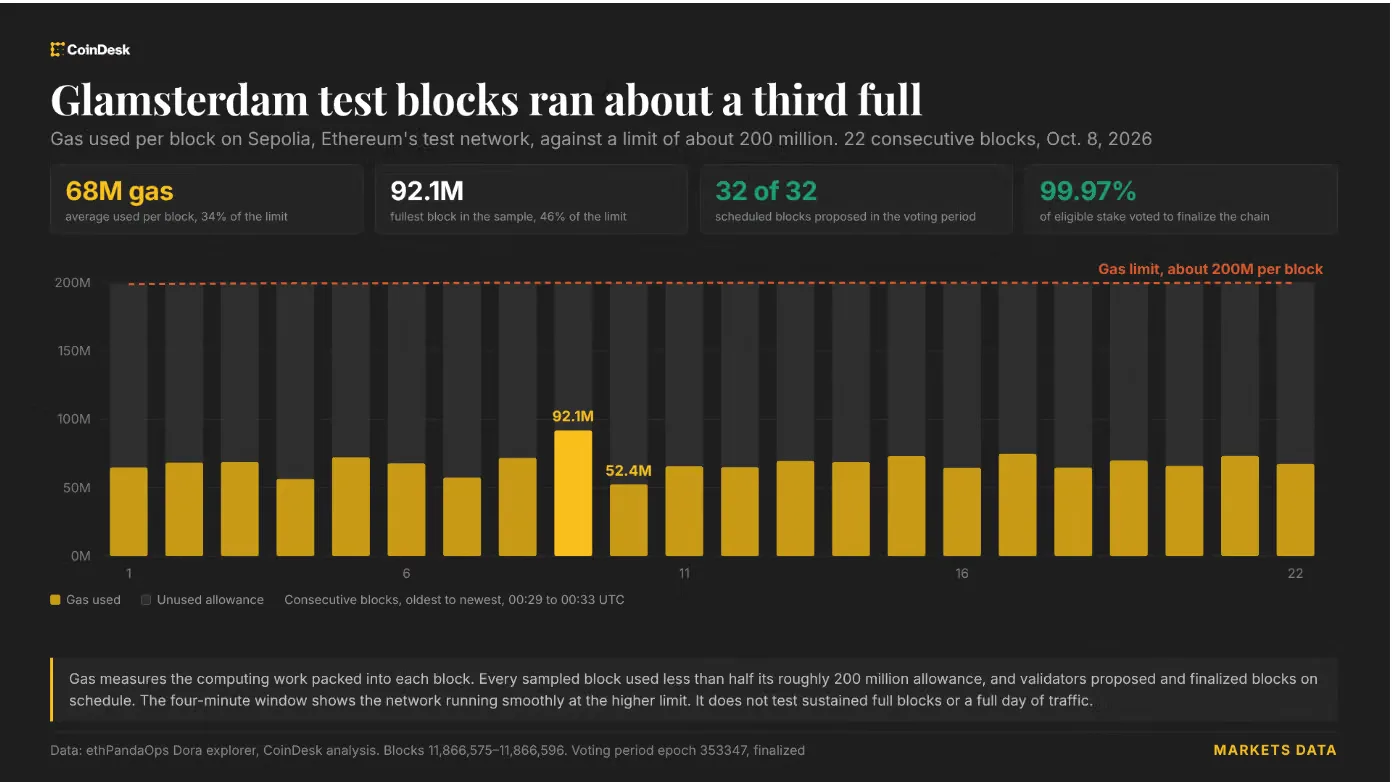
Ethereum is testing an increase in transaction processing capacity through the Glamsterdam upgrade, which has been active on the Sepolia public test network since Tuesday. In the test, the gas limit per block surged to nearly 200 million, far above the previous level of around 60 million. Gas itself is a unit that measures the computational load of processing transactions on the blockchain.
The surge is an early signal that Ethereum is trying to address congestion that often drives up transaction fees when the network is busy. However, a higher gas limit does not automatically translate into a proportional increase in the number of transactions. That is because Glamsterdam also changes gas accounting for certain tasks, so a threefold increase in the processing budget does not automatically produce three times as many transactions.
Based on monitoring of more than 25 consecutive test blocks, each block used only about 52 million to 92 million gas, equivalent to 26% to 46% of the available allocation. No block came close to full capacity—a condition that is in fact the most challenging point for the computers running the network. In a separate six-minute voting period early Thursday, all 32 scheduled blocks were successfully proposed and 99.97% of eligible testnet stake voted toward finality, according to an explorer from the ethPandaOps testing group.
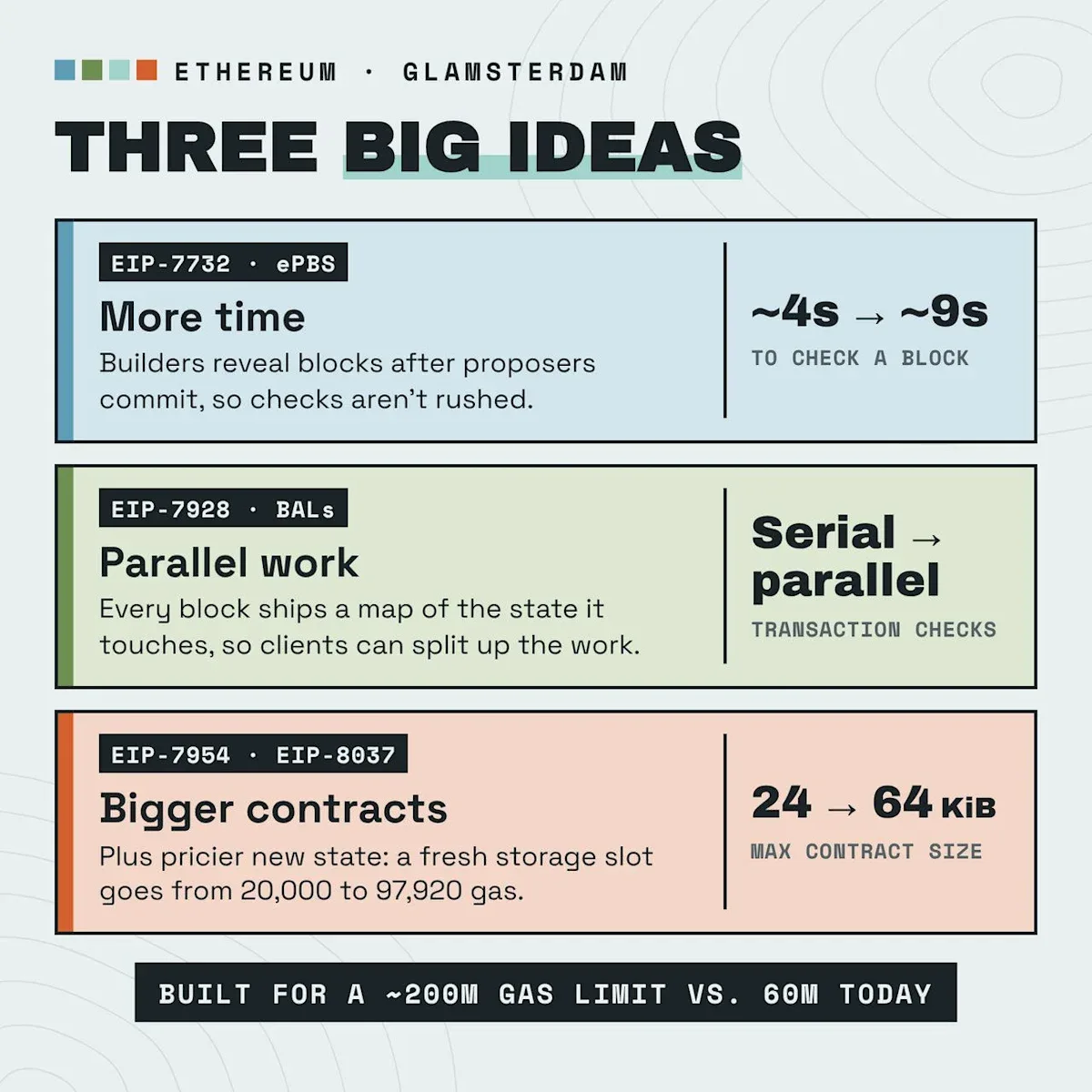
Glamsterdam brings fundamental changes to how Ethereum computers divide work. The upgrade incorporates the handoff process between "specialists" that assemble transactions and validators that publish blocks into the network rules, giving validators more time to check transaction computations. In addition, each block includes a list of accounts and stored information touched by its transactions. Software can use that list to fetch data earlier and check unrelated transactions simultaneously, instead of processing everything sequentially.
"This capacity increase is an important step to make room for more payments and trading, but the technical challenge remains significant because network stability must be maintained," said an Ethereum core developer in a community discussion, as quoted from the source.
Even so, handling more activity still burdens the computers running Ethereum. The upgrade adjusts the cost of creating and accessing stored data, and developers are asked to retest applications that assume certain gas costs. These changes could affect decentralized applications (dApps) operating on the network, especially those with complex interaction patterns with data storage.
In the Indonesian context, the increase in Ethereum capacity could affect the domestic crypto ecosystem. According to data from the Commodity Futures Trading Regulatory Agency (Bappebti), the value of crypto asset transactions in Indonesia reached hundreds of trillions of rupiah in 2025, with Ethereum as one of the main assets. If this upgrade succeeds, transaction fees on the Ethereum network could become more stable, which could encourage the adoption of digital payments and asset tokenization in the country. However, domestic industry players need to pay close attention to changes in gas costs because they could affect the development strategy of Ethereum-based projects.
Next, the Hoodi public test network is scheduled for October 27, pending the results from Sepolia. Meanwhile, the Ethereum mainnet does not yet have an official activation date. The question is whether this capacity increase will be enough to accommodate a surge in future demand, or whether it will instead create new challenges for validators and application developers. Time will test how ready the Ethereum ecosystem is for a new era with denser transactions.