Peter Fluck, Creator of Spitting Image and Its Piercing Parodies of British Politics, Dies at 85
Baca dalam 60 detik
- Peter Fluck, seniman di balik boneka satir Spitting Image, meninggal pada usia 85 tahun setelah sakit singkat.
- Spitting Image menjadi fenomena budaya pada 1980-an hingga 1990-an dengan sindiran tajam terhadap politisi dan bangsawan.
- Karya Fluck dan Roger Law mengubah cara media mengkritik kekuasaan melalui parodi visual yang berani.
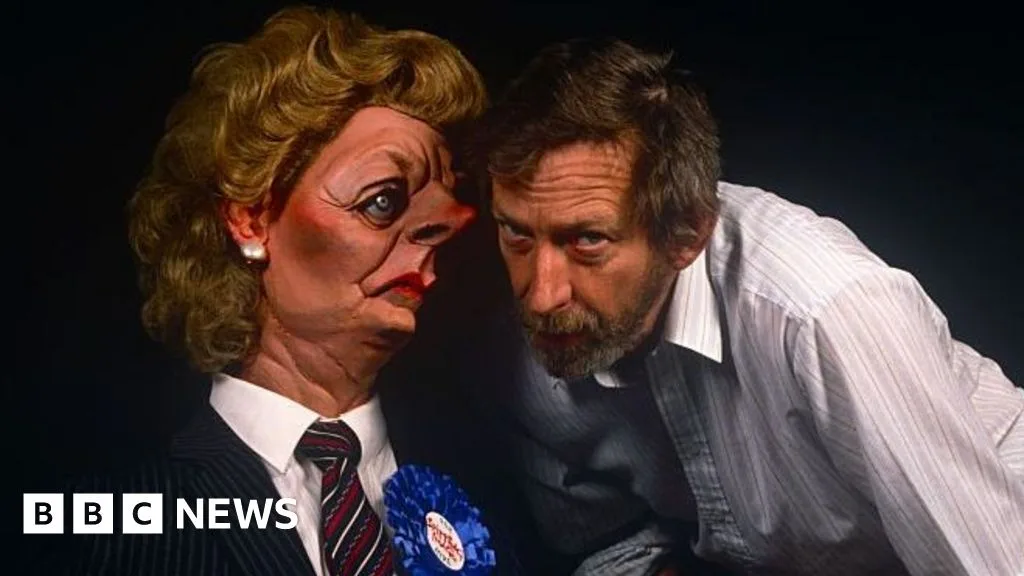
Peter Fluck, one of the creators of the legendary satirical puppet series Spitting Image, has died at the age of 85. The family announced the news in an official statement on Saturday (1/3/2025), saying Fluck passed away at his home in Cornwall after suffering from an illness that was not specified in detail.
Spitting Image was no ordinary television show. Across 18 seasons from 1984 to 1996, the program held a sharp mirror up to Britain's ruling class. Caricature puppets of politicians, celebrities, and members of the royal family—including Prime Minister Margaret Thatcher and Queen Elizabeth the Queen Mother—were presented in a style that was sometimes crude but always drew laughs. At its peak, the show was watched by up to 15 million people, a huge figure for British television at the time.
The success of Spitting Image owed much to Fluck's partnership with his childhood friend Roger Law. The two met while studying at the Cambridge School of Art, then moved to London to work as freelance illustrators. In 1976 they formed the duo 'Luck and Flaw', which later gave rise to the concept of Spitting Image. "You could say we moved the traditional editorial cartoon onto the screen," Fluck said in a 2006 interview with ArtCornwall, as quoted by the BBC.
The show aired in an unusual slot: 10 p.m. every Sunday, when politicians were supposed to be resting. It was precisely at that hour that the sharpest jibes were delivered, establishing a new tradition in political satire. Fluck and Law were known for daring, biting parodies, such as Douglas Hurd with hair resembling a Mr Whippy ice cream, or John Major portrayed as a dull grey puppet with an odd fondness for peas.
According to Fluck, the show's impact reached the politicians themselves. "We were quite often approached by politicians asking to be made into puppets, because if you didn't appear on Spitting Image, you weren't considered an established politician," he recalled in a 2011 interview. The remark underscores how Spitting Image became a kind of cultural legitimacy for those in power.
ITV, the broadcaster that aired Spitting Image, paid tribute. In its statement, it described Fluck's creative contribution to television satire as unmatched. "The skill of his puppets and sharp caricatures, together with the show's clever and always perceptive humour, became an important part of the cultural zeitgeist," ITV said. Condolences also poured in from various quarters, acknowledging that Fluck had left a deep mark on entertainment and social criticism.
After stepping away from Spitting Image, Fluck chose to settle in Cornwall and shifted his artistic focus to ceramics, graphic art, and mobiles. He was known as a private person who avoided the public spotlight. In 2018, Roger Law donated the entire Spitting Image archive—including original scripts, puppet moulds, drawings, and recordings—to the University of Cambridge. The collection is now preserved and forms part of the university library.
The passing of Peter Fluck marks the end of an important chapter in the history of British political satire. Yet his influence on how the media criticises power through visual parody will long be remembered. Spitting Image proved that laughter can be a potent weapon for challenging authority, and Fluck was one of its chief architects.