Bitcoin Plunges Below US$83,000 as Geopolitical Pressure and Oil Spike Trigger Sell-Off
Baca dalam 60 detik
- Harga Bitcoin turun 1,6% ke level US$82.800 pada perdagangan Asia, dipicu eskalasi ketegangan Timur Tengah dan kenaikan harga minyak.
- Laporan rencana serangan AS terhadap Iran mendorong Brent menembus US$102 per barel, sementara yield obligasi AS 10 tahun naik ke 5,31%.
- Likuidasi posisi leveraged senilai US$550 juta dalam sehari memperkuat tekanan jual, dengan XRP dan DOGE memimpin koreksi.
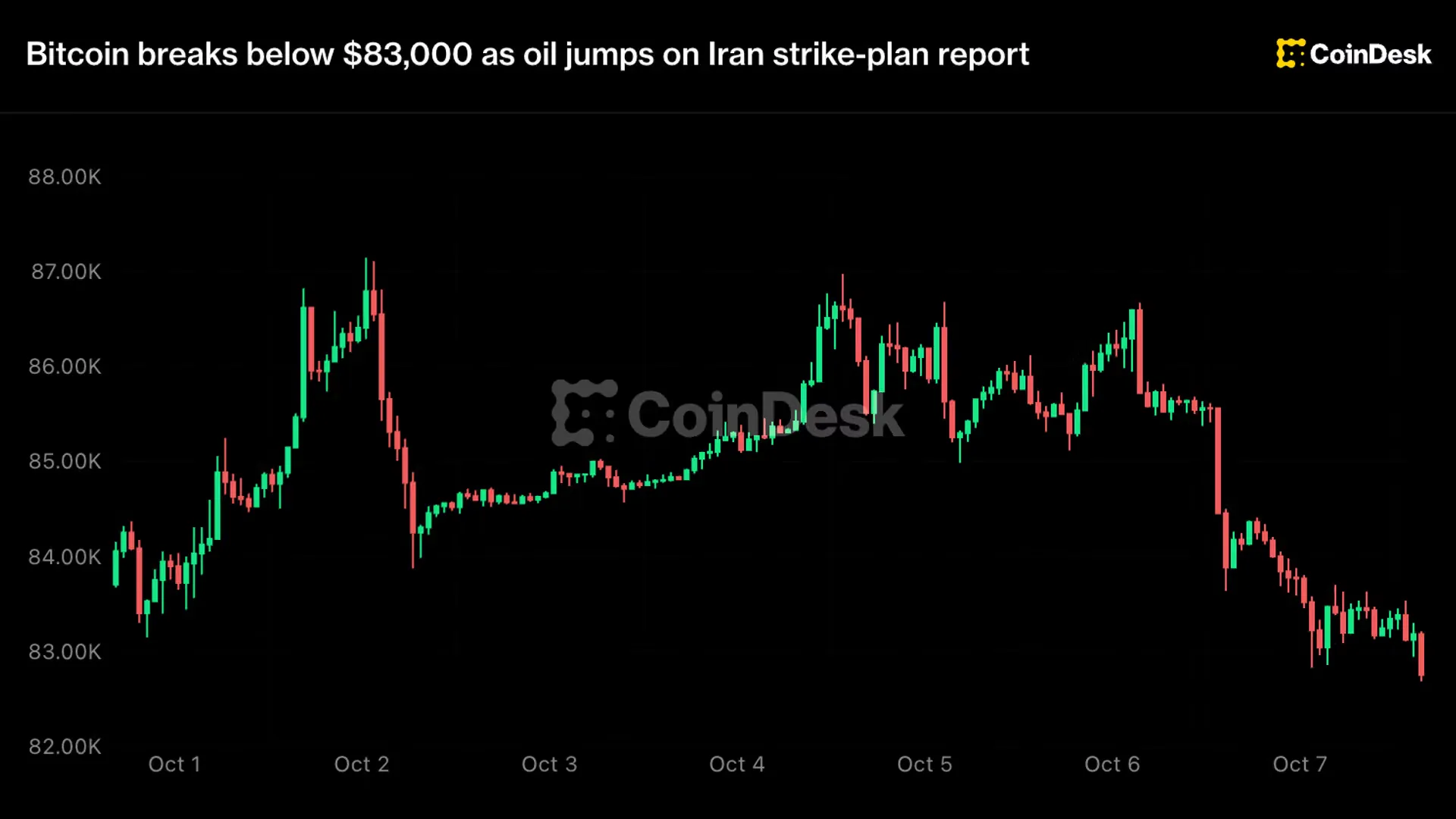
Bitcoin weakened 1.6% to US$82,800 on Thursday morning Asia time, breaking through the psychological threshold of US$83,000 that had previously been seen as a crucial support level. The decline came amid a surge in global crude oil prices following reports that the White House had asked the Pentagon to draw up options for strikes against Iran, fueling global market fears of an escalation in geopolitical conflict.
According to CoinDesk data, the selling pressure did not hit Bitcoin alone. XRP led the correction among large-cap crypto assets with a drop of nearly 4% to around US$1.42. Dogecoin (DOGE) fell 3% toward the 9-cent level, while Ether (ETH) weakened 3% to US$2,570. HYPE and Solana (SOL) each fell more than 2%, while Zcash (ZEC) slipped only slightly below 1%. Only BNB and TRX posted marginal gains of less than 1%.
Bitcoin's drop below US$83,000 confirmed a signal previously issued by analysis firm FxPro on Tuesday. FxPro said the level was a critical point; if breached, Bitcoin's price could quickly slide to US$80,000. That warning has now proven correct, reinforcing the narrative that market control has shifted to sellers.
The selling pressure was compounded by a wave of leveraged position liquidations worth around US$550 million the previous day. CoinGlass data showed that most of the liquidated positions were those betting on price gains. This created a domino effect: falling prices triggered margin calls, which then accelerated selling and pushed prices down further.
In commodity markets, Brent crude oil prices jumped 2% above US$102 per barrel. Besides the report of planned strikes against Iran, supply disruptions also came from a storm that halted part of US oil production, as well as attacks by Iran-backed Houthi rebels on two airports in Saudi Arabia that killed three people. The oil spike pushed the yield on 10-year US government bonds up two basis points to 5.31%, the highest level since 2002.
Global stock markets were also affected. Wall Street indexes retreated from record highs just reached on Tuesday, and Asian stocks followed with a 1% decline. MSCI's All Country World Index fell 0.2%, moving away from a record nearly touched earlier this week. The correlation between rising oil, bond yields, and pressure on risk assets such as crypto has become increasingly visible over the past two trading days.
"A drop in Brent back below US$100, as happened on Tuesday, would remove this pressure," a market analyst noted, highlighting the direct link between oil prices and global risk sentiment.
For Indonesian investors, these dynamics have direct implications. Rising global oil prices could widen the trade balance deficit and pressure the rupiah exchange rate, which in turn affects the appeal of crypto assets as an alternative hedge. However, with US bond yields continuing to rise, returns on safe-haven assets such as Treasuries become more attractive, potentially diverting capital flows from crypto markets to fixed-income instruments.
Going forward, Bitcoin's movement will depend heavily on geopolitical developments in the Middle East and the oil market's response. If tensions ease and Brent returns below US$100, pressure on risk assets could subside. Conversely, further escalation could accelerate a decline toward US$80,000. The question is whether the crypto market can absorb this external shock, or whether it will become the first casualty of a shift in global sentiment.