Gibran's Diploma Dispute at the Constitutional Court: When the Constitution Is Interpreted to Suit Interests
Baca dalam 60 detik
- Permohonan PHPU yang mempersoalkan syarat pendidikan Gibran Rakabuming diajukan jauh melewati tenggat tiga hari setelah penetapan KPU, memicu perdebatan soal batas waktu sengketa pemilu.
- Pakar hukum tata negara menilai ada kecenderungan memperlakukan UUD 1945 secara dogmatis dan selektif, memilih pasal yang menguntungkan sembari mengabaikan yang membatasi.
- Mahkamah Konstitusi berada di posisi sulit: menegakkan kepastian hukum atau membuka ruang pemeriksaan substantif yang berpotensi mengguncang legitimasi proses pemilu.
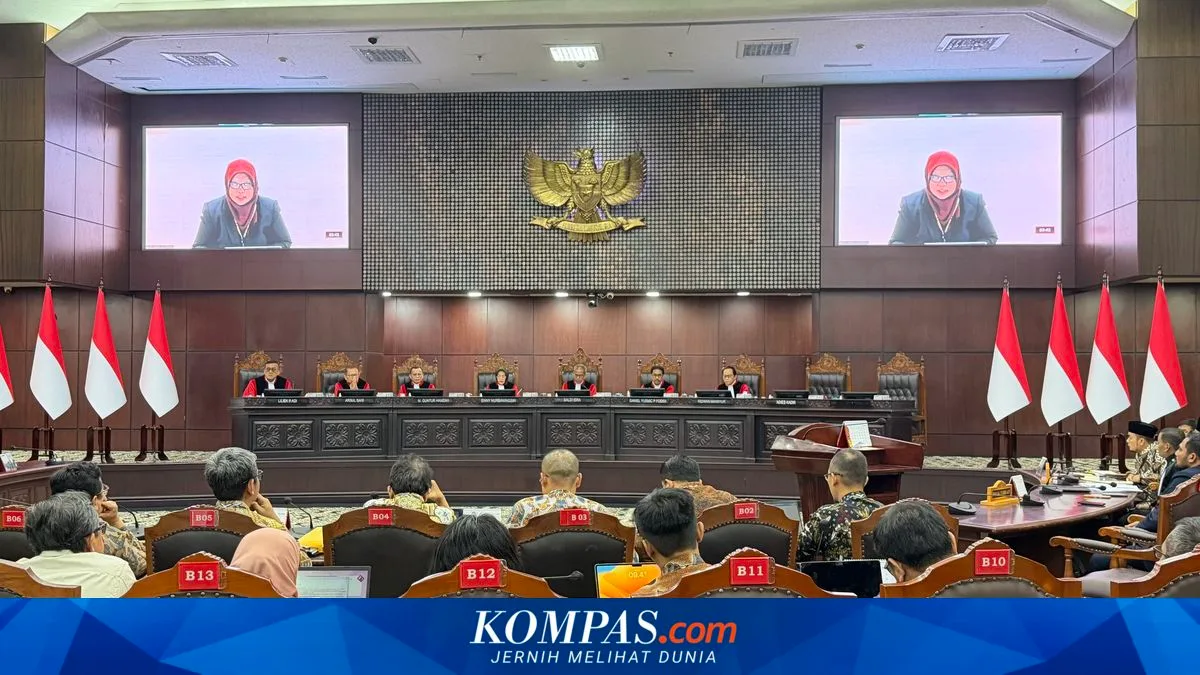
The Constitutional Court is once again in the spotlight after receiving a petition for the Election Results Dispute (PHPU) questioning whether Vice President Gibran Rakabuming Raka met the educational requirement for office. The petition was filed long after the vote and the inauguration of the elected ticket, raising a fundamental question: is the constitution being fought for, or is it being used to justify a conclusion that was desired all along?
This is not merely an administrative matter. Article 475 paragraph (1) of Law No. 7 of 2017 on Elections sets the deadline for filing a presidential PHPU petition at no later than three days after the General Elections Commission certifies the results. That provision aligns with Article 74 paragraph (3) of the Constitutional Court Law, reinforced by Constitutional Court Ruling No. 31/PUU-XXI/2023. The deadline did not come about without reason. Elections are a constitutional process that must lead to certainty about who holds the people's mandate.
Yet legal certainty often clashes with demands for substantive justice. The petitioners acknowledge that their petition was filed late, but argue that substantive justice should open room for examining alleged violations they consider crucial. This is where the legal dilemma comes to the fore: it is not about whether the alleged violations deserve a hearing, but through what mechanism, by which institution, and within what time limit such an examination can be conducted.
In academic studies, this phenomenon is called constitutional fundamentalism — a term popularized by Mary Anne Franks in her book The Cult of the Constitution (2019). Franks criticizes the tendency to treat the constitution dogmatically and selectively: highlighting articles that support one's own interests while ignoring parts that complicate that position. Loyalty to the constitution, through this lens, can turn into a shield for interests that in fact want protection from criticism.
"Constitutional fundamentalists read the Constitution in selective and self-interested ways." — Mary Anne Franks, The Cult of the Constitution (2019; 2021).
A similar symptom appears when every party acting as a petitioner eagerly cites articles of the 1945 Constitution, including Article 22E paragraph (1) on the principles of elections that are direct, general, free, secret, honest, and fair. Such references are legitimate. But the critical question is: are those articles read in full, or only the parts that are advantageous? The constitution is not a menu to be chosen according to taste. It is a complete framework that binds all parties, including those who claim to be fighting for it.
For the public, this case concerns something bigger than Gibran as a figure. It tests whether state institutions — the KPU, Bawaslu, and the Constitutional Court — can maintain the integrity of the election process when faced with political pressure. If the deadline can be negotiated in the name of substantive justice, what prevents other parties from demanding similar treatment in the future? Conversely, if legal certainty is enforced rigidly without providing a channel to examine alleged violations, trust in institutions could erode.
Those most affected by this uncertainty are voters. When election disputes drag on, the legitimacy of the sitting government is also called into question. Markets, investors, and international partners are watching Indonesia's political stability. Legal uncertainty in the electoral sphere can affect risk perception, even if its impact is not always immediately visible in economic figures.
Going forward, the Constitutional Court faces a difficult test. Any ruling will set a precedent: whether it expands or narrows the space for post-election disputes. If the Court opens the door to substantive examination beyond the deadline, it must formulate clear limits so as not to become a loophole for endless lawsuits. If the Court refuses, it needs to explain why substantive justice cannot override procedural certainty — and provide an alternative channel for alleged violations. The question now is: is the constitution still read as a single, complete whole, or as a collection of articles that can be picked according to interest?