US Supreme Court Revives Trump's Mass Voter Verification System
Baca dalam 60 detik
- Mahkamah Agung AS membatalkan putusan pengadilan bawah yang menghambat penggunaan basis data imigrasi untuk memverifikasi status kewarganegaraan pemilih terdaftar.
- Keputusan ini memperluas peran pemerintah federal dalam administrasi pemilu menjelang pemilu sela November, meski konstitusi menyerahkan kewenangan utama kepada negara bagian.
- Kelompok hak sipil memperingatkan risiko pencabutan hak pilih warga negara yang sah, sementara pendukung menilai langkah ini memperkuat integritas pemilu.
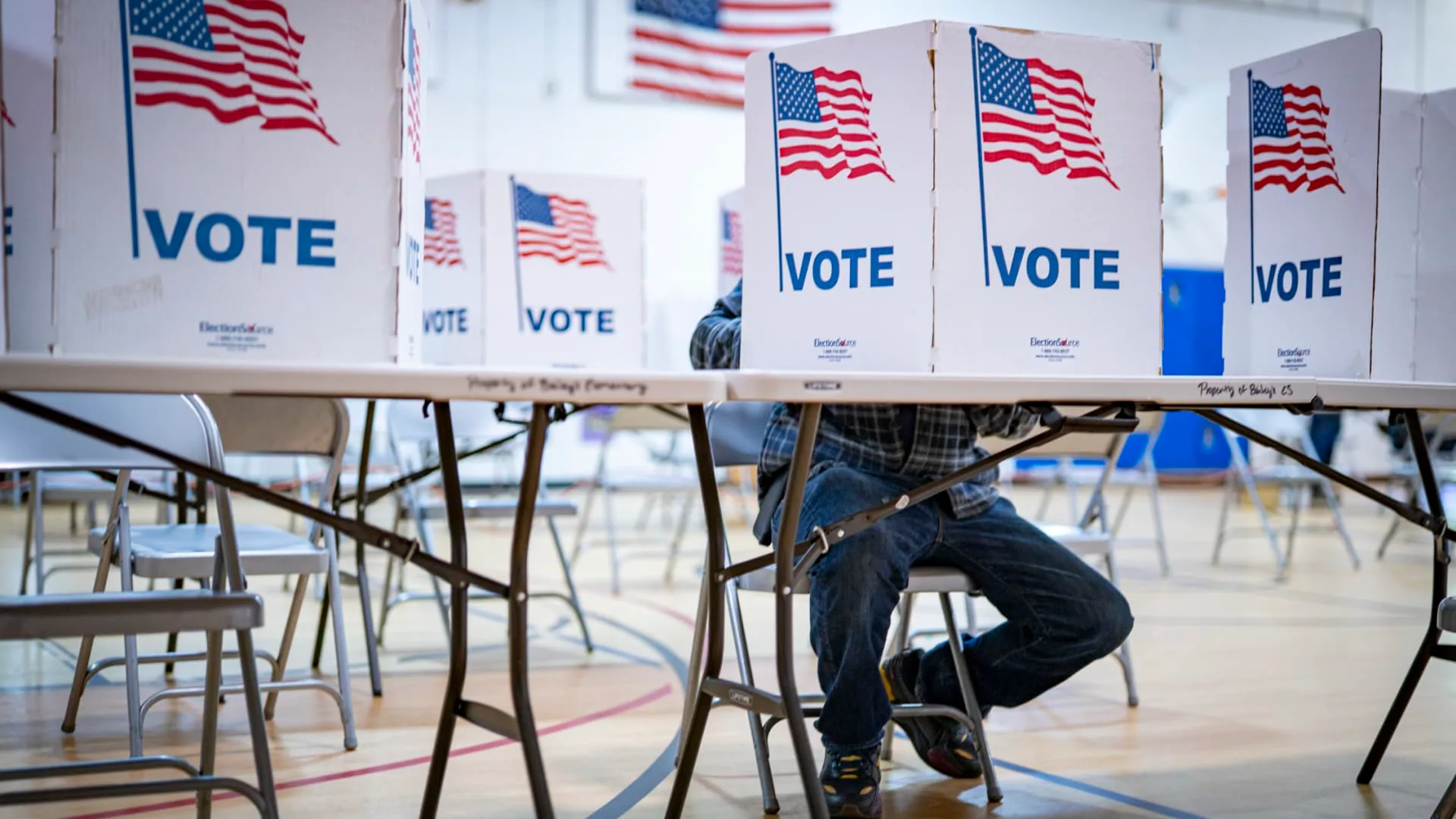
The US Supreme Court on Friday overturned a federal court ruling that had barred the use of an expanded immigration database to check the citizenship status of registered voters. The decision paves the way for President Donald Trump's administration to resume mass verification operations that critics fear could purge legitimate citizens from voter rolls, just weeks before the November midterm elections.
The conservative 6-3 majority granted the Justice Department's request to stay a district judge's order that had stopped state officials from using Social Security numbers and other data to match voter rolls against federal records. Three liberal justices dissented. In its reasoning, the majority found that the plaintiffs' arguments were likely to fail because federal law explicitly authorizes the Department of Homeland Security (DHS) to request and receive citizenship information from other agencies, including the Social Security Administration.
The move is part of a series of policies that have expanded federal involvement in election matters, even though the US Constitution assigns primary authority over elections to the individual states. DHS last year overhauled the Systematic Alien Verification for Entitlements (SAVE) database, which was originally used to verify citizenship and immigration status. The new version allows searches of multiple records at once and Social Security number-based lookups.
Since then, a number of Republican-controlled states have compared their voter rolls against the database. Some voters flagged as non-citizens have had their registrations revoked. Critics argue the action is driven more by an effort to shrink a voter base that tends to support the Democratic Party than by genuine concerns about election security. Trump himself has repeatedly made baseless claims of massive election fraud, including when he lost to Joe Biden in 2020.
Advocacy groups that sued to block the SAVE system said Friday's decision was "deeply disappointing" and put Americans "at risk of being illegally targeted by an unreliable voter-purge database, just weeks before the midterm elections." They highlighted the example of an election official in Travis County, Texas, who revealed that a quarter of non-citizen matches were actually people who had already proven their citizenship. News reports also found that at least 81% of the system's responses in St. Louis County, Missouri, were wrong.
"The harm caused by burdening or removing the voting rights of even a few legitimate voters is greater than the harm that no one suffers when the government is prevented from taking action it likely lacks the authority to take," Justice Ketanji Brown Jackson wrote in a dissent joined by two other liberal justices.
District Judge Sparkle Sooknanan in June blocked the overhauled database, calling it haphazardly assembled and containing unreliable citizenship data. "The federal government is knowingly trampling on Americans' privacy rights in a way that threatens the sacred right to vote," she wrote. The District of Columbia Circuit Court of Appeals on September 4, in a 2-1 ruling, declined to stay Sooknanan's order, prompting the government's application to the Supreme Court. In its filing, Justice Department lawyers called the judge's order "indefensible" and said it "threatens the integrity" of the midterm elections.
For Indonesia, the decision serves as a mirror of how database technology and interagency data sharing can affect democratic processes. As a major country like the US grapples with the balance between election security and protection of voting rights, other countries building digital civil registration systems—including Indonesia with its electronic ID card program and voter data—can draw lessons about the importance of data accuracy, transparency, and fair correction mechanisms. Large-scale data errors can potentially trigger election disputes and erode public trust, as is feared in the US.
Going forward, the big question is how far the Supreme Court will go in deciding the underlying case and whether Congress will step in to redraw the limits of federal authority in elections. Meanwhile, civil rights groups have vowed to keep monitoring the system's implementation at the state level. If SAVE's high error rate is not fixed soon, the November midterms could face a wave of lawsuits and disputes that could shake the legitimacy of the results. The Indonesian public, too, should pay close attention to how the world's largest democracy navigates the tension between technological innovation and political rights.