UINSA Rector Resigns, Students Keep Campus Sealed: Written Proof Demanded
Baca dalam 60 detik
- Prof Akh Muzakki dikabarkan mengirim surat pengunduran diri sebagai Rektor UINSA ke Kemenag pada Selasa malam, dan surat itu telah diterima keesokan harinya.
- DEMA UINSA menolak menghentikan penyegelan kampus sebelum menerima salinan resmi surat pengunduran diri, bukan sekadar informasi dari pihak ketiga.
- Kemenag disebut akan menunjuk Pelaksana Tugas untuk mengisi kekosongan kepemimpinan, sementara proses perkuliahan tatap muka terpaksa dialihkan ke daring.
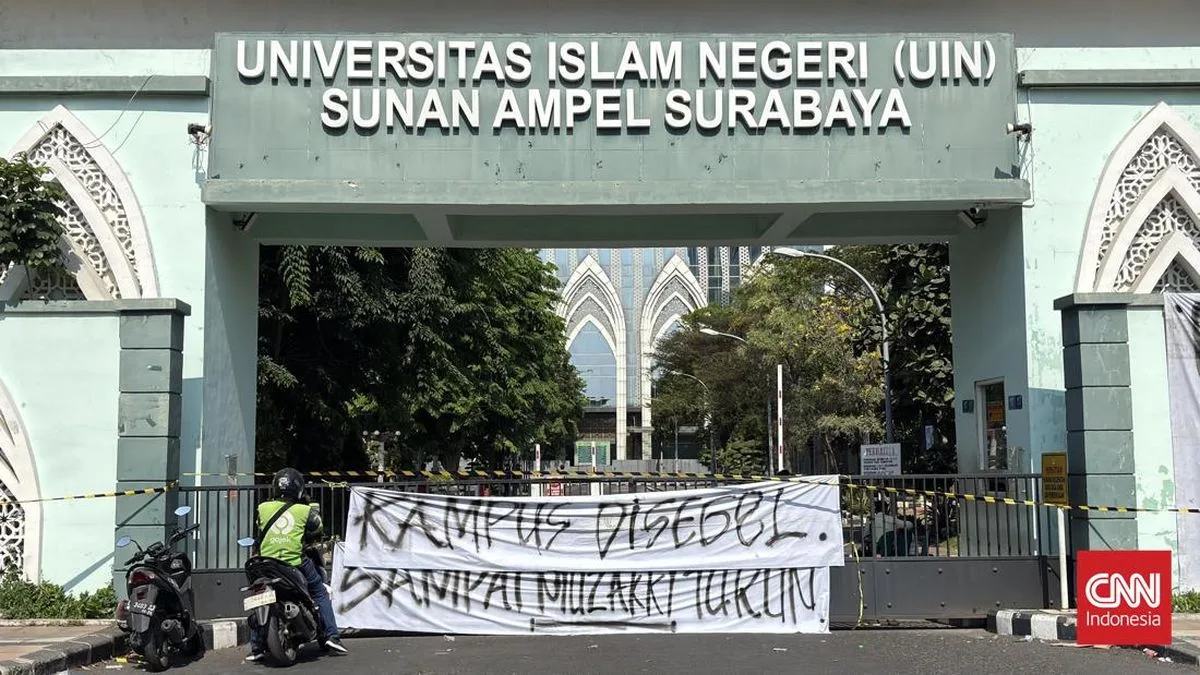
The Rector of Universitas Islam Negeri Sunan Ampel (UINSA) Surabaya, Prof Akh Muzakki, is reported to have sent a resignation letter to the Ministry of Religious Affairs (Kemenag), following a wave of student demonstrations that ended with the campus being sealed off. The information first surfaced from within the university senate, not from official statements by the rector or the ministry.
UINSA Senate member Prof KH Imam Ghazali Said confirmed that the letter was sent on Tuesday night at around 22.00 WIB and reached Kemenag on Wednesday morning. According to him, Muzakki's resignation from the rector post for the 2026–2030 term has been approved by the ministry. "The letter has been received, and the next process will be filled by an Acting Official," Imam said when confirmed, Wednesday (23/9).
The appointment of an acting official (Plt), Imam said, was taken to prevent a vacancy in the campus's highest leadership seat. He admitted he had proposed that no Plt be appointed, but the decision had already been set out in a decree (SK) and could not be changed. "So that there is no vacancy, it was eventually filled by a Plt," he added.
Although news of the resignation has circulated, the UINSA Student Executive Board (DEMA) has chosen not to immediately lift the campus seal. They are demanding valid administrative proof before ending the boycott. DEMA UINSA Vice President Fadlurrakhman Fazle Purwardana stressed that his side will not trust rumors, news reports, or verbal statements from third parties.
"If the rector has indeed resigned, we want normative proof. Not through the news, not through talk," Fadlurrakhman said at UINSA Campus 1 in Surabaya, Wednesday (23/9).
Students also challenged Muzakki to come directly to the campus and announce his resignation openly before representatives of the Student Senate and DEMA. According to Fadlurrakhman, the rector's direct presence would reinforce the assumption that he has truly stepped down from his post. As long as that demand is unmet, the campus sealing is certain to continue.
The impact of the sealing has been significant. In-person lecture activities have been completely paralyzed and forced to move online. However, DEMA guarantees that administrative services for students and alumni continue to run normally. "We are not prohibiting education staff who want to provide public services," Fadlurrakhman explained.
Previously, Minister of Religious Affairs Nasaruddin Umar admitted he was surprised by the polemic over the rector election at UINSA. He said he had consulted with Kemenristekdikti and assessed that the rector election process within Kemenag usually runs smoothly. "The same machine and regulations, but the reaction in Surabaya is different. I was also surprised," he said during a Hearing Meeting with Commission VIII, Tuesday (22/9).
Nasaruddin stressed he would examine whether there were any rule violations in this case. He highlighted the need for a thorough evaluation of the rector election mechanism, especially when resistance emerges from students. This statement underscores that the UINSA issue is not merely internal campus dynamics, but also a test for the governance of religious higher education under Kemenag.
For the Indonesian public, this case is a mirror of how the legitimacy of campus leadership can waver when the process is not transparent. The sealing of a campus by students is a rare form of protest at religious universities, and could set a precedent for other campuses. If students' demands are not immediately answered with formal proof, a wave of solidarity from other campuses could emerge.
Going forward, attention will focus on two things: when Kemenag issues an official statement and what the mechanism for the Plt appointment to be decreed will look like. Without clear communication, the campus sealing could drag on and disrupt the academic calendar. The question is, will Kemenag and the university senate be able to bridge students' demands before the escalation worsens?