Indonesia's Market Value Tops ASEAN Cup 2026, but Titles Can't Be Bought
Baca dalam 60 detik
- Timnas Indonesia memuncaki daftar nilai pasar di Divisi 1 FIFA ASEAN Cup 2026 dengan total Rp377,79 miliar, jauh di atas Thailand (Rp159,09 miliar) dan Malaysia (Rp120,37 miliar).
- Pengamat Malaysia Raja Isa menilai tingginya valuasi skuad tidak otomatis berbuah trofi, karena soliditas tim dan mentalitas bertanding tetap penentu utama.
- Status tuan rumah plus bayang-bayang kegagalan Piala AFF 2026 membuat ekspektasi publik justru berpotensi menjadi beban psikologis bagi para pemain.
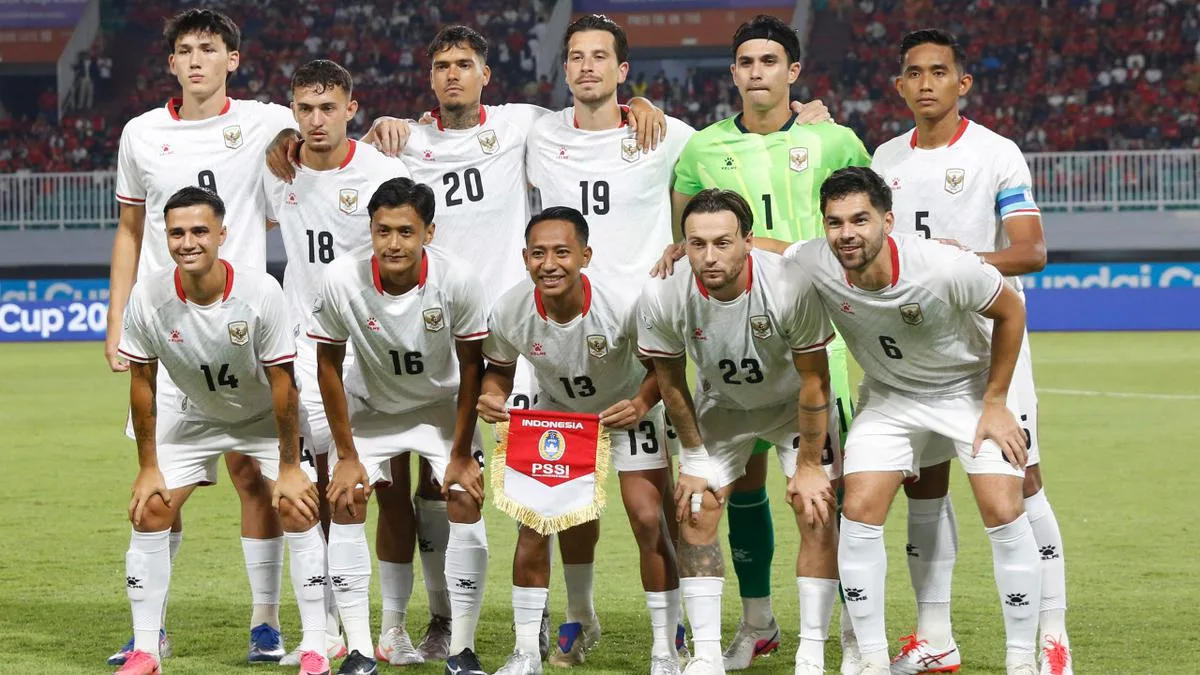
The Indonesia national team sits at the top of the market value list among participants in Division 1 of the FIFA ASEAN Cup 2026. Based on Transfermarkt data, the total valuation of the Garuda squad reaches Rp377.79 billion, a figure that far exceeds its closest rivals. However, that financial achievement does not automatically make Indonesia the strongest candidate for the title in the new tournament organized by FIFA and the AFC.
Thailand follows in second place with a market value of Rp159.09 billion, then Malaysia (Rp120.37 billion), Bangladesh (Rp115.15 billion), Vietnam (Rp111.24 billion), Pakistan (Rp76.04 billion), the Philippines (Rp68.22 billion), and Singapore (Rp59.10 billion). Indonesia's gap over Thailand alone is more than double, indicating the even individual quality of players across European and Asian levels.
Malaysian football observer Raja Isa Raja Akram Shah assesses that the market value phenomenon is a natural consequence of football increasingly becoming a global industry. According to him, every player has a price converted from experience and individual quality. "In the era of global business and industry, all sectors are valued materially. So too in football. Every player has a market value based on their experience and quality," he said.
Raja Isa, who has coached PSM Makassar and Persipura Jayapura, added that market value also serves as a marketing and promotional tool. Detailed databases make it easier for clubs to manage player spending budgets. "This market value is a marketing and promotional effort so that football becomes more competitive and makes this sport number one in the world," he explained.
Although Indonesia is at the top, Raja Isa stressed that the figure is no guarantee of a title. He referred to the 2026 World Cup, where teams with small market values were able to trouble high-priced nations. "The best example was the last World Cup. There were small teams with small market values that could beat countries with higher prices. Who expected Cape Verde to trouble Spain and Argentina, who eventually became finalists," he said.
If looking only at valuation, Thailand and Malaysia are the closest rivals. However, Raja Isa reminded that Vietnam must still be counted. Although its market value is fifth, Vietnam comes as the 2026 AFF Cup champion. A winning tradition and team solidity mean they cannot be underestimated. "The Indonesia national team's target of winning the FIFA ASEAN Cup is heavier than the AFF Cup. Thailand, Vietnam, and Malaysia are deploying their best strength. We also don't know whether Singapore can provide a surprise. Including invited teams like Bangladesh and Pakistan," he said.
Indonesia's burden grows heavier because of its status as host. High public expectations, plus the trauma of failure at the 2026 AFF Cup, mean the team's confidence cannot rest entirely on market value. "Expectations and the target of winning become a burden for the Indonesia national team. Especially since they are the host. Plus the trauma of failure at the 2026 AFF Cup. So, the Indonesia national team is not too confident with this market value," said Raja Isa.
From a psychological standpoint, the status as the most expensive squad can be a positive push. Many Indonesian players play in European leagues and will perform in front of their own supporters. "The Indonesia national team's psychologist team must be able to manage this advantage into team strength," he said. However, pressure from media and netizens known for being fierce remains a challenge of its own. "Besides the challenge of opponents on the pitch, how the Garuda national team faces pressure from Indonesian media and netizens, who are known to be fierce," Raja Isa concluded.
For the Indonesian public, this tournament is not just a stage to prove the squad's quality, but also a mirror of how national football manages expectations and pressure. A high market value is indeed a source of pride, but football history often records that surprises are born from teams considered underdogs. Can the Garuda prove that expensive player prices go hand in hand with a champion mentality, or will they slip under the burden they carry themselves?