Ed Sheeran Cries on Philadelphia Stage, Admits Mistake Regarding Palestine Controversy
Baca dalam 60 detik
- Ed Sheeran membuka konser di Philadelphia dengan permintaan maaf dan tangis atas kontroversi Palestina yang menyeret namanya.
- Ia menuding pemilik venue kaya sebagai pihak di balik penyingkiran Macklemore dari tur, dan menyoroti praktik persetujuan konten.
- Kontroversi ini memicu perdebatan kebebasan berekspresi di industri hiburan, dengan implikasi pada pasar musik global termasuk Indonesia.
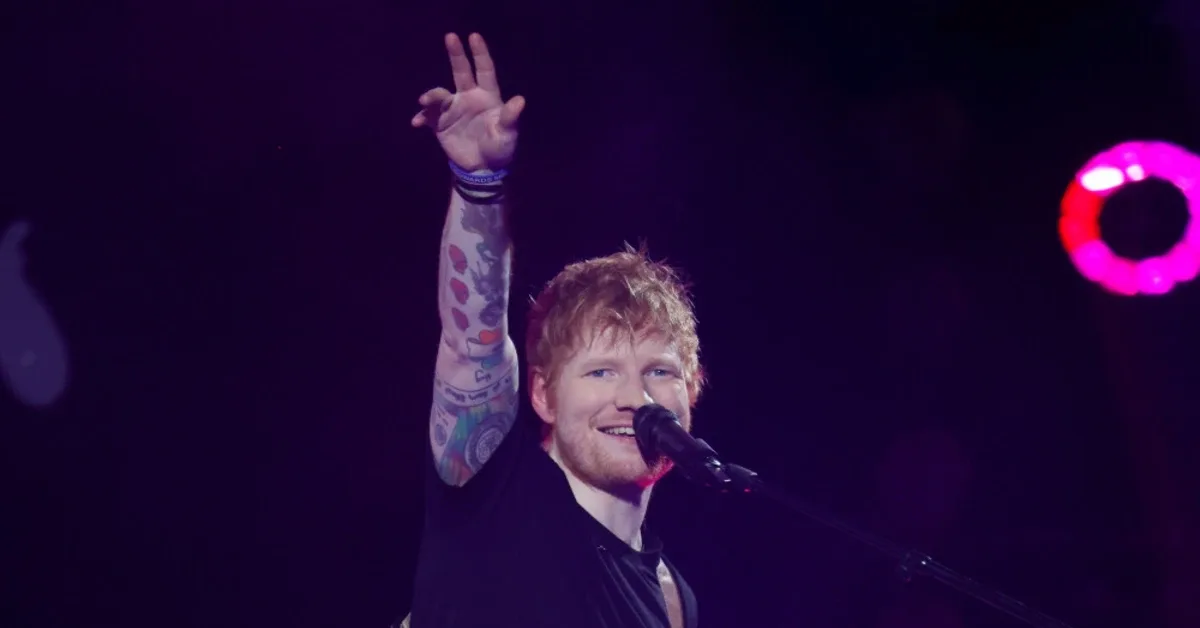
Ed Sheeran began his concert in Philadelphia, United States, with a rare admission for a top musician: he cried and apologized. In front of thousands of spectators on Saturday (September 19), the British singer openly addressed the Palestine controversy that had recently embroiled his name, after his supporting act, Macklemore, was removed from the Loop tour.
The decision to drop Macklemore—who had previously expressed support for the Palestinian people—sparked a wave of criticism. Sheeran, long known for his reluctance to engage in politics, suddenly found himself at the center of a debate about free speech and humanitarian issues far more complex than mere music criticism. 'I don't want to disappoint fans, and I never wanted to be an activist musician, but this puts me in the middle of an important argument about free speech and the most complicated political issue in the world,' he said, as quoted from his statement on stage.
In an emotional opening speech, Sheeran stated that what happened in Israel and at the Nova music festival on October 7 was an atrocity that exacerbated the long-standing wounds of the Jewish people. However, he also described the situation in Gaza as an unjustifiable and disproportionate catastrophe. 'My heart is broken seeing the scale of destruction, the loss of civilian lives, the lives of children. The systemic injustice we are witnessing in the West Bank cannot be ignored,' he asserted.
Sheeran also highlighted a practice he deemed concerning: several large venues, he claimed, pre-approved show content. 'I am very concerned about the idea that venues pre-approve content forms. That should not happen in a free world,' he said. He also admitted to having communicated with various parties to find ways to contribute to the victims.
'I am learning. I don't know enough. This concert remains a place where everyone is welcome, and everyone can stand alongside those with different views,' Sheeran said.
This controversy is not just a ripple in the entertainment scene. It touches upon the intersection of freedom of expression, political pressure, and business interests in the global music industry. In many countries, including Indonesia, similar issues often arise when international artists are scheduled to perform: are they free to voice political opinions, or are there subtle boundaries set by organizers and sponsors? By raising this issue on stage, Sheeran indirectly opened a Pandora's box about the extent to which artists' freedom is jeopardized for commercial viability.
For fans in Indonesia, Sheeran's stance could serve as a mirror. When global musicians begin to take positions, the domestic public might demand similar actions from local artists. However, the political and social context in Indonesia is different; support for Palestine is mainstream, while criticism of Israel rarely becomes a controversy. What is interesting, rather, is how Sheeran navigated pressure from various parties—including alleged intervention from venue owners—while still striving to maintain relationships with a diverse fanbase.
Moving forward, the question is not only whether Sheeran will continue to voice this issue, but also how the global music industry will respond to the content pre-approval practices he mentioned. If there truly is pressure from venue owners, then artistic freedom on major stages could be under scrutiny. And for audiences worldwide, including in Indonesia, concerts might no longer be just entertainment, but also a space for negotiating values.