Toyota Confirms Locally Assembled bZ4X Meets 40% Local Content Requirement, a Serious Signal for Indonesia's Electrification
Baca dalam 60 detik
- PT Toyota-Astra Motor menegaskan bZ4X versi CKD telah memenuhi ambang TKDN 40% yang dipatok pemerintah untuk kendaraan listrik murni.
- Pemenuhan aturan ini membuka jalan bagi Toyota mempertahankan insentif fiskal dan memperkuat posisi di segmen BEV yang persaingannya kian ketat.
- Perusahaan masih mengkaji strategi menghadapi potensi kenaikan target TKDN, sambil menjalankan pendekatan multi-jalur ICE, hybrid, dan BEV.
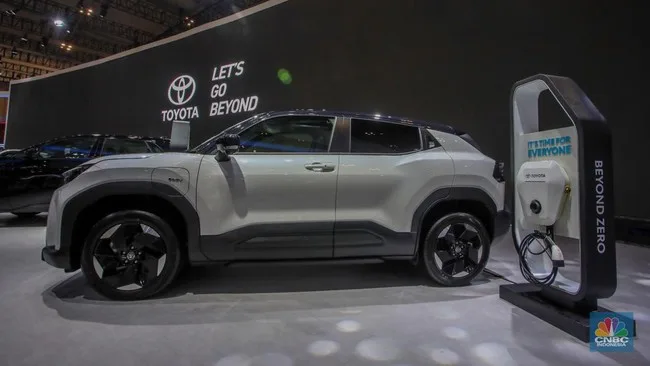
PT Toyota-Astra Motor (TAM) has confirmed that the bZ4X units assembled domestically through the completely knocked down (CKD) scheme have crossed the 40% local content (TKDN) threshold—the requirement in effect for battery electric vehicles (BEVs) this year. The assurance was delivered by Toyota management on the sidelines of the 2026 Toyota Journalist Test Drive event in Yogyakarta on Wednesday (16/9/2026).
TAM Marketing Director Bansar Maduma explained that TKDN rules for electrified vehicles are not uniform. The government applies different calculations for BEVs and other electrified vehicles in the low carbon emission vehicle (LCEV) category, including hybrids. This difference in formula is what makes meeting targets in each technology line require its own production strategy.
“The TKDN regulations for BEVs and LCEVs are indeed different,” Bansar said, stressing that the locally assembled bZ4X is able to meet the government's requirements.
For Toyota, this achievement is not merely a matter of administrative compliance. TKDN is the key to accessing fiscal incentives—from luxury goods sales tax relief to import duty exemptions—that keep BEV selling prices competitive. Without TKDN certification, models like the bZ4X risk losing competitiveness in a market increasingly crowded by Chinese and European brands.
Toyota's move reflects the mounting pressure in the national automotive industry. The government is gradually raising TKDN targets to force manufacturers to build local supply chains, especially for high-value components such as batteries, electric motors, and electronic control systems. Manufacturers that adapt slowly risk being excluded from incentives, while those that move quickly have the opportunity to lock in market share.
Even so, Toyota has not disclosed a road map for dealing with possible increases in TKDN requirements in the coming years. Bansar only said the company is still conducting a review. “We will study it,” he said briefly, without detailing numerical targets or internal deadlines.
That cautious stance is in line with Toyota's approach of not placing all its bets on a single technology. The company continues to sell internal combustion engine vehicles, expand its hybrid line, and pioneer BEVs. Analysts view this strategy as a way to maintain sales volume amid uneven charging infrastructure and still-high battery prices.
However, for readers in Indonesia—especially investors and industry players—the question is sharper: how deep will Toyota really embed a local supply chain? Meeting the 40% TKDN through CKD assembly does fulfill the minimum requirement, but it does not necessarily create substantial added value for the domestic components industry. If core components remain imported, the economic benefits flowing into the country could be far smaller than expected.
The government itself has an interest in maintaining investment momentum in the electric vehicle sector. Any manufacturer that fails to meet TKDN stands to lose incentives, which in turn could hit selling prices and the appeal of models in consumers' eyes. Conversely, manufacturers able to increase local content have the opportunity to secure better fiscal treatment while strengthening their image as serious players in the energy transition.
Going forward, the public awaits whether Toyota will announce more ambitious TKDN targets, including plans to produce batteries or electric motors domestically. Without such steps, the position of the bZ4X and other BEV models risks being trapped as mere assembly products—not a true manufacturing hub. The big question: will Toyota choose to deepen local investment, or play it safe with a multi-pathway strategy that postpones full commitment to electrification?