East Jakarta Puts Clean Water Tanker Trucks on Standby Ahead of Dry Season Drought
Baca dalam 60 detik
- Pemerintah Kota Jakarta Timur menyiagakan armada truk tangki untuk mendistribusikan air bersih ke wilayah yang terdampak kekeringan.
- Sejumlah waduk dan embung di Jakarta Timur dinilai masih mampu menopang cadangan air selama musim kemarau.
- Warga diimbau segera melaporkan kesulitan air bersih agar bantuan bisa disalurkan cepat melalui kanal pengaduan resmi.
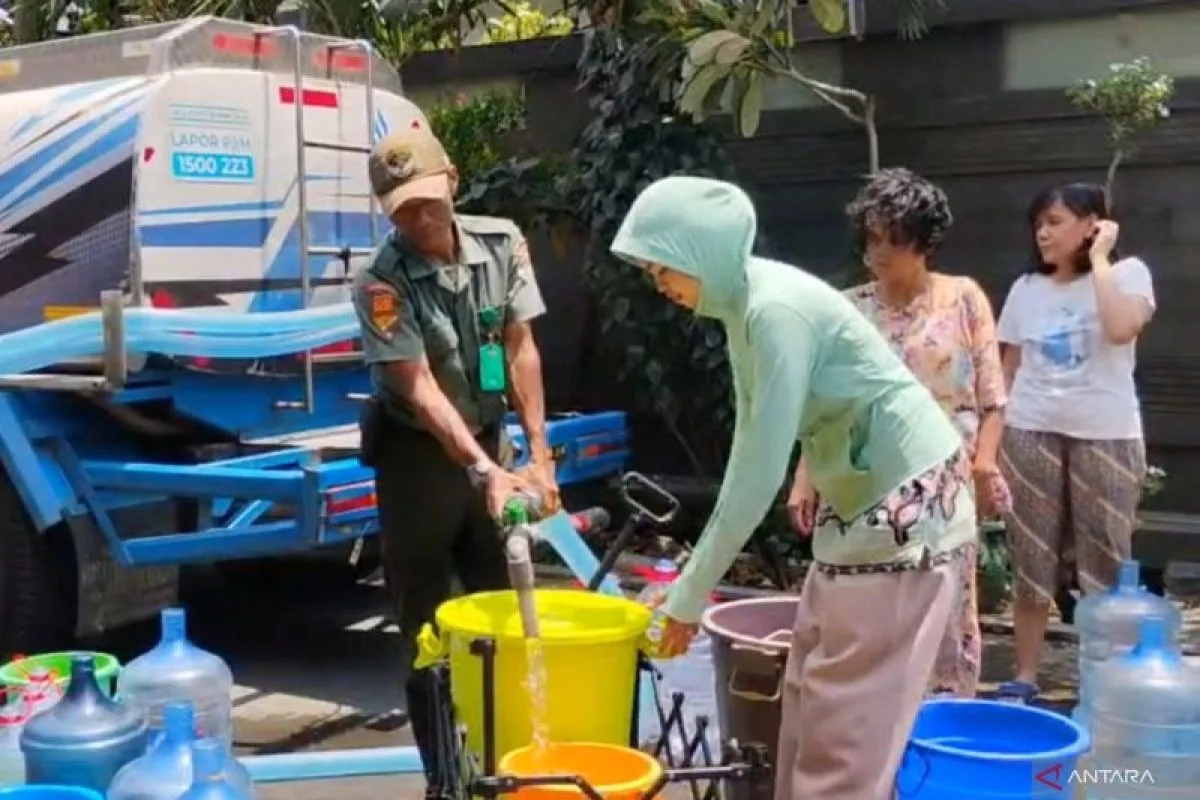
The East Jakarta city government has put clean water tanker trucks on standby to anticipate the impact of drought that has begun to affect several areas of the capital. The move follows confirmation by Jakarta Governor Pramono Anung of drought reports in several subdistricts, although so far no formal complaints have come from East Jakarta residents struggling to obtain water.
East Jakarta Deputy Mayor Kusmanto stressed that his office is not waiting for reports to arrive before acting. "If there is a report from residents whose water sources have dried up, we will supply water as soon as possible," he said in Jakarta on Wednesday. He added that water is a fundamental need whose fulfillment cannot be delayed, so the local government chose to be on standby early rather than react after a crisis grows.
Notably, East Jakarta is said to still have a natural buffer in the form of several reservoirs and retention ponds that store water reserves during the dry season. Kusmanto named Pondok Ranggon Reservoir and Batu Licin Reservoir in Cipayung District, Kaja Retention Pond in Ciracas, and Dukuh Reservoir in Kramat Jati as key infrastructure that maintains groundwater availability. "We also continue to expand greening in East Jakarta as an effort to maintain groundwater availability," he said.
Even so, Kusmanto's statement implies that the tanker truck readiness is reactive — dependent on reports from residents. That means the speed of response is largely determined by public awareness to report. The East Jakarta city government has also urged residents not to delay reporting difficulties in obtaining clean water, because assistance can only be delivered if there is a verified request.
"We will send clean water using tanker trucks to help residents. Water is a very important need for living things," Kusmanto said.
For readers in Jakarta and its surroundings, this situation is a reminder that water resilience is not merely an environmental matter, but also one of household economics and business stability. When clean water supply is disrupted, the operating costs of households and small and medium enterprises surge because they must buy bottled water or hire private tanker services. For property investors, the quality of water infrastructure in an area becomes a serious consideration in assessing a region's long-term appeal.
In a broader context, drought in Jakarta reflects the pressures of urbanization and climate change that are increasingly real. Dependence on reservoirs and retention ponds as surface water buffers shows that the city still has natural capital, but its capacity is limited if extreme rainfall and long dry seasons occur simultaneously. The local government needs to ensure that water distribution is not only about tanker trucks, but also about sustainable water resource governance — including management of recharge areas and control of development in green zones.
Going forward, the big question is not only how fast tanker trucks can move, but how prepared Jakarta is for increasingly erratic seasonal patterns. If drought spreads to other areas, will the existing tanker fleet and reservoirs still be enough to sustain the needs of millions of residents? And just as important, how will the government ensure that residents in the most vulnerable areas — often off the complaint radar — still get access to clean water without having to wait for the crisis to worsen?