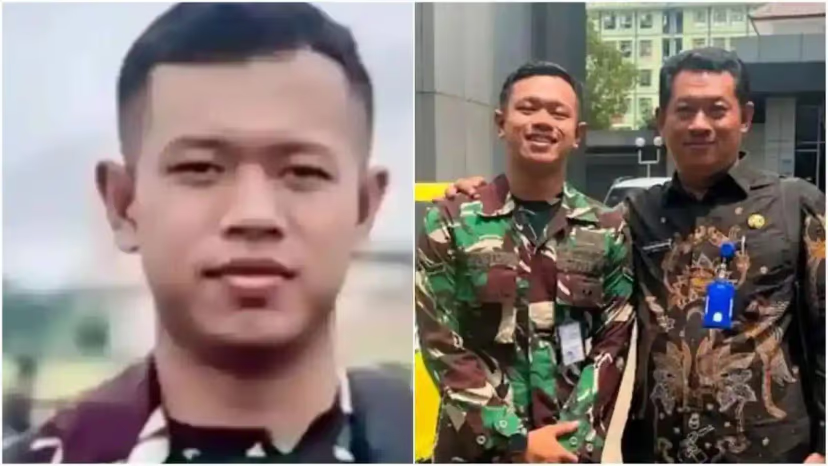
Four TNI AU Non-Commissioned Officers Named Suspects in Assault That Killed Serda Muzammil, Face Stacked Charges
Baca dalam 60 detik
- Puspomau menetapkan empat bintara TNI AU sebagai tersangka dalam kasus penganiayaan yang menewaskan Serda Ahmad Muzammil Farisa.
- Para tersangka dijerat pasal berlapis dengan ancaman pidana maksimal sembilan tahun penjara.
- Penetapan tersangka menandai babak baru penegakan hukum di lingkungan militer yang menyoroti disiplin dan pengawasan internal.
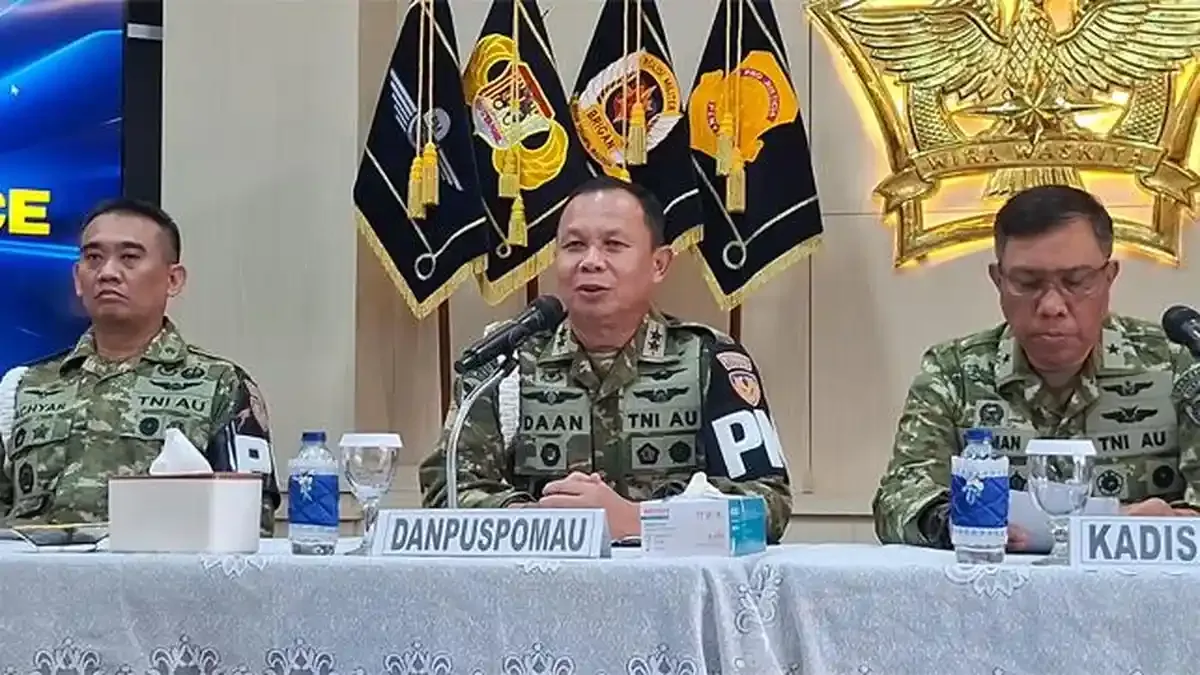
The Indonesian Air Force Military Police Center (Puspomau) has officially named four non-commissioned officers as suspects in the assault that led to the death of Serda Ahmad Muzammil Farisa. The designation was announced directly by Puspomau Commander Air Vice Marshal Daan Sulfi at a press conference at Puspomau Headquarters, Halim Perdanakusuma, East Jakarta, Wednesday (16/9/2026). The four suspects are active TNI AU members identified by the initials Serda MTS, Serda AH, Serda MAD, and Serda JM. The move marks the case's transition from investigation to prosecution and affirms that military law proceeds without favoritism.
This incident is more than a black mark on the TNI AU. The public is waiting for consistent law enforcement, especially since the victim and the perpetrators come from the same institution. The naming of suspects is a crucial point: will the legal process be transparent and complete, or will it stall halfway? On the other hand, the case opens room to evaluate the internal coaching and oversight mechanisms within military units, which have long been considered closed off.
Investigators have charged the four suspects under stacked articles. First, Article 131 paragraph 3 of the KUHPM in conjunction with Article 20 letter C of Law No. 1 of 2023 on the Criminal Code, which governs assault by military personnel resulting in death, carrying a maximum penalty of nine years. Second, Article 467 paragraph 3 in conjunction with Article 20 letter C of the Criminal Code, which covers premeditated aggravated assault resulting in death, also carrying a nine-year penalty. Third, Article 466 paragraph 3 in conjunction with Article 20 letter C of the Criminal Code, which governs assault causing death with a maximum penalty of seven years. The combination of articles shows that investigators are seeking to cover every aspect of the act, from intent to premeditation.
From a military law perspective, the use of stacked articles gives the military prosecutor latitude to prove the heaviest elements. However, the main challenge lies in proving the case at trial. According to military law observers, handling violence between soldiers is often hampered by a strong culture of corps solidarity. Therefore, the independence of investigators and external oversight is key. Transparency from the outset, including access for the victim's family and the public, will determine whether this process is trusted or instead draws skepticism.
"Based on the results of our investigation, four suspects have been named, namely Serda MTS, Serda MAD, Serda JM, Serda AH, and all of them are members of the Indonesian Air Force," said Air Vice Marshal Daan Sulfi at the press conference.
For readers in Indonesia, especially investors and professionals, this case highlights the importance of legal certainty in the defense sector. The stability of military institutions is one of the pillars of the investment climate, particularly for strategic industries that partner with the TNI. When a legal violation occurs internally, a swift and firm response is a positive signal that governance reform continues. Conversely, ambiguity in handling can trigger doubts about the institution's professionalism, which ultimately affects risk perception in the eyes of international partners.
Going forward, the public will watch whether this case proceeds to a military court with a proportionate verdict. In addition, systematic steps are needed to prevent similar violence from recurring, for example by strengthening complaint mechanisms and tiered oversight. The big question: will the TNI AU make this momentum a turning point for reforming its internal culture, or will it be just another routine legal process that passes without fundamental change?