National MTQ 2026 in Semarang Makes History: First-Ever Tartil Al-Qur’an Isyarat Exhibition for Deaf Participants
Baca dalam 60 detik
- MTQ Nasional XXXI di Semarang menjadi ajang pertama yang menyelenggarakan ekshibisi Tartil Al-Qur’an Isyarat bagi penyandang disabilitas sensorik rungu wicara.
- Sebanyak 28 peserta dari sembilan provinsi terlibat, menandai babak baru standardisasi Mushaf Al-Qur’an Isyarat yang telah berproses sejak 2020.
- Langkah ini menegaskan komitmen inklusivitas layanan keagamaan dan berpotensi mendorong perluasan akses pendidikan Al-Qur’an bagi komunitas Tuli di seluruh Indonesia.
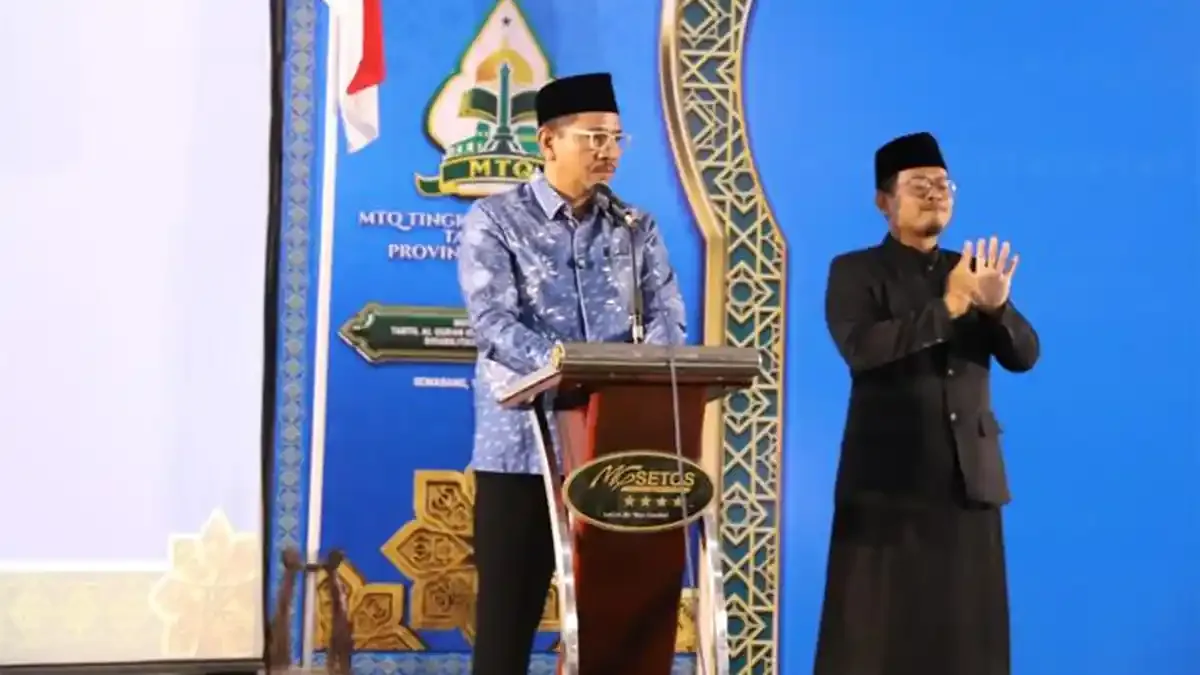
The XXXI National Musabaqah Tilawatil Qur’an (MTQ) 2026 in Semarang, Central Java, set a new milestone: for the first time, the event opened a Tartil Al-Qur’an Isyarat exhibition for people with sensory disabilities of hearing and speech (PDSRW), or the Deaf. A total of 28 participants from nine provinces took part in the exhibition held on Tuesday (15/9/2026).
The opening of this exhibition is seen as a breakthrough in inclusive religious services. The Director General of Islamic Community Guidance at the Ministry of Religious Affairs, who is also the Chairman of the Tilawatil Qur’an Development Board (LPTQ), Abu Rokhmad, said the 31st MTQ in Semarang had given birth to a new tradition. "We feel very happy and certainly very proud. The 31st National MTQ in Semarang has given birth to a new tradition, a sunnah hasanah, namely the Tartil Al-Qur’an Isyarat exhibition for people with sensory disabilities of hearing and speech," he said when opening the event.
Abu stressed that the opportunity to learn the Qur’an must be open to everyone without exception. According to him, physical, socioeconomic, or geographic conditions must not become a barrier for anyone to gain access to learning the Qur’an. "Therefore, no one should lose the opportunity to learn the Qur’an because of physical, socioeconomic, or geographic conditions," he said.
The Director of Islamic Religious Information at the Ministry of Religious Affairs, Muchlis M Hanafi, said the exhibition was part of the long journey of standardizing the Mushaf Al-Qur’an Isyarat in Indonesia. In 2020, a number of Muslim Deaf communities voiced their aspiration for a common standard in reading the Qur’an using sign language. The aspiration was followed up through workshops, research, and a collaborative process involving mushaf reviewers, academics, sign language practitioners, teachers, and Deaf communities from various regions.
"Our position as the government is that of facilitator. The Deaf community, academics, and practitioners were directly involved in its drafting. This collaborative process produced reading guidelines, learning guides, and the Indonesian Mushaf Al-Qur’an Isyarat in print and digital form," Muchlis explained.
The development obtained an official basis through Minister of Religious Affairs Decree Number 889 of 2022, which designated the Mushaf Al-Qur’an Isyarat as one of the new variants of the Indonesian Standard Mushaf Al-Qur’an. This decree serves as the basis for the review, publication, digitization, and learning of the Qur’an Isyarat in Indonesia.
For readers in Indonesia, this step is not merely symbolic. The initiative opens wider space for participation by people with disabilities in religious life, while affirming that human resource development must not leave vulnerable groups behind. Going forward, the standardization of the sign language mushaf could encourage the birth of an inclusive religious education curriculum in special schools and madrasas, as well as strengthen an ecosystem of disability-friendly public services.
With the Mushaf Al-Qur’an Isyarat recognized as an official variant, the next challenge is ensuring its availability and accessibility down to remote areas. Are local governments and educational institutions ready to adopt these guidelines on a massive scale? The public awaits the continuation of the breakthrough that began in Semarang.