Seoul Court Orders Pyongyang to Pay Rp528 Billion for Destruction of Liaison Office
Baca dalam 60 detik
- Pengadilan Seoul memutuskan Korea Utara wajib membayar kompensasi sekitar US$32,5 juta (Rp528 miliar) atas penghancuran Kantor Perhubungan Antar-Korea di Kaesong pada 2020.
- Gugatan ini menjadi yang pertama dalam sejarah di mana pemerintah Korea Selatan menuntut kerugian langsung dari Pyongyang, membuka preseden hukum yang sensitif.
- Keputusan ini memicu pertanyaan tentang penegakan hukum internasional dan dampaknya terhadap stabilitas diplomasi Asia Timur, termasuk bagi Indonesia sebagai mitra strategis kedua Korea.
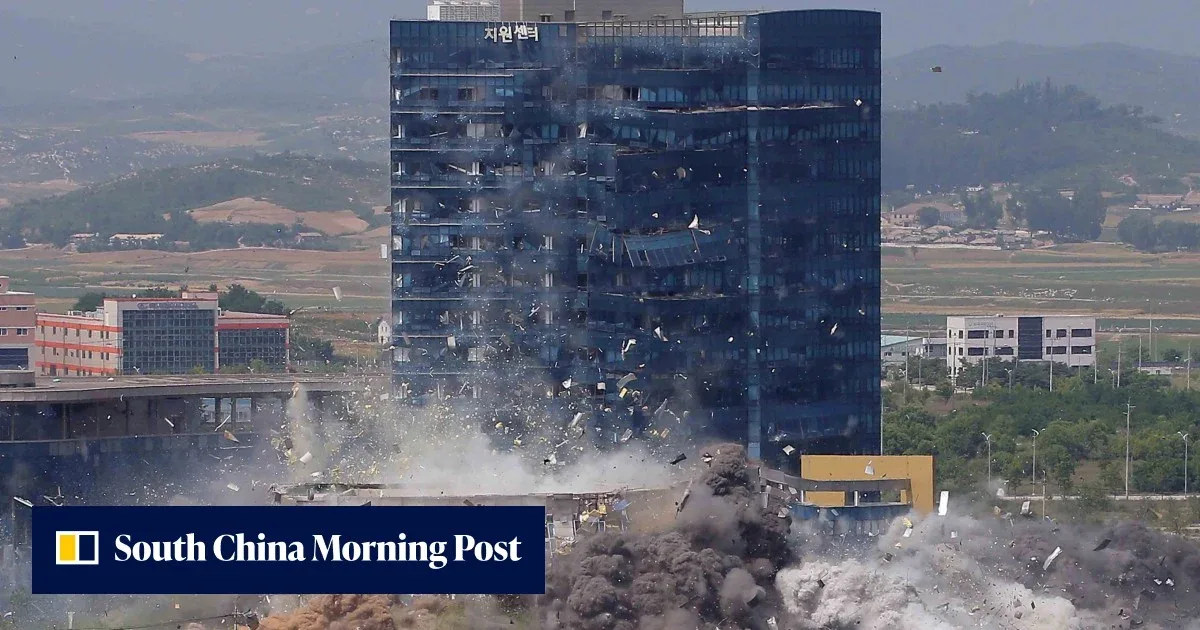
A court in Seoul has ruled that North Korea must pay about US$32.5 million (equivalent to Rp528 billion) in compensation to South Korea for the destruction of the inter-Korean Liaison Office in Kaesong in June 2020. The ruling marks the first time the South Korean government has formally sought direct damages from Pyongyang, a legal step previously considered taboo in the tense bilateral relationship.
The lawsuit was filed in June 2023 by the then-conservative administration under President Yoon Suk-yeol, several months before Yoon was removed from office following a brief martial law decree in December 2024. Nevertheless, the legal process continued and has now produced a ruling that symbolically strengthens Seoul's position before the domestic public and the international community.
The inter-Korean Liaison Office was built in the Kaesong Industrial Complex, an economic zone that was once a symbol of cross-border economic cooperation. In that complex, South Korean companies once employed hundreds of North Korean workers before it was finally closed in 2016 in response to Pyongyang's nuclear and missile tests. The building's destruction in 2020 by Kim Jong-un's regime dealt a severe blow to the remnants of trust left between the two countries.
From the perspective of international law, the ruling faces major challenges in terms of enforcement. North Korea does not recognize the jurisdiction of foreign courts and will almost certainly not pay a single cent. For Seoul, however, this step is not merely about money. It is an effort to build an official record that Pyongyang has committed violations, which could later be used as a basis for claims in multilateral forums or additional sanctions.
"This is the first time the South Korean government has taken legal action to seek direct compensation from North Korea. Its impact is more about political and diplomatic precedent than actual asset recovery," said a foreign policy analyst in Seoul, as quoted by the Yonhap news agency.
For Indonesia, this development has indirect but significant implications. As a country that actively promotes peaceful dialogue on the Korean Peninsula and maintains diplomatic relations with both sides, Jakarta has an interest in preserving regional stability. Rising tensions could disrupt maritime trade routes in East Asia, affect commodity prices, and hamper regional economic cooperation that has long been the backbone of growth.
Moreover, the ruling could serve as a reference for other countries facing similar disputes with unconventional actors. If South Korea succeeds in building legal legitimacy for its claim, ASEAN countries with border disputes or losses caused by unilateral actions may be encouraged to pursue a similar path. Without a strong enforcement mechanism, however, the risk that the ruling remains symbolic is still high.
Going forward, the question is no longer whether Pyongyang will pay, but how Seoul will use this ruling in its diplomatic strategy. Will it become a springboard for pressuring North Korea in international forums, or will it instead muddy already fragile dialogue efforts? The answer will depend heavily on the direction of South Korea's new government and the responses of Beijing and Washington to this dynamic.