PTBA's Coal Reserves Only 9% of National Total, CEO: Fifth Position Among Giants
Baca dalam 60 detik
- PT Bukit Asam (PTBA) membukukan cadangan batu bara 2,88 miliar ton, hanya 9,01% dari total nasional 97,96 miliar ton.
- Produksi PTBA berada di peringkat kelima, di bawah Bumi Resources, Adaro, Bayan Group, dan Sinar Mas Group.
- Kewajiban DMO PTBA melebihi 54%, jauh di atas ambang 25%, memicu pertanyaan tentang dampak ke laba perusahaan.
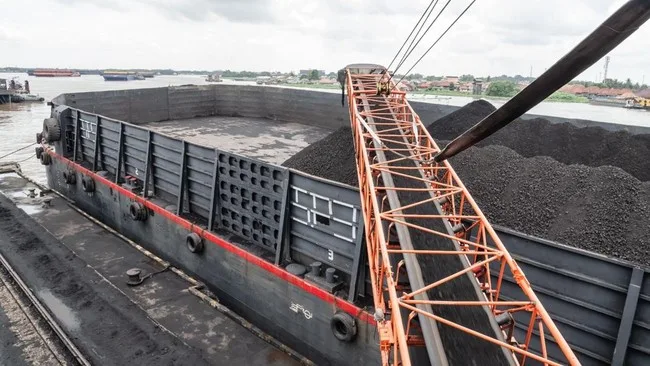
PT Bukit Asam Tbk (PTBA) disclosed that its share of coal reserves is only about 9.01% of the national total of 97.96 billion tons. PTBA President Director Bambang Ismawan conveyed this during a hearing (RDP) with Commission XII of the Indonesian House of Representatives (DPR RI) on Wednesday (16/9/2026). The company recorded resources of 5.71 billion tons and reserves of 2.88 billion tons, figures deemed disproportionate given its status as the only state-owned coal company.
In his presentation, Bambang highlighted the company's production position, which ranks fifth, below Bumi Resources, Adaro Indonesia, Bayan Group, and Sinar Mas Group. According to him, this condition is concerning because PTBA should be the backbone of national energy supply. "We are fully aware that our reserves are not as large as those of private companies, even though we are a state-owned enterprise," he said. He added that PTBA's resources account for only 5.83% of total national resources, reinforcing the picture of limited assets.
Beyond reserves, Bambang also highlighted the implementation of the domestic market obligation (DMO), which has long far exceeded the requirement. Regulation mandates a DMO of 25% of production, but PTBA has consistently realized more than 54% from 2021 to 2025. "We are always double what is required. We once tried to calculate how much profit declined because of this excess DMO," he said. The high DMO share does help domestic supply, but on the other hand it erodes the potential for more profitable export revenue.
For investors, this statement is an important signal. First, limited reserves could constrain long-term production growth, especially if there is no expansion of new resources. Second, the large DMO burden could pressure profit margins, although on the other hand PTBA gets priority in domestic sales. Third, its position as a state-owned enterprise makes PTBA vulnerable to changes in energy policy, including energy transition plans that could affect coal demand in the future.
In the industry context, PTBA competes with private giants that have larger reserves and operational flexibility. Bumi Resources, Adaro, and Bayan Group have higher production scales, allowing them to lower costs per ton. Meanwhile, PTBA must balance its role as a domestic supplier with profitability demands. Energy analysts assess that diversification into renewable energy or improving mine efficiency is key for PTBA to maintain performance amid global pressure on coal.
The government itself is pushing to increase coal's added value through downstreaming, such as gasification and the production of dimethyl ether (DME). PTBA is among those tasked with working on the coal gasification to DME project, a strategic step to reduce LPG imports. However, this project requires large investment and advanced technology, while limited reserves could become a constraint on long-term raw material supply.
Going forward, the public will await PTBA's concrete steps to address limited reserves, whether through acquiring new mines, increasing exploration, or optimizing existing mines. In addition, transparency regarding the impact of DMO on financial performance is important for investors. Without a breakthrough, PTBA's position as a major national coal player could erode, especially as global demand shifts to clean energy. Will PTBA be able to adapt, or will it fall further behind?