Singapore Airlines Spends Rp22 Trillion on New First Class and Business Class Seats
Baca dalam 60 detik
- Singapore Airlines menginvestasikan lebih dari S$2 miliar (sekitar Rp22 triliun) untuk membenahi kabin premium, hiburan, dan layanan darat.
- Kursi first class dan business class anyar akan meluncur di pesawat A350 long-haul dan ultra-long-range pada pertengahan 2027, menyusul tertundanya pengiriman Boeing 777-9.
- Langkah ini mempertegas persaingan maskapai kelas atas di Asia Tenggara, dengan SIA berupaya mempertahankan posisinya sebagai yang terbaik dunia versi Skytrax 2026.
Singapore Airlines (SIA) announced an investment program worth more than S$2 billion (around Rp22 trillion) to overhaul its first class and business class experience. The large sum is allocated for next-generation seats, entertainment systems, food offerings, as well as lounge facilities and ground services at Changi Airport. The new premium seats will first appear on the long-haul and ultra-long-range variants of the Airbus A350 starting mid-2027.
The move comes as SIA grapples with delays in the delivery of the long-awaited Boeing 777-9. The aircraft, originally scheduled to arrive in 2021, will now only be handed over in 2027, according to Boeing's announcement in its third-quarter report. As a result, SIA chose to accelerate the refresh of its existing A350 fleet so that its premium products do not fall behind competitors.
SIA Chief Commercial Officer Lee Lik Hsin, at a press conference in early November, said the decision to bring the new product to the A350 was inseparable from the 777-9 delay. “We cannot keep waiting,” he said, as quoted by CNBC. SIA has not even confirmed whether it will be a launch customer for the 777-9. Chief Operating Officer Tan Kai Ping in May called the program a “very much delayed program” and said it most likely will not strengthen the fleet in the fiscal year ending March 2027.
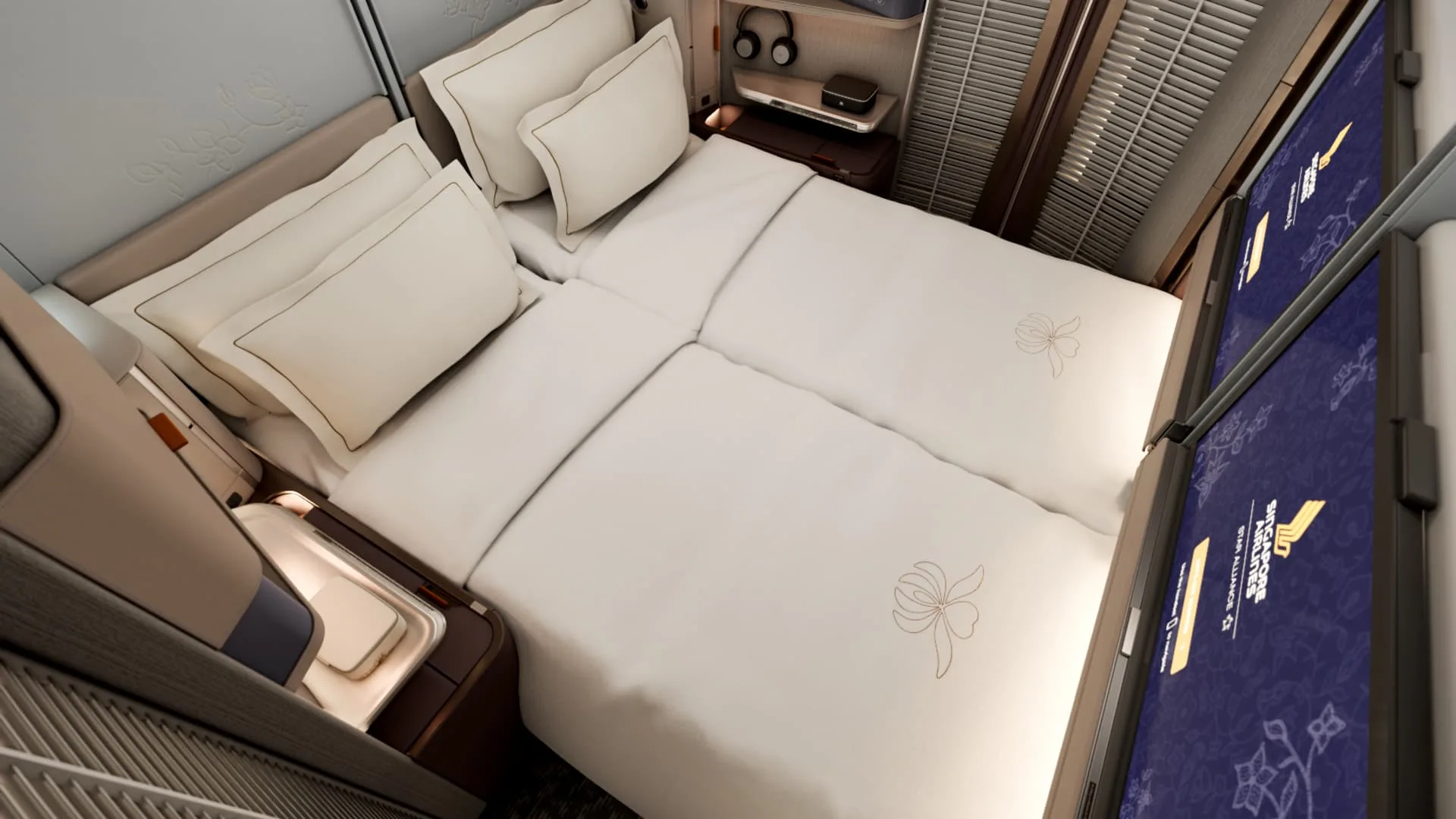
The new first class seats will be equipped with 32-inch 4K screens, noise-cancelling headphones from Bang & Olufsen, as well as options for a double-bed configuration and facing dining. SIA claims the double bed is the largest in commercial aviation. Meanwhile, the business class seats come with 22-inch 4K screens, wireless charging, and Bluetooth audio connectivity. Passengers can also enjoy a full flat bed measuring 79 inches long and up to 24 inches wide, as well as certain middle seats that can be combined into a shared bed.
The changes do not stop at the premium cabins. Premium economy gets an extra inch of recline, while economy receives new seat upholstery. Both will be equipped with the latest generation of 4K entertainment monitors, but this feature is only available on the upcoming 777-9 aircraft. SIA is also introducing a new dining experience with fresh menus and beverages for all classes, Christofle tableware for premium cabins, as well as Sisley-branded amenity kits for first class and BYREDO for business class. Business class passengers will for the first time receive sleep pajamas.
“We want to ensure that every touch, from the seat to the ground service, reflects the highest standards,” said Lee Lik Hsin.
The investment also includes a S$130 million renovation of the SilverKris lounge and “end-to-end” services for Suites and First Class passengers at Changi Airport, including concierge, fast-track immigration and security lanes, and buggy transfers. As a note, SIA has just been named World’s Best Airline 2026 by Skytrax and won the World’s Best Economy Class title. However, in the Business Class category, SIA had to concede superiority to Qatar Airways, and in First Class, Air France came out on top.
For Indonesia, SIA's move signals that competition in Southeast Asia's premium aviation segment is tightening. National carrier Garuda Indonesia and a number of other carriers in the region are pressed to keep improving, especially in terms of cabin comfort and digital connectivity. Moreover, SIA also plans to bring Starlink-based internet service to nearly its entire Airbus fleet, except the medium-haul A350, starting in the first quarter of 2027. That means about half of its total fleet will enjoy high-speed satellite connectivity.
With a launch deadline in mid-2027, the question now is: will SIA be able to meet the schedule amid global aircraft supply uncertainty? And further, will an investment of this size trigger a similar wave of upgrades among other airlines, including in Indonesia, that want to win over premium passengers?