Bitcoin Dragged Down by AI Selloff, Crypto Market Loses $1 Billion in a Day
Baca dalam 60 detik
- Harga Bitcoin merosot di bawah $76.000 setelah indeks saham teknologi AI anjlok, memicu likuidasi besar-besaran di pasar derivatif kripto.
- Kemenangan Partai Demokrat di pemilu paruh waktu AS memunculkan kekhawatiran perlambatan pembangunan pusat data, yang selama ini menjadi pendorong bisnis penambang kripto.
- Meski jangka pendek tertekan, sebagian analis menilai adopsi kripto yang meluas tetap menjadi katalis positif jangka menengah.
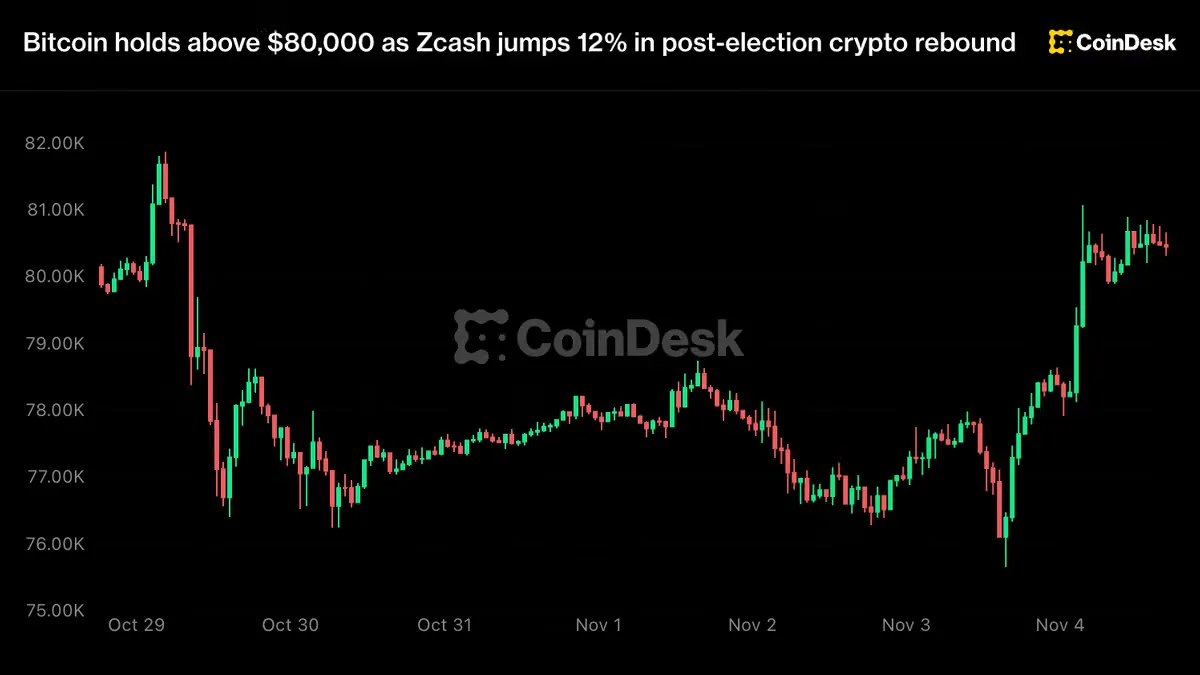
Bitcoin (BTC) fell below $76,000 on Thursday (5/11), marking a sharp reversal from the previous day's rally, after a wave of selling in artificial intelligence (AI) technology stocks spilled over into the broader digital asset market. The decline was the worst since late October and triggered heavy liquidations in the derivatives market.
The Nasdaq Composite fell nearly 6%—its worst daily performance since the Trump administration's tariff policy in April 2025—while the chip sector index plunged more than 10% in early trading. Shares of crypto mining companies that have recently pivoted to AI computing were also hit, falling 15% to 20%.
The main trigger for the panic was the result of Tuesday's US midterm elections, which gave the Democratic Party control of both chambers of Congress. Investors fear the new legislative majority will slow the construction of data centers that underpin AI expansion. For many Bitcoin miners, the AI computing business has become an alternative revenue source as mining margins thin.
"We're seeing fresh selling come back into the market as the implications of a slowdown in data center buildout start to come into focus," said Joshua Lim, co-head of markets at FalconX, an institutional crypto broker.
Lim added that Wednesday's rally was actually driven by short covering following the anticipated election results. "That rally was temporary because many short positions were forced to close," he said.
Similarly, Carlos Guzman, vice president of research at digital asset trading firm GSR, said investors had already been questioning the returns from massive investment in AI infrastructure. The election results, he said, added to those concerns. "The midterm elections appear to have triggered this selloff, with investors worried that stronger opposition to data center expansion could slow AI buildout," Guzman said. He also highlighted disappointing earnings from chipmakers as an additional drag.
In the stock market, crypto-related issuers were also dragged down. Coinbase (COIN), the largest US crypto exchange, stablecoin issuer Circle (CRCL), and digital asset custodian BitGo (BTGO) fell between 10% and 15%. Meanwhile, Strategy (MSTR), a company holding a Bitcoin treasury, lost 9.6% of its share value.
Nevertheless, major cryptocurrencies showed relative resilience compared with stocks directly tied to AI trading. Bitcoin fell only about 5.5% in the last 24 hours, better than Ether, Solana, XRP, and Hyperliquid, which each weakened 6% to 7%.
Selling pressure was exacerbated by forced liquidations in the derivatives market. According to CoinGlass data, more than $1 billion in crypto positions were liquidated in the last 24 hours, most of them from bets on rising prices. This was the largest liquidation at least since 28–29 October, when Bitcoin slid from nearly $82,000 to $76,000.
"Yesterday we saw a rally on optimism about the geopolitical situation after the election results. Today the situation has reversed with a decline in risk appetite amplified by leverage," Guzman said.
However, Jasper De Maere of Wintermute cautioned the market against overreacting to a single day of selling. According to him, crypto held up relatively well amid the turmoil in AI stocks, while broader adoption continues to strengthen the long-term outlook. "Let's see where we land in the short term. For the medium term, the glass is still half full," he said. He also suggested investors watch for bargains emerging as cross-asset correlation runs high.
On the other hand, diversified stablecoin instruments based on real-world assets (RWA) offer yields of 5–7% from real credit, while crypto funding has compressed to around 4%. The GENIUS regulation is pushing yields off-chain, with the total market potentially growing to $4 billion within three years.
For Indonesian investors, this turmoil is a reminder that the domestic crypto market is increasingly connected to global dynamics, especially sentiment toward AI technology and US political policy. Nevertheless, adoption fundamentals in the country—supported by licensed exchanges and strong retail interest—can serve as a long-term buffer. The question is whether this correction will become an entry point for local investors, or rather a signal of a deeper slowdown.