Police Chief Suyudi Shakes Up 264 Senior and Mid-Level Officers, Six Deputy Regional Chiefs Replaced
Baca dalam 60 detik
- Jenderal Suyudi Ario Seto menandatangani Surat Telegram ST/2467/XI/KEP./2026 yang mengganti enam Wakapolda dan memindahkan 264 perwira.
- Mutasi menyasar posisi strategis di Sumbar, Sulbar, Papua Barat, NTB, Lampung, dan Gorontalo, dengan mayoritas pengganti berpangkat Brigjen.
- Polri membingkai rotasi sebagai penyegaran organisasi, tetapi publik akan menilai apakah perubahan ini memperkuat pengawasan internal dan pelayanan di daerah.
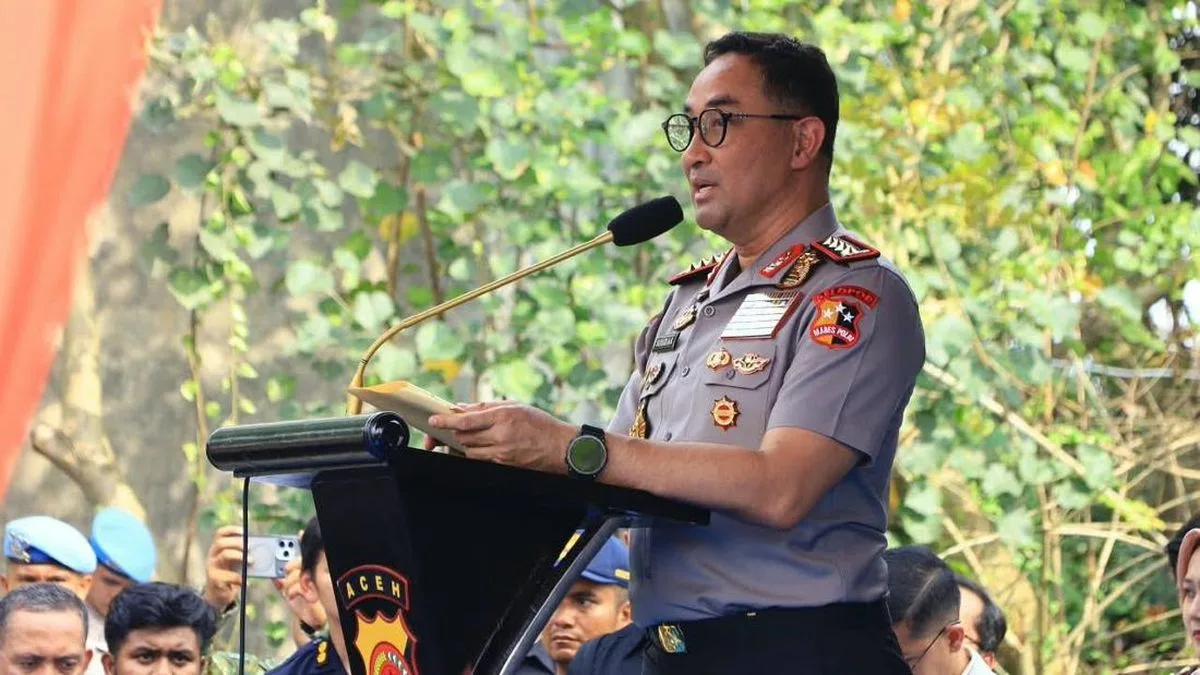
General Suyudi Ario Seto has once again shaken up the National Police (Polri). Through Police Chief Telegram Letter Number ST/2467/XI/KEP./2026 dated 2 November 2026, he transferred 264 high-ranking and mid-ranking officers, including replacing six Deputy Regional Police Chiefs (Wakapolda). The mutation signals that the Police Chief is tidying up the leadership composition in the regions, not merely carrying out a routine rotation.
The six Wakapolda positions that changed hands are spread from Sumatra to Papua. Kombes Dhani Kristianto was promoted to replace Brigjen Solihin in West Sumatra. Brigjen Eko Suprihanto fills the West Sulawesi Wakapolda seat left by Brigjen Hari Santoso. In West Papua, Brigjen Yohanes Agus Rijanto takes over from Brigjen Sulastiana. Brigjen Harry Kurniawan now serves as Wakapolda of West Nusa Tenggara, replacing Brigjen Hari Nugroho. Brigjen Singgamata was appointed Wakapolda of Lampung, while Brigjen Laode Aries El Fathar fills the Wakapolda position in Gorontalo.
Read from its geographic spread, the mutation touches regions with different characters of challenges: West Sumatra and Lampung, which are relatively densely populated; NTB and West Sulawesi, with maritime issues; and West Papua and Gorontalo, which have their own security sensitivities. Replacement at the Wakapolda level is not merely an administrative matter. The position holds daily operational control, from personnel management and investigation oversight to coordination with local governments. Therefore, the Police Chief's choice of these names will be read as a signal of priorities: whether Polri wants to strengthen internal oversight, sharpen public services, or respond to local political dynamics.
The Head of the Public Relations Division of Polri, Irjen Johnny Eddizon Isir, emphasized that such a rotation is part of organizational dynamics and personnel career development. According to him, a refresh is needed so that the leadership wheel and the execution of duties run optimally amid increasingly complex challenges. The statement aligns with Polri's official framing, which emphasizes organizational continuity and the effectiveness of duty execution.
"Mutation and rotation of positions are part of organizational dynamics as well as the career development of Polri personnel. This is also an effort to refresh the organization to ensure the leadership wheel and the execution of duties run optimally," said Irjen Johnny Eddizon Isir in a written statement, Tuesday (3/11).
However, beyond the official narrative, the public usually gauges a mutation by two things: whether the process is transparent and whether the result affects service quality. Polri often faces criticism over promotions that are not always tied to performance. Therefore, this large-scale rotation can be a credibility test. If the new Wakapolda are able to improve internal oversight, speed up the handling of public reports, and maintain neutrality in the regions, the mutation will be seen as a strategic step. Conversely, if it stops at ceremony, the public will again question the effectiveness of career development.
The Indonesian context makes this mutation increasingly relevant. Several regions affected by the rotation have packed security agendas, from securing regional elections and handling agrarian conflicts to overseeing traffic and narcotics. In West Papua, for example, security and development issues are a heavy homework assignment. In Lampung and NTB, the problems of drug trafficking and cross-regional crime demand coordination between regional police forces. Meanwhile, in Gorontalo and West Sulawesi, proximity to border and sea areas requires its own oversight. The Police Chief's choice of new names is expected to answer those specific needs, not merely fill vacant positions.
Also worth noting is the scale of the mutation: 264 officers in a single telegram letter. The figure shows the Police Chief wants to move fast, but it also raises questions about how deep the selection process and performance considerations were. In a large organization like Polri, mass rotation can trigger adjustments at lower levels, from the replacement of mid-level officials to staff restructuring. If not managed well, the transition could disrupt program continuity, especially long-term ones such as bureaucratic reform and strengthening internal oversight.
Going forward, the public will wait to see whether this mutation is followed by measurable performance evaluation. Polri needs to explain the success indicators for the new Wakapolda, not just the handover ceremony. Without that, the rotation will only be a routine whose impact is hard to assess. The question is simple: will this refresh strengthen public trust, or instead add to the long list of mutations without a clear direction?