UN Report: 1.5C Overshoot Threatens Permanent Damage to Earth's Ice Regions
Baca dalam 60 detik
- Studi terbaru PBB dan ICCI menyimpulkan bahwa kenaikan suhu global yang melampaui 1,5C, meski sementara, akan memicu kerusakan permanen pada gletser dan lapisan es kutub.
- Kebijakan emisi saat ini diproyeksikan membawa pemanasan hingga 2,8C, yang berpotensi menghilangkan lebih dari 90% massa gletser di Pegunungan Rocky, Alpen, Islandia, dan Skandinavia.
- Para ilmuwan mendesak agar suhu global dikembalikan di bawah 1C pada 2150 melalui pemangkasan emisi agresif dan penyerapan karbon, guna menghindari titik kritis yang tidak dapat dipulihkan.
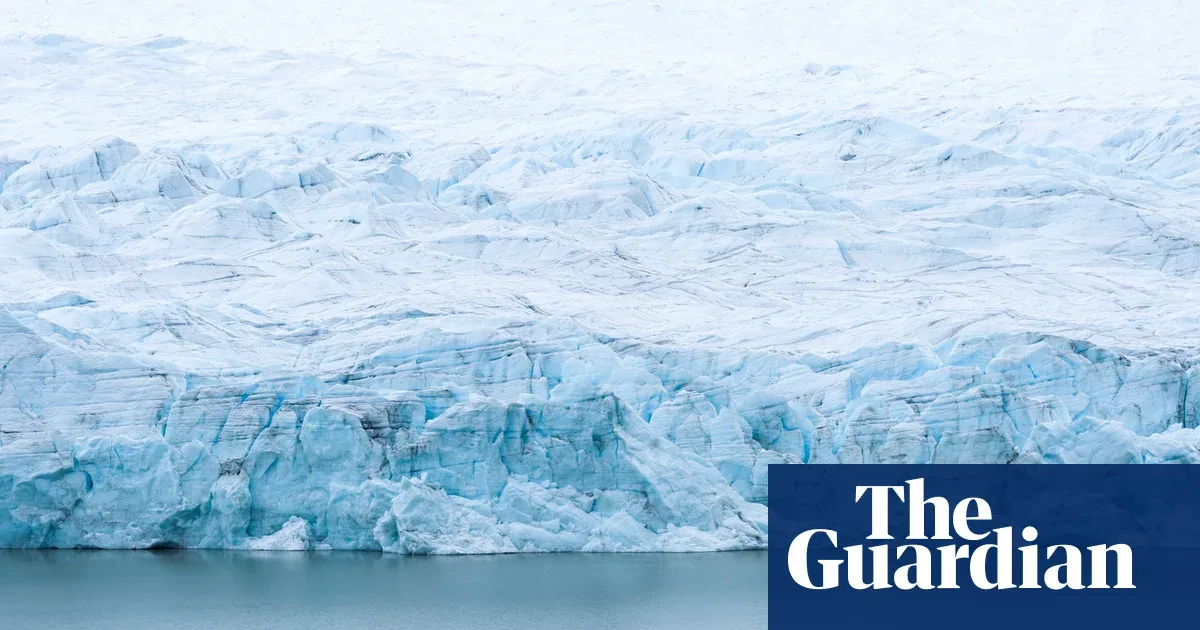
A new report coordinated by the International Cryosphere Climate Initiative (ICCI) and the UN Environment Programme (UNEP) concludes that even a temporary rise in global temperature above the 1.5C threshold could cause permanent damage to glaciers, ice sheets, and permafrost. The findings also refute the assumption that a temperature overshoot—temporarily exceeding the Paris target—can be managed without serious consequences.
According to the study involving 80 scientists, the planet has warmed by about 1.3C compared with the pre-industrial era. Under current emissions policies, the world is projected to head toward a warming peak of about 3C before the end of the century. In that scenario, nearly all near-surface permafrost will thaw, ocean circulation could suffer severe disruption, and ocean acidification will spread. More worrying, most of these impacts will not recover even if temperatures are later brought back down to 1.5C.
James Kirkham, a glaciologist at ICCI and lead author of the report, stressed that the cryosphere—the ice and snow-covered parts of the Earth—responds very quickly to every fraction of temperature rise. "These systems will take centuries to millennia to recover after an overshoot, especially if tipping points have been crossed," he said. He cited this year's rock-ice avalanche on the Nepal-China border that killed thousands of people and caused losses equivalent to 10% of Nepal's GDP. Meanwhile, Switzerland lost 20% of its glacier ice volume in just the past five years.
The report also highlights that the polar ice sheets have a lower safe threshold, close to 1.0C of global warming. Even in a brief overshoot scenario with temperatures returning to 1.5C, the Greenland and Antarctic ice sheets will continue to lose mass. The scientists urge that the overshoot period be shortened as much as possible and offset by large-scale carbon removal from the atmosphere, so that long-term warming can be pushed below 1C by 2150.
"Every minister and fossil fuel executive who has ever succeeded in weakening climate action can look at this report and realize that their actions have damaged the world we live in," said Bill Hare, CEO of Climate Analytics, who was not involved in writing the report.
For Indonesia, these findings reinforce the urgency of the energy transition and the protection of coastal ecosystems. As an archipelagic country with more than 99,000 km of coastline, sea-level rise caused by the melting of global ice sheets threatens millions of people in low-lying areas, including Jakarta, Semarang, and Surabaya. In addition, Indonesia lies on the Ring of Fire, which is vulnerable to shifts in extreme weather patterns. This UN report affirms that national climate commitments, including the 2060 net-zero emissions target, need to be accelerated and strengthened, not merely maintained.
With the COP31 Climate Conference underway in Turkey, the report is a blow to countries that rely on an overshoot strategy. The question now: will policymakers adopt a target of bringing temperatures back below 1C, or will they stay on a path that scientists call a "persistent myth"?