Investor Who Called for AI Pivot Now Predicts Bitcoin at US$57,000: Danger Signal or Opportunity?
Baca dalam 60 detik
- Jason Calacanis memprediksi harga bitcoin akan merosot ke US$57.000 dalam 12 bulan ke depan dan tidak akan pernah mencetak rekor baru.
- Ia menilai bitcoin telah kehilangan daya tarik di kalangan investor yang kini beralih ke aset berbasis kecerdasan buatan (AI).
- Arus keluar dana dari ETF bitcoin menjadi indikasi melemahnya permintaan, sementara Calacanis justru mengungkap kepemilikan token TAO yang terkait proyek AI.

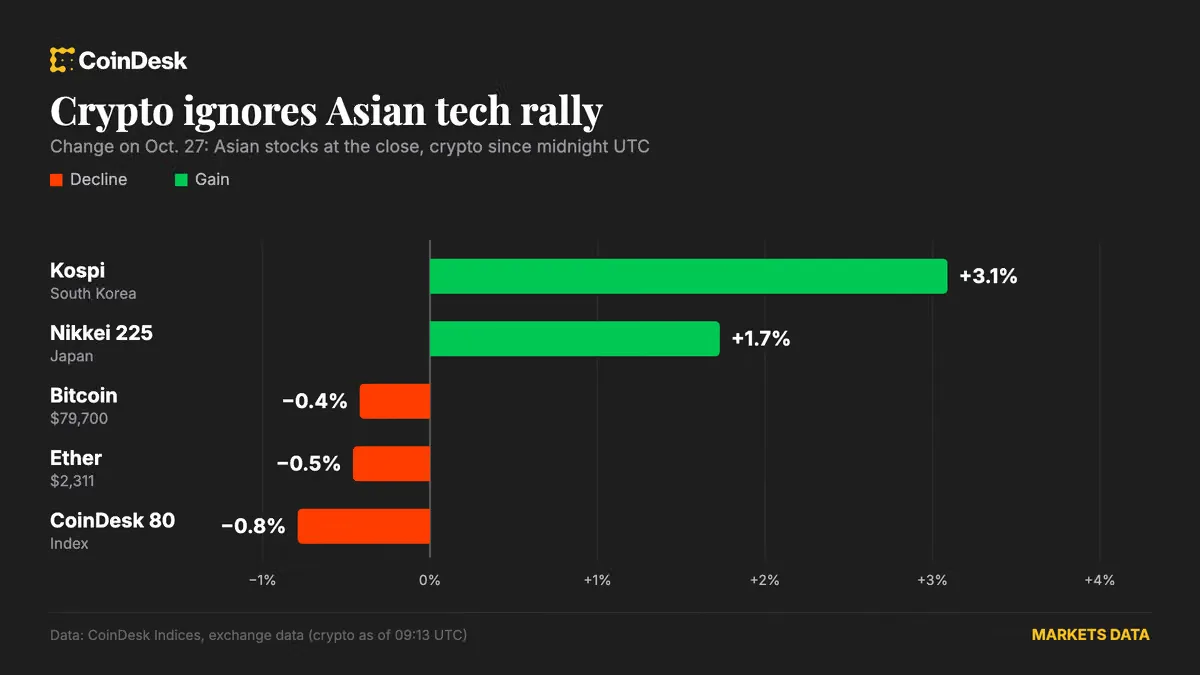
A controversial prediction comes from Jason Calacanis, a technology investor also known as a podcast host. He openly urged bitcoin holders to sell their assets, projecting that the price will return to the US$57,000 level within the next year and will never again reach its all-time high. The call came as bitcoin traded around US$79,600, implying a potential decline of about 28% from the current position.
In his post on the X platform, Calacanis questioned why investors hold bitcoin. He called bitcoin a dead network that offers nothing beyond a store-of-value function. Further, he claimed that bitcoin has lost the mass of enthusiasts that once made holding the asset feel mandatory. Now, according to him, investors can ignore bitcoin without fear of ridicule, while AI offers a more useful alternative for deploying funds.
Calacanis is not a new name in technology investing. In 2023, he advised crypto startup founders to pivot to AI. Now, he is extending that call to bitcoin holders. He even stated that tokens still have a place in his portfolio, provided they reward the people building AI. One he mentioned is TAO, the token behind Bittensor, a network that pays participants to provide services such as computing, AI responses, and storage.
Calacanis's main argument is the weakening of institutional demand through bitcoin ETFs. He pointed to a net withdrawal of US$774 million from bitcoin ETFs on Thursday and Friday last week, although on Monday there was a return inflow of US$110 million. This figure, according to him, signals that selling pressure will continue. He also questioned where the next bitcoin buyers will come from, given that the pressure to own the asset has faded and investor interest is now being drawn to the AI sector.
Calacanis's view conflicts with bitcoin's old narrative, which relies on a combination of fixed supply and steady growth in the buyer base. If demand no longer grows, the scarcity argument as a price driver becomes fragile. In the broader market context, the rotation of funds from crypto assets to AI reflects a shift in investor appetite toward technology seen as having direct utility. AI offers real applications that can be felt immediately, while crypto still leaves questions about its practical value for ordinary people.
"Why put your resources into a dead network that offers nothing but a store of value?" Calacanis wrote on X.
Even so, Calacanis has not entirely abandoned crypto. He disclosed a stake in TAO because he believes tokens that incentivize AI development have bright prospects. In a LinkedIn post in April, he explained that crypto still leaves people wondering about its use, whereas AI immediately delivers something useful. Bittensor stands out, in his view, because its token rewards encourage people to build those services. "I'm long $TAO and love Bittensor's focus on scaling AI," he said.
For Indonesian investors, Calacanis's prediction can serve as a mirror for reevaluating portfolio allocation. The domestic crypto market itself has shown similar dynamics, with fluctuating interest in digital assets and growing discussion of AI technology among young professionals. Domestic regulators, through Bappebti and OJK, continue to strengthen the crypto asset oversight framework, while digital financial literacy remains a work in progress. If global capital flows truly shift from bitcoin to AI, the impact could be felt in liquidity and price volatility on local crypto exchanges.
Looking ahead, the question is whether Calacanis's prediction will prove correct or instead become a buy signal for investors who believe in the bitcoin cycle. History shows bitcoin often rebounds after periods of sharp decline, but this time pressure from the rotation into AI and ETF outflows creates a different combination. The market will test whether the scarcity narrative is still strong enough to attract new buyers, or whether bitcoin's golden era as the premier speculative asset has ended.