Kratom and Frankincense Downstreaming: Prabowo's New Bet After Nickel, Targeting the US Market
Baca dalam 60 detik
- Pemerintah menyiapkan hilirisasi kratom dan kemenyan sebagai komoditas pertanian bernilai tambah tinggi, dengan peresmian pusat riset di Toba dijadwalkan Maret tahun depan.
- Kratom Indonesia menguasai 96 persen pasokan ke Amerika Serikat, dengan nilai ekspor mencapai US$350 juta atau sekitar Rp5,8 triliun.
- Langkah ini meniru model hilirisasi nikel, tetapi tantangannya berbeda: regulasi, riset, dan kesiapan industri hilir masih harus dibuktikan.
President Prabowo Subianto will open a new chapter in the downstreaming of agricultural commodities: kratom and frankincense. The plan was announced by the Chair of the National Economic Council (DEN), Luhut Binsar Pandjaitan, at the Merdeka Palace in Jakarta on Tuesday (20/10), marking an expansion of the natural resource processing strategy previously associated with nickel and minerals.
According to Luhut, both plants command high selling prices on the global market. If processed into derivative products, their economic value is projected to reach tens of billions of dollars. The government is preparing a genome sequencing research center in Toba, North Sumatra, as the base for developing kratom and frankincense downstreaming. The facility is scheduled to be inaugurated in March next year, depending on the readiness of all stages.
The move does not come without a policy trail. Since 26 August 2024, the government has opened the tap for kratom exports through two Ministry of Trade regulations—Permendag No. 20 of 2024 and Permendag No. 21 of 2024—which revised earlier rules on prohibited export goods and export policy. In other words, the legal foundation for kratom as an export commodity already exists, even though downstreaming demands more than just a permit to ship raw materials.
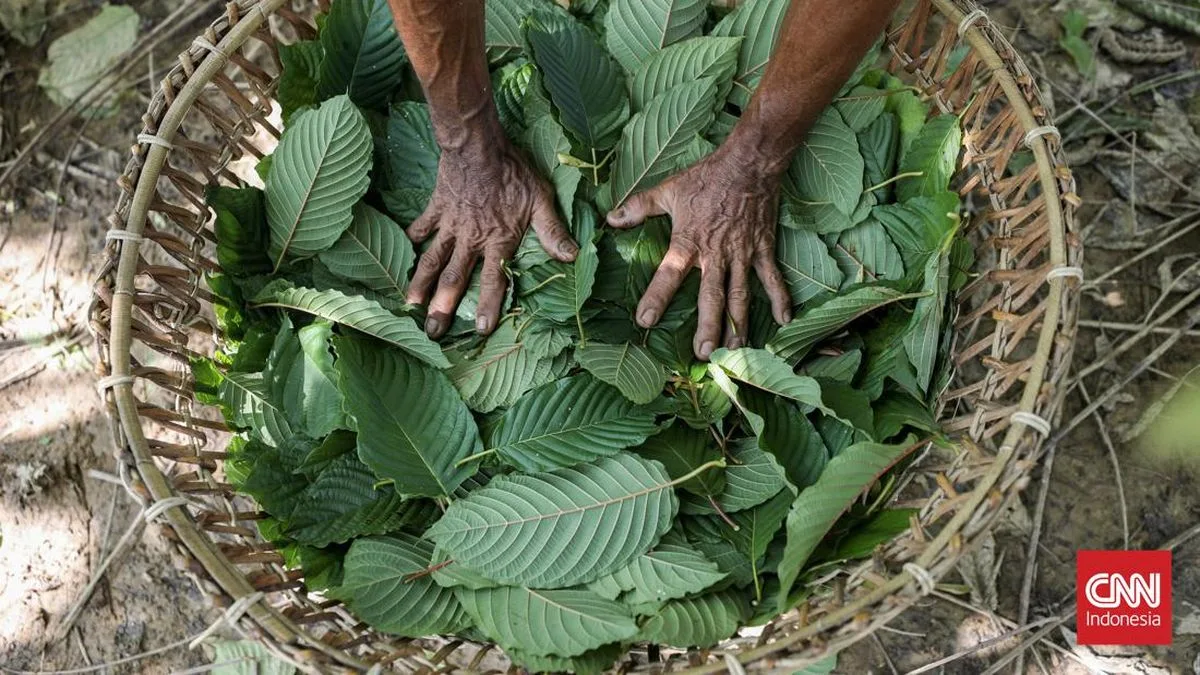
Minister of Investment and Downstreaming/Head of BKPM Rosan Roeslani revealed how heavily the US market depends on Indonesian kratom. He said 96 percent of the kratom entering the US comes from Indonesia, with an export value reaching US$350 million, equivalent to Rp5.8 trillion (assuming an exchange rate of Rp16,571 per US dollar). Rosan admitted he only became aware of this potential after discussions with the relevant associations. According to him, kratom—a herbal plant that grows widely in West Kalimantan—has been accepted as a medicinal and herbal treatment ingredient in the US, and shipments continue to flow.
"I only caught on to it there too. Kratom is essentially a plant, found mainly in West Kalimantan, that can be used for medication, herbal treatment. And it turns out 96 percent of the kratom entering the US comes from Indonesia," Rosan said.
For Indonesia, kratom and frankincense downstreaming offers a chance to diversify exports beyond minerals and palm oil. However, the model applied cannot fully imitate nickel. Nickel operates in mining with a well-established battery industry supply chain, while kratom and frankincense sit in the smallholder agricultural sector with small farmers, limited research capacity, and uneven quality standards. Another risk is market acceptance: kratom still faces regulatory debate in a number of countries, including the US, so dependence on a single market is a gap that needs to be anticipated.
The government appears to want to close that gap through research. The genome sequencing center in Toba is expected to be not only a laboratory but also a link between upstream and downstream—from mapping superior varieties and standardizing raw materials to developing value-added derivative products. If it goes according to plan, kratom and frankincense could become the first agriculture-based downstreaming example of significant scale. However, without a processing industry ecosystem, investment incentives, and market certainty, the promise of tens of billions of dollars remains far from realization.
The question now is: can the government build a value chain that does not merely export raw materials but genuinely processes them domestically? March next year will be the first test, when the research center is inaugurated and the shape of the kratom and frankincense downstreaming road map begins to emerge.